Caterpillar 321D LCR buying guide with jobsite specs
Specs and field checks for the Cat 321D LCR. See what its reach, depth, and tail swing mean on tight sites, plus a quick inspection checklist before you buy.
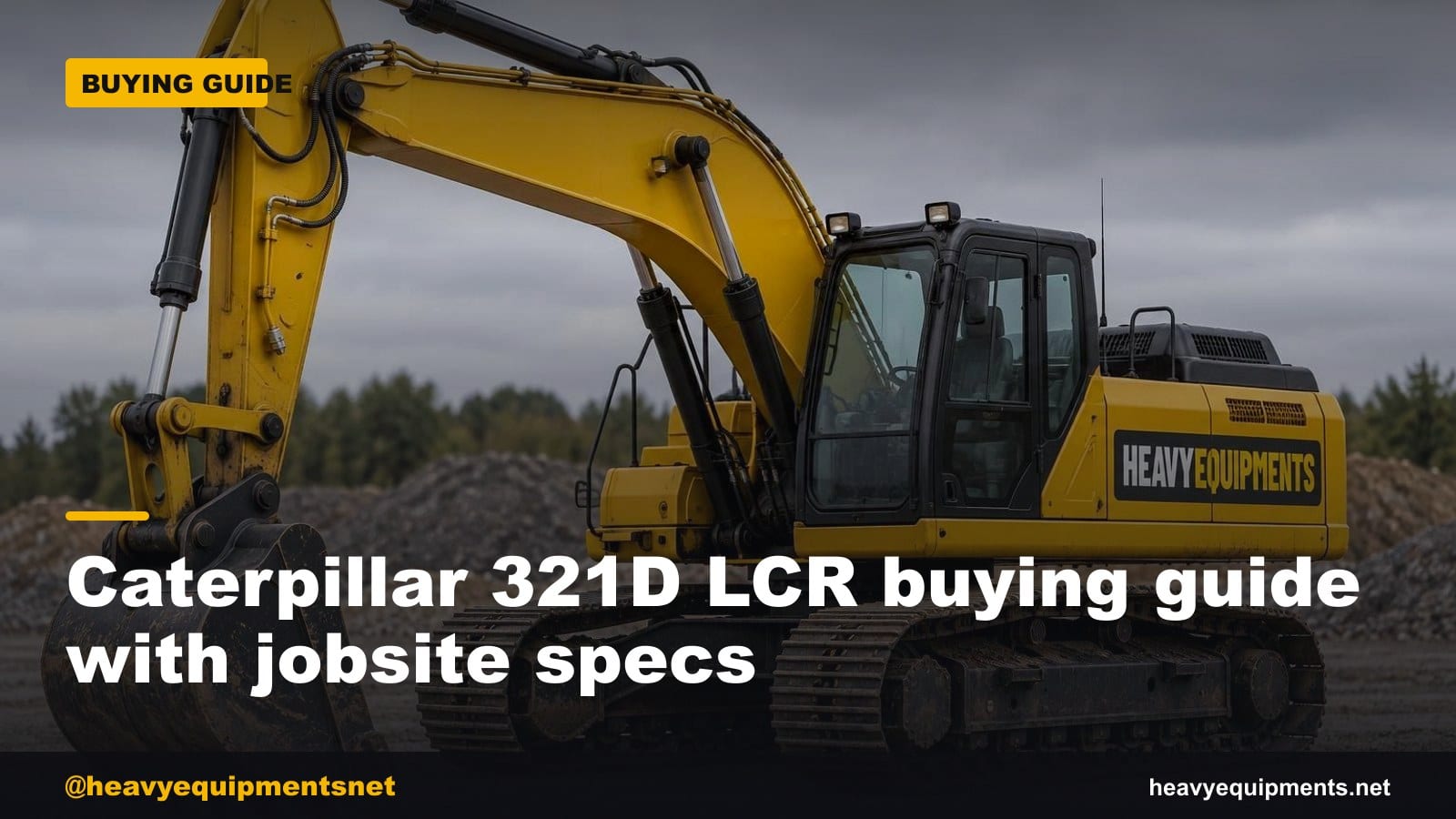
Caterpillar 321D LCR brings a reduced tail swing package to mid size digging, with 148 HP, 51875 lbs operating weight, a 66 in tail swing radius, and 385.2 in of ground reach. It fits the lanes where full tailswing machines struggle but still carries the muscle and reach for real production.
This model digs to 264 in, loads up to 312 in, and runs a reference 1.4 cu yd bucket with options to 2.1 cu yds. If your work mixes street cuts, utilities, and tight pads with some mass digging, these numbers help keep trucks moving without constant repositioning.
Size and transport fit
At 51875 lbs operating weight, the 321D LCR sits firmly in the mid size class. Plan a lowboy and permits to match that weight and an overall length of 350.4 in. Overall width is 117.6 in and cab height is 117.6 in, so measure bridges, trees, and shop doors. Ground clearance and counterweight clearance both measure 18.0 in, useful for curbs, stumps, and uneven approaches.
The key spec that defines this machine is the 66.0 in tail swing radius. On alleys, lane closures, or next to structures, that smaller radius can be the difference between safe slewing and a dented wall. The undercarriage puts 144.0 in of track on the ground for a stable footprint while still letting you crab into tight cuts.
Digging and loading performance
Maximum digging depth is 264 in with a vertical wall depth of 232.8 in. That covers many municipal water and sewer runs without a larger class machine. With 385.2 in of maximum reach along the ground, you can sit back from a trench line and still clean the far wall, which helps with trench safety and traffic control.
Loading height tops out at 312.0 in with a maximum cutting height of 433.2 in. Match that loading height to your dump body sides to avoid short passes or repositioning. A reference bucket capacity of 1.4 cu yds and a maximum of 2.1 cu yds let you balance heaped volume with material density and underfoot conditions. On wet clay or rock, step down to the 1.4 cu yd range to keep cycle times crisp and protect the front linkage. On lighter spoil, a larger 2.1 cu yd bucket can reduce truck passes.
Hydraulics and power
Net power is 110 kW or 148 HP from the Caterpillar C6.4 ACERT, with 389 cu in of displacement, a 4.1 in bore, and a 5.2 in stroke. That power feeds a hydraulic system with 54 GPM pump flow and 5076 psi relief pressure, backed by 55.0 gal of hydraulic oil capacity. In the seat, that shows up as steady multi function control when you are swinging, booming down, and curling at the same time.
Swing speed is 11.5 RPM, quick enough to keep a truck fed if your operator stays ahead of the pile. Travel speed reaches 3.5 mph for short roading and site moves. Drawbar pull of 46311 lbs helps when climbing a ramp or tracking through soft spots, paired with 24.0 in shoes that spread the load without getting too wide for transport.
The electrical system runs 24 V with a 50 A alternator. That is standard kit for this class and supports machine electronics and work lights. Fuel capacity is 87.0 gal, enough for long shifts if the job has limited refuel windows.
Undercarriage and stability
Stability starts with the 144.0 in track length on ground and the 117.6 in overall width. The undercarriage carries 2 carrier rollers per side, 8 track rollers per side, and 49 shoes per side. Shoe width is 24.0 in, a good all round choice that keeps ground pressure reasonable without making the machine awkward on a trailer.
Ground clearance of 18.0 in reduces belly strikes on demolition rubble and curb lines. The 66.0 in tail swing radius helps you work closer to obstacles, but it also puts more load on your positioning choices. Set up level, use the full 385.2 in reach to stay off the edge, and keep the counterweight swing path clear.
What to inspect before you buy
Run the machine hot and put numbers to work. Cycle the boom, stick, and bucket at high idle and low idle, then swing full left and right to feel the 11.5 RPM swing. Track the machine in high and low to confirm the 3.5 mph travel range feels even side to side. Dig a test trench if possible to depth and check breakout and control through the last few feet near the 264 in spec.
- Hydraulics, verify smooth multi function with no cavitation, check for leaks at hoses and pumps, and listen under 5076 psi loads for relief chatter
- Undercarriage, count 49 shoes per side, look for cracked 24.0 in pads, measure roller and sprocket wear, and check track frame straightness
- Front end, check bucket pin and bushing play on the 1.4 to 2.1 cu yd setup, inspect stick and boom welds for hairline cracks
- Powertrain and fluids, look for blowby at the C6.4 ACERT, confirm clean engine oil at 8.0 gal, clean coolant at 6.6 gal, and clean hydraulic oil at 55.0 gal
- Electrical, confirm 24 V system health, alternator output at 50 A, and all work lights and monitors functional
Check the swing bearing for grease, lift the front to feel for play, and inspect the swing drive oil at 2.1 gal capacity. Look around the counterweight and upper deck, that 18.0 in counterweight clearance is tight, so dents and scrapes there often tell you about past swing contact. Inspect the fuel tank area and lines, then fill and run to make sure the 87.0 gal capacity is not hiding sludge at the bottom.
Match any attachments to the machine’s hydraulic numbers. Hammers, thumbs, and compactors need to be happy with 54 GPM and 5076 psi. If a quick coupler is installed, test it under load and verify it latches tight on both the 1.4 cu yd and any larger buckets you plan to run.
Who this machine suits
The Caterpillar 321D LCR earns its keep on urban and roadside work where a 66.0 in tail swing radius reduces lane closures and risk around utilities and structures. With 385.2 in of reach and 264 in of depth, it handles trenching, laterals, and slope cleanup without stretching. The 312.0 in loading height works well pairing with on road trucks. Swing at 11.5 RPM keeps cycles brisk, and the 46311 lbs of drawbar pull helps you climb out of pits or push through soft fill.
For contractors who run mixed work, the 1.4 to 2.1 cu yd bucket range lets you tailor to dense shot rock or light spoil. The 24.0 in shoes balance flotation and transport. If you need a mid size excavator that fits tight pads but still has production reach, the Caterpillar 321D LCR is a fit.
Decision takeaway, if your jobs demand real reach and depth in tight swing zones, these specs line up. If you rarely work near obstacles and want maximum tail ballast, a full tailswing machine may edge it, but for street, site, and utility work the 321D LCR’s numbers check the boxes.