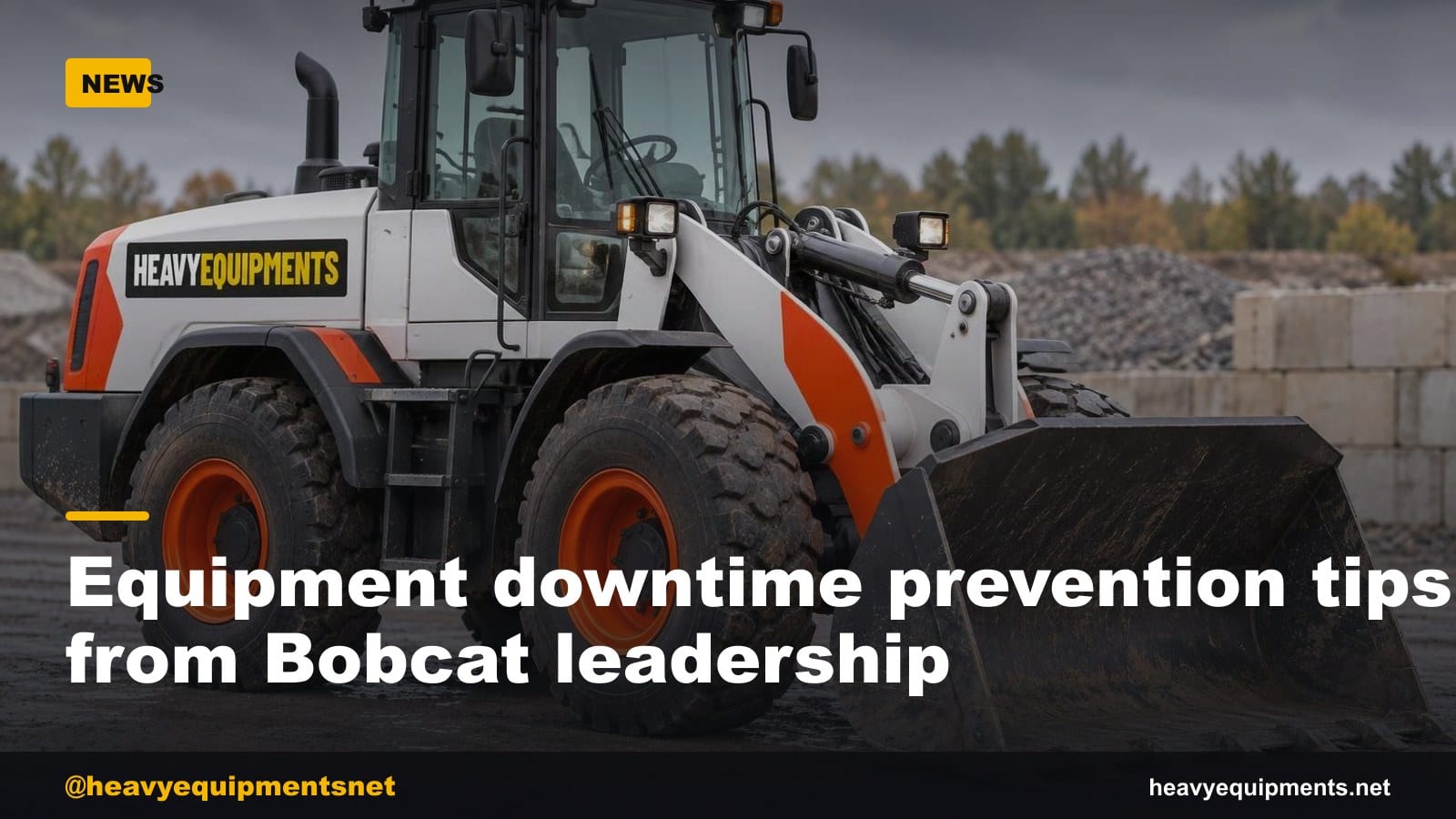
Equipment downtime prevention tips from Bobcat leadership
Bobcat’s Jeremy Bailey joins the Machine Heads video to lay out simple maintenance habits that cut downtime. Here is what it means for your fleet and what to do.
Equipment downtime prevention took center stage on November 9, 2026, when Compact Equipment published a new Machine Heads video with Jeremy Bailey, Director of Parts for Bobcat’s Portable Power division. Bailey and host Wayne Grayson cut through the noise and talk about the habits that actually keep machines earning.
The episode, reported by compactequip.com, digs into preventative maintenance, the hidden cost of downtime, and how simple choices with coolers, filters, fuel and DEF ripple into reliability and resale. Grayson has more than 10 years of experience covering equipment and has produced hundreds of videos, so this is grounded in field reality, not theory.
What happened
Machine Heads welcomed Bailey for a practical conversation focused on keeping compact equipment and portable power assets working. The discussion calls out three common problem areas that owners overlook, dirty coolers, neglected filters, and sloppy handling of fuel or DEF. The pair also highlight the value of OEM parts and basic service records to reinforce a maintenance routine and to document care when you sell or trade.
For buyers and operators, this is a reminder that most failures do not start as big failures. They start as small heat, filtration, or contamination issues that compound. The video is not a sales pitch. It is a checklist of bad habits to stop and good habits to start.
Why coolers, filters and fluids matter
Bailey singles out dirty coolers as a frequent root cause. When the cooling stack loads up with debris, the machine runs hotter. Heat shortens component life and can trigger nuisance shutdowns that balloon into real downtime. Cleaning the cooler and keeping air moving is one of the fastest ways to protect uptime.
Filters come next. Neglected filters let contaminants circulate, which accelerates wear and causes erratic performance. A filter that stays in service past its useful life also starves systems of flow. That shows up as sluggish hydraulics, weak starting, or codes that force you to stop work.
Poor fuel or DEF handling is the third land mine. Contaminated fuel or DEF causes misfires, injector issues, or aftertreatment faults. A bad batch can sideline a machine, and the fix is rarely quick. Clean storage, clean transfer, and capped containers are small steps that prevent big headaches.
Downtime warning signs to act on
The episode lays out warning signs owners should not ignore. Rising operating temperatures, fans running harder and longer, or a machine derating itself are signals to check the cooler stack. A machine that feels down on power or throws intermittent codes is asking for fresh filters and a contamination check. White crust around a DEF cap, discolored fluid, or odd odors are cues to flush and reset your handling routine.
None of these require special tools to notice. They require a walkaround with eyes open and a habit of addressing small problems when they are still small. That is the heart of equipment downtime prevention, catching issues before they stop a job.
OEM parts and service records
The conversation also hits the value of OEM parts. Fit, filtration media, and calibration consistency matter. Using the parts a system was designed around reduces the chances of a cascade of issues caused by an off-spec component. It also simplifies diagnosis because you are removing one variable.
Bailey and Grayson point out another upside, documentation. Simple service records make maintenance consistent and help prove care when it is time to sell or trade. Buyers pay attention to how a machine was treated. A folder or digital log that shows regular cooler cleaning, on-time filter swaps, and clean handling of fuel and DEF supports your asking position and moves deals forward faster.
What this means for your fleet
If you run compact machines, generators, compressors or any mobile assets, the message is clear. Uptime is built in the yard long before the machine hits the site. You do not control every variable on a job, but you control cooler cleanliness, filter condition, and the quality of what you pour into the tank. You also control whether there is a record that proves you cared.
There is no magic hour meter threshold in this guidance. The focus is on daily and weekly habits that stack reliability. It is also on de-risking resale. A tidy maintenance history shortens buyer hesitation and reduces back-and-forth when you list a machine.
What to do now
Put the takeaways from the Machine Heads video to work this week. Start with a fast audit, then make two or three habits stick. You do not need new tools or a new shop. You need consistency.
- Blow out and rinse cooler stacks on a routine your crew can keep
- Replace filters on time and write it down where you can find it
- Store and transfer fuel and DEF with clean, sealed containers
- Watch for heat, flow, or code changes and fix root causes early
- Use OEM parts so fit and performance are known quantities
If your team is light on records, build a simple template. Date, machine ID, work done, parts used, initials. Keep it in the cab or in a shared folder. When you go to sell or trade, that stack of entries is your proof of care.
Finally, share the video with your operators and techs. The discussion is from the Director of Parts for Bobcat’s Portable Power division, not a marketing deck. It will make sense to the folks turning wrenches and starting machines at daybreak.
For the full conversation and context, read and watch the coverage on compactequip.com. Wayne Grayson’s background, more than 10 years of reporting and hundreds of videos, helps keep it grounded in what matters on site.
Decision takeaway, the cheapest uptime you will ever buy is a clean cooler, fresh filters, careful fluids, OEM parts, and a log that proves it. Start there and your machines will spend more time working and less time waiting on a service truck.