Skid Steer Buyer Checklist for Inspecting Used Machines
A practical inspection checklist for skid steers for sale, focusing on loader pins and bushings, hydraulics, controls, and driveline, plus a spec table.
Why pins hydraulics and controls matter
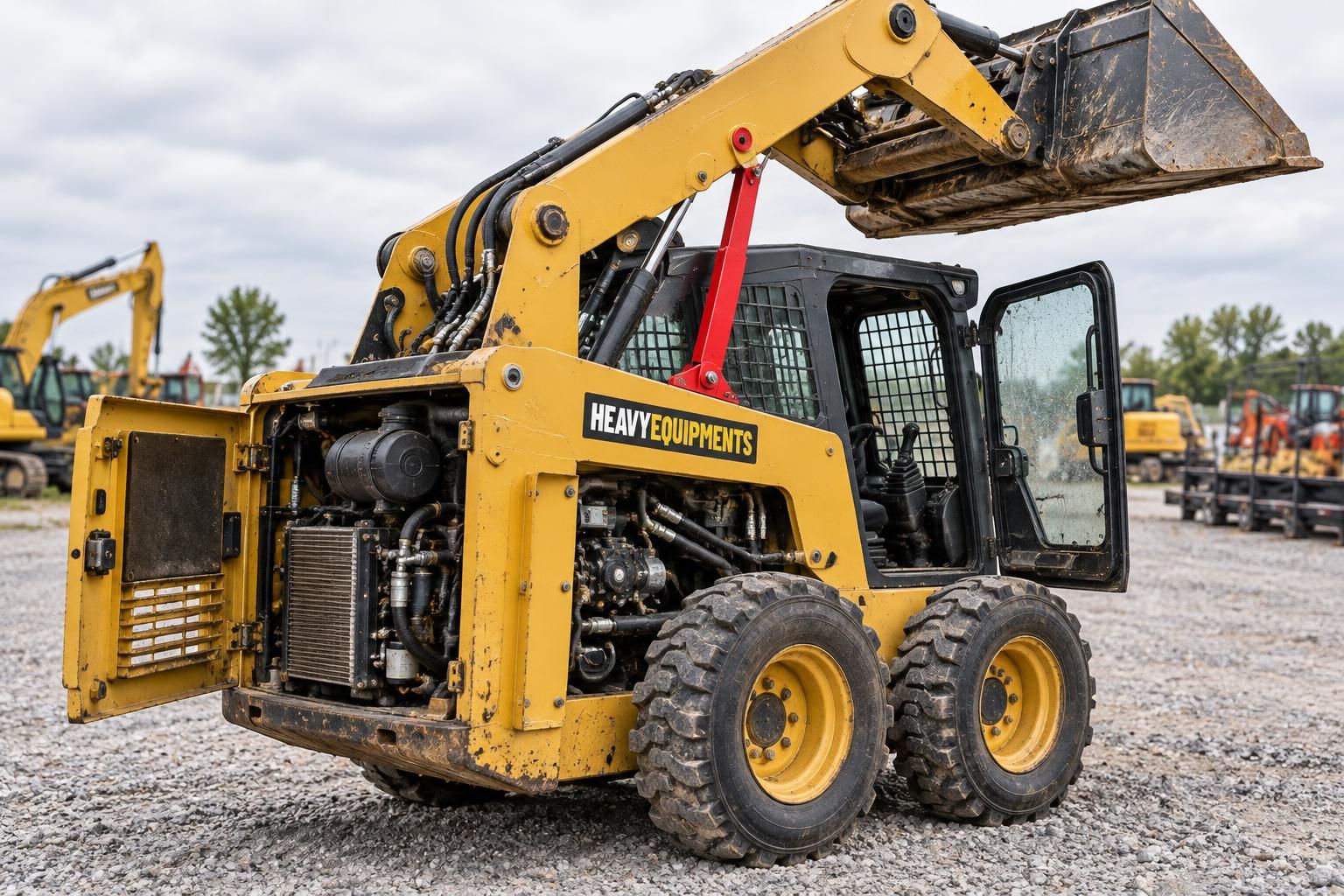
When you are evaluating a skid steer for sale, the biggest risks hide in the loader linkage, the hydraulic system, and how the machine behaves under load. This checklist targets those high cost areas first, then rounds out your inspection with drivetrain, tires, coupler, and attachments. If you are shopping a used skid steer for sale, a methodical inspection like this helps you separate a solid machine from a future shop project.
Lift path capacity and weight
Before you inspect, make sure the machine’s lift design and capacity fit your work. Radial lift machines generally excel at digging and grading, vertical lift machines shine at loading into trucks and handling pallets. The table below puts several popular models side by side so you can quickly gauge size class, power, and loads before you start condition checks.
| Model | Lift design | Horsepower | ROC @ 50% tipping | Operating weight | Tipping load | Tilt breakout force |
|---|---|---|---|---|---|---|
| Cat 246D | Radial | 55.4 kW (74.3 HP) | 975.2 kg (2150 lbs) | 3367.5 kg (7424 lbs) | 1950.4 kg (4300 lbs) | 3366.2 kg (7355 lbs) |
| Cat 272D | Vertical | 73.1 kW (98.0 HP) | 1451.5 kg (3200 lbs) | 3742.1 kg (8250 lbs) | 2903.0 kg (6400 lbs) | 3379.3 kg (7450 lbs) |
| John Deere 332G | Vertical | 74.6 kW (100.0 HP) | 1701 kg (3750 lbs) | 4540 kg (10000 lbs) | 3269 kg (7200 lbs) | 3519 kg (7750 lbs) |
| John Deere 328E | Vertical | 64.1 kW (86.0 HP) | 1270.1 kg (2800 lbs) | 3978.0 kg (8770 lbs) | 2540.1 kg (5600 lbs) | 2268.0 kg (5000 lbs) |
| Kubota SSV75 | Vertical | 55.4 kW (74.3 HP) | 1220.2 kg (2690 lbs) | 3819.8 kg (8421 lbs) | 2440.0 kg (5379 lbs) | 2667.1 kg (5880 lbs) |
| Bobcat S650 | Vertical | 55.4 kW (74.3 HP) | 1220.2 kg (2690 lbs) | 3777.1 kg (8327 lbs) | 2440.3 kg (5380 lbs) | 2313.3 kg (5100 lbs) |
| Bobcat S750 | Vertical | 63.4 kW (85.0 HP) | 1451.5 kg (3200 lbs) | 4033.8 kg (8893 lbs) | 2903.0 kg (6400 lbs) | 3052.7 kg (6730 lbs) |
| Case 95XT | Radial | 63.4 kW (85.0 HP) | 1428.8 kg (3150 lbs) | 4105.0 kg (9050 lbs) | 2857.6 kg (6300 lbs) | 2800.9 kg (6175 lbs) |
Use this table to sanity-check if a machine’s class fits your work. For example, a high capacity john deere skid steer like the 332G carries strong tilt breakout; that puts extra stress on pins and bushings, so your inspection there matters even more. Likewise, a mid class kubota skid steer like the SSV75 offers ample ROC for pallets, verify the coupler and auxiliary hydraulics match your attachments.
Loader pins and bushings wear checks
Loader linkage wear is among the most expensive surprises on a used machine. Focus on these points:
- Bucket quick coupler and tilt linkage: With the engine off and the loader raised safely or set on stands, curl and uncurl by hand. Feel for play at the coupler, tilt cylinder rod ends, and bucket ears. Excessive slop often shows up first here.
- Lower and upper boom pins: Watch for ovaled bores, hammered grease seals, and mismatched hardware. Fresh paint over dry joints is a red flag.
- Side to side looseness: With the bucket flat on the ground, push the arms laterally. Movement at the tower pivots points to bushing wear.
- Grease history: Uniform, clean grease at all zerks is encouraging. Dry, rusty pins or uneven grease patterns suggest deferred maintenance.
- Match wear to machine power: Models with higher tilt breakout, like the John Deere 332G at 3519 kg (7750 lbs) or the Cat 272D at 3379.3 kg (7450 lbs), deserve extra scrutiny at tilt links.
Decision tip: A little cosmetic rattle is common; clunking you can feel in the cab under load usually means budget for pins and bushings and potential line boring.
Hydraulics cylinders hoses and auxiliary flow
Hydraulics run the show on any cat skid steer, Bobcat, Deere, or Case. Confirm that the system builds power smoothly, holds without drifting, and stays leak free.
- Cylinders: Extend and retract tilt and lift fully. Hold at end of travel for several seconds and watch for hose ballooning, cylinder weeping, or relief chatter.
- Holds and drift: Raise the boom mid stroke and hold. It should stay put without dropping. Repeat with the bucket curled and dumped.
- Hoses and fittings: Look for wetness at crimp collars, abrasion at frame pass throughs, and chafed spots under the cab and around the coupler.
- Auxiliary hydraulics: Couple a known good attachment and verify smooth function both directions. Check couplers for leaks under pressure and make sure case drain (if required by your tool) is present and clean.
- Pump performance: Response should be crisp from idle to work RPM. As a reminder of variability across models, an older John Deere 125 lists a pump capacity of 56.8 LPM (15.0 GPM), confirm the machine you are buying meets your attachment’s needs.
Decision tip: Inconsistent speed or noisy operation under load can indicate pump wear or relief valve issues. Oil leaks at the motor face or sprocket seals point to more involved repairs.
Drivetrain tires and brakes checklist
On wheeled skid steers, you are inspecting chain cases, drive motors, and tires as a system.
- Cold start travel: From a standstill, drive straight at walking speed and then faster. It should track straight without constant correction. Pulls can point to motor, chain, or pressure balance issues.
- Counter rotation: Pivot left and right in place. Jerky response or hesitation can indicate hydraulic or control problems.
- Braking and park brake: The park brake should set positively and release without lag. On a slope, it must hold.
- Tires: Even wear across all four corners is the goal. Mismatched diameters or severe chunking strain the driveline.
- Chain case and hubs: Inspect for oil at case bolts and axle seals. Milky oil on dipsticks or breathers (if equipped) suggests water intrusion.
Decision tip: Strong machines like the Bobcat S750 and Case 95XT put plenty of torque to the ground. Mismatched or worn tires can mask deeper tracking issues during a short demo, look closely.
Controls electronics and cab checks
Whether hand or foot controls or joystick controls, you want consistent, predictable response.
- Start up and warnings: All lights should cycle on, then off. No persistent fault lights.
- Control response: Lift, tilt, and drive should respond linearly. Excess deadband or sudden surges can indicate calibration or valve concerns.
- Safety interlocks: Seat switch, seat bar, and door interlocks should enable or disable hydraulics correctly.
- Cab condition: Check harness routing behind panels and at the floor. Water staining under mats hints at past leaks.
- Ride and visibility: On a short run with the arms raised safely, listen for rubbing or harness pinch points.
Decision tip: If the machine creeps at neutral, needs frequent trim to go straight, or surges when you feather controls, plan for diagnostics and setup work.
Coupler bucket and attachments
The work tool interface is where productivity lives. Verify compatibility and condition:
- Coupler: Locking pins should engage fully. Inspect pin tips and the bores on your bucket or forks.
- Bucket and cutting edge: Look for scalloped edges, cracked welds at corner gussets, and floor plate buckling.
- Aux lines at the coupler: Cycle the auxiliary circuit with an attachment installed and look for leaks at quick connects.
- Match class to tools: Mid class machines like the Kubota SSV75 and Bobcat S650 carry ROC near 1220 kg (2690 lbs), confirm your forks, brooms, or planers are sized accordingly.
If you need different tools than the seller includes, you can source options in our attachments and parts catalogs.
Quick fifteen minute field test
Use this quick sequence to stress the systems that matter:
- Walkaround: Check for fresh leaks, loose hardware, and cracked glass or guards.
- Cold start: Listen for smooth idle. Verify warning lights clear.
- Hydraulic function: Full lift and tilt cycles, then hold at relief. Watch for drift or weeping.
- Drive: Straight runs, counter rotations, and controlled stops. Confirm park brake hold.
- Load test: With a bucket of material or a pallet weight appropriate for the class (see the ROC in the table), lift, carry, and tip. Feel for clunks at pins and confirm stability.
- Aux hydraulics: Run a powered attachment, both directions, and check couplers afterward.
- Final inspection: Recheck for new leaks and heat at hubs, motors, and hose groups.
Note: If you are comparing similar models (for example, Cat 246D radial vs. a vertical lift option like the John Deere 328E), keep your tests identical so differences you feel are about the machine, not your process.
Next steps compare shortlist and shop
Move from inspection tips to action with this plan:
- Compare specs for finalists side by side in our specs compare tool and browse more details in Specs.
- Browse current listings to find a skid steer for sale that matches your capacity and lift path needs.
- If you only need short term iron, check availability in Rentals.
- Line up the right attachments and keep maintenance handled with parts.
With a disciplined inspection focused on pins and bushings, hydraulics, and control behavior, and the table above to keep size class in view, you can pick the right machine and avoid costly surprises on your next skid steer purchase.