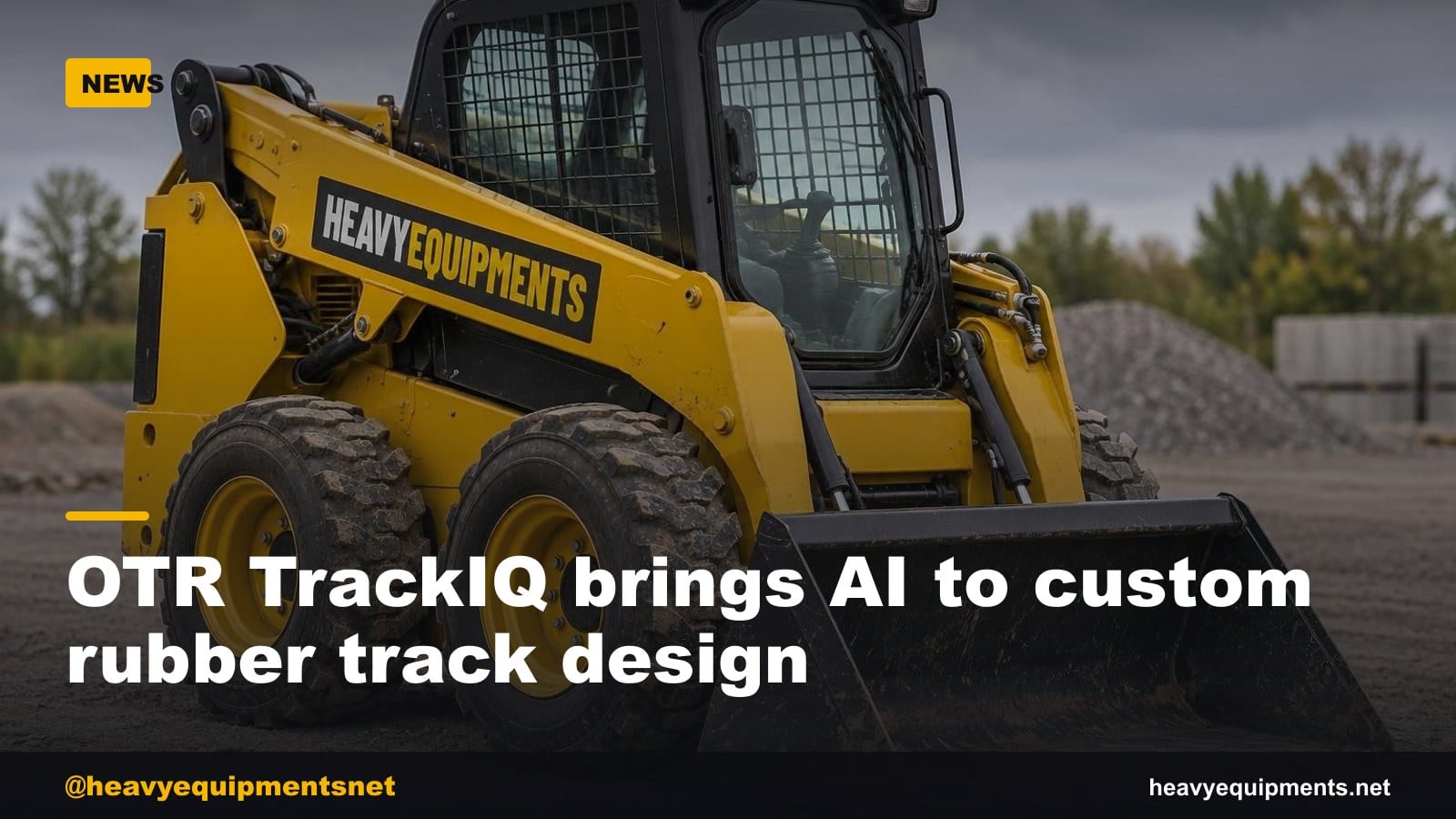
OTR TrackIQ brings AI to custom rubber track design
OTR launches TrackIQ, an AI-assisted custom rubber track design platform for OEMs and distributors. Here is what faster, data-driven track design means for you.
OTR TrackIQ debuts as an AI-assisted platform for custom rubber track design, announced by OTR Engineered Solutions on Nov. 3, 2026. The launch was reported by compactequip.com.
TrackIQ pairs AI tools with OTR’s 40 years of engineering experience and direct customer input. The goal is faster concepting, clearer trade-off decisions, and a more collaborative path from requirement to 3D track concept.
What launched
OTR Engineered Solutions introduced TrackIQ, a software platform that helps design rubber tracks for OEMs and distributors. Company officials describe a process where engineers and customers work together in real time, feed performance and aesthetic requirements into the system, and receive 3D concepts for review without waiting on a lengthy back-and-forth. The intent is to speed up custom track design while keeping engineering standards intact.
TrackIQ is part of a broader toolset at OTR. It sits alongside TreadIQ, an AI-assisted tire concept design platform, and OTR3DLab, the company’s larger-scale physical prototyping software. Together, these tools are meant to carry a customer from application-specific needs through digital concepts and on toward prototype work, all with faster iteration cycles.
How TrackIQ works for design trade-offs
The platform provides detailed trade-off analyses that compare tread patterns across core performance areas. The metrics called out by OTR include traction, ride quality, handling, and durability. That matters because you rarely get every attribute at once. For example, a tread or carcass decision that improves traction may affect ride or wear. With TrackIQ, OTR says buyers and engineers can see those impacts side by side during concept reviews instead of discovering them late in the process.
Officials say the software is designed to fold customer feedback directly into the design session. If a customer needs a certain look, or a certain balance of grip and comfort, those inputs can be modeled and visualized as new 3D concepts for immediate evaluation. That shortens the loop between requirement, design change, and review.
What it means for contractors and fleets
If you specify or source rubber tracks through an OEM or a distributor, earlier visibility into design trade-offs can save time and reduce misfires. TrackIQ aims to tighten the fit between how you actually work and what the track delivers. That is useful if your jobs push traction in loose soils, prioritize operator comfort on long transport runs, or demand specific handling and wear characteristics in mixed terrain.
Because TrackIQ is aimed at OEMs and distributors, contractors and farmers will most often feel the impact through the equipment maker or the track supplier they already use. Expect faster concept proposals for application-specific tracks and clearer explanations of what each tread choice gives up or gains across traction, ride, handling, and durability.
The company also states it is the first and only provider currently offering this type of AI-assisted custom track design service. If your machines depend on rubber tracks and you need something dialed to a specific application, this claim signals a potential new path to get there.
Where this applies
OTR says its AI design platforms serve OEMs across construction, landscaping, agriculture, mining, material handling, and other machinery applications. Rubber tracks are common across many of these sectors. A design workflow that can present multiple tread concepts quickly, with quantified trade-offs, helps when you run in varied materials, face seasonal swings, or manage mixed fleets that need different track behaviors.
For buyers who operate in several environments across a season, the ability to compare concepts against traction and ride targets can help prevent over- or under-spec decisions. If you manage a small fleet, the benefit is not just speed, it is confidence that the selected design reflects the conditions that matter most to your crew.
How to act now
TrackIQ is a tool for OEMs and distributors, but end users can steer the process by tightening up requirements and asking for a TrackIQ-backed review from their suppliers. Use the platform’s focus areas to frame your ask.
- Document your traction, ride, handling, and durability priorities in order
- Describe surfaces and loads that cause failures or downtime
- Ask your OEM or distributor if OTR TrackIQ can model your requirements
- Request multiple concepts with trade-off summaries you can compare
- Confirm how concepts move into OTR3DLab for prototyping if needed
What changes in the buying process
Instead of picking a track based mainly on general application labels, TrackIQ supports requirement-driven concepting. You can weigh tread options against the four metrics OTR highlights, and match them to the work you actually do. That reduces guesswork. Rapid 3D concept generation also makes it easier to react to new jobs or site conditions, because a supplier can show you options earlier in the calendar.
The tie-in with TreadIQ and OTR3DLab suggests a continuum from idea to prototype. While the article on compactequip.com does not list timelines, the stated goal is faster movement through application-specific design steps. For customers, that can translate into more iterations before a season starts, or quicker pivoting when a current track design is not meeting expectations.
Who benefits and what to watch
OEMs gain a faster path to new track options that align with branded performance targets. Distributors get clearer tools to match customers with the right concept. Contractors, farmers, and small fleet owners benefit when the upstream design conversation yields a track that fits the ground truth of their sites. That might mean a tread layout that grips better in wet soils, or a compound and pattern that ride smoother on hard surfaces, or a design that aims for longer service in abrasive conditions.
Keep an eye on how widely TrackIQ-designed options appear in your supplier’s catalog. Pay attention to how well the trade-off summaries track with your crew’s seat time. If the promised collaboration tightens, you should see fewer surprises after install, because the key compromises were discussed up front.
The bottom line
OTR TrackIQ brings AI and four decades of engineering into a collaborative track design loop. If you buy or specify rubber tracks through an OEM or distributor, ask your supplier to run your requirements through the platform and show you the trade-offs. A clearer line from job conditions to track concept helps you make a clean decision and keep the machines moving.