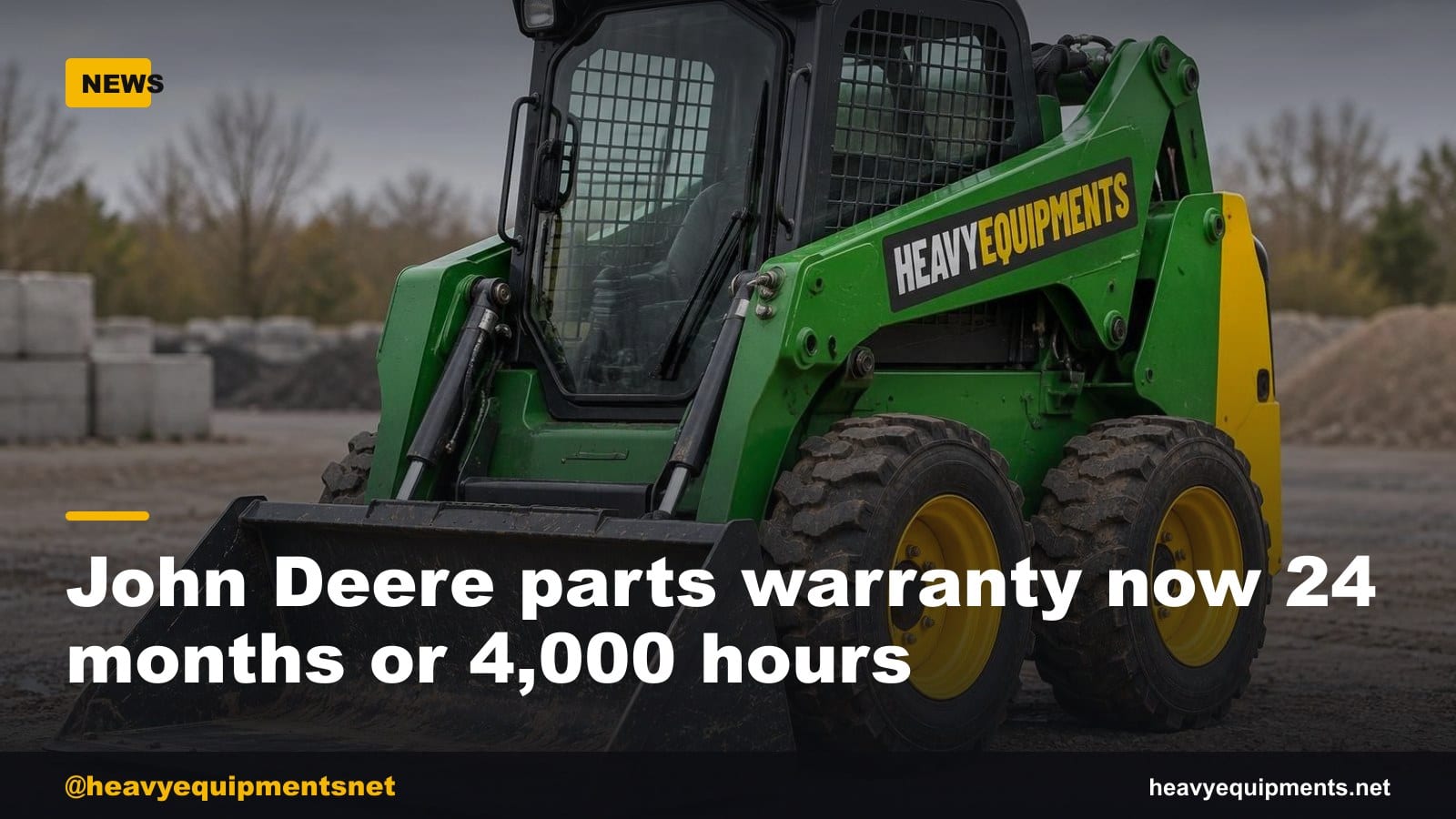
John Deere parts warranty now 24 months or 4,000 hours
Deere doubled coverage for eligible OEM service and repair parts to 24 months or 4,000 hours, effective Nov. 1, 2026. Here is what that means on your jobs.
John Deere parts warranty expands on Nov. 1, 2026, with eligible OEM service and repair parts moving from 12 to 24 months of coverage or 4,000 machine hours, as reported by compactequip.com. Deere says this doubles the period on qualifying parts to give owners more flexibility and value across the life of their machines.
Coverage details matter at install time. If a John Deere dealer installs an eligible part, the first 12 months include parts and dealer labor. If you or a non‑Deere provider install the part, coverage is parts only. Deere notes that standard terms and exclusions still apply.
What changed for parts coverage
Deere is extending the warranty window on eligible John Deere Original Equipment service and repair parts from 12 to 24 months, and it now includes up to 4,000 machine hours. The company frames this as an investment in the ownership experience, backing up the parts used to keep existing machines working. The change is effective Nov. 1, 2026, so parts installed on or after that date can qualify under the expanded terms, subject to eligibility.
For contractors and farmers, the key shift is time and hours. If your machines rack up hours quickly, the hour cap matters. If your fleet runs lighter duty or seasonal work, the longer calendar window helps. Either way, a longer backstop on eligible parts reduces the chance you pay for a second fix inside that period.
Dealer install versus do it yourself
The expanded program treats labor differently based on who installs the part. Deere states that eligible dealer‑installed parts include parts and dealer labor during the first 12 months. That can shield you from a second labor hit if a covered part fails in that first year. If you install the part yourself or hire a non‑Deere shop, coverage is parts only, which keeps material costs protected but leaves you on the hook for labor if a covered claim arises.
That tradeoff gives you a clear lever. When the repair involves deep teardown or hard‑to‑reach components, dealer install can lower risk because labor is in play for 12 months. For simpler bolt‑on parts where labor time is low, self install may still pencil out. Either way, document the install date, machine hours at install, the work order or receipt, and the part number so any future claim is straightforward.
Parts choices across the lifecycle
Deere also points to broader aftermarket options that fit different fleet strategies. The company highlights remanufactured components for cost effectiveness, along with value‑focused parts aimed at equipment later in its lifespan. Pairing those choices with the longer warranty window can help you plan major refreshes and keep older units producing without over‑investing. Match part type to the asset’s remaining service plan, then decide on dealer install if the labor coverage adds value in that first year.
Because all coverage is still subject to applicable terms and exclusions, ask your dealer to confirm which part numbers qualify before you buy. Clarify any requirements on proof of purchase, installation documentation, and hour tracking so there are no surprises at claim time.
Tools that support repair choice
Through its Run It Your Way effort, Deere says it is widening access to information and tools that support different repair paths. Resources named in the report include John Deere Operations Center™, Equipment Mobile, Shop.Deere.com, and Operations Center PRO Service. Deere positions these to support you if you work with a John Deere dealer, choose another service provider, or turn the wrenches yourself.
For owners and small fleets, that mix can streamline how you identify parts, schedule work, and log machine hours against warranty windows. Use these tools to track installation dates and current hours, then set reminders so you can act quickly if an issue appears inside the coverage period.
What to do now
The policy takes effect on Nov. 1, 2026. If you run green iron, a short prep list will help you capture the benefit without slowing jobs.
- Confirm eligibility of the specific part numbers you plan to install after Nov. 1, 2026
- Decide dealer install versus self install, based on whether 12 months of labor coverage changes your risk
- Record installation date, machine hours at install, and keep the work order or receipt with part numbers
- Ask your dealer how claims are processed and what documentation speeds approval
- Use Operations Center tools to track hours and flag issues inside the coverage window
Impact on ownership costs
Deere states the expanded warranty is one of several steps aimed at helping customers manage ownership costs and get more value from their equipment. Longer coverage on eligible OEM parts can reduce unplanned spend on repeat failures inside the window, especially on high‑use machines that accumulate hours fast. The difference in labor coverage by installer gives you a way to tune risk on big jobs, while parts‑only coverage still protects material costs if you prefer to do the work yourself or use a local shop.
For fleet managers, this change can influence stocking and scheduling. You might shift certain replacements into the effective window so the new terms apply, if timing and uptime allow. You can also review which repairs should move to dealer install when the potential labor exposure is highest in the first year. Align those choices with reman or value‑focused parts where appropriate to balance cost and uptime across your fleet.
How to talk to your dealer
Before you order, have your serial number, current machine hours, and a list of target part numbers. Ask the parts counter to verify eligibility under the new policy and to note dealer‑install labor coverage on the estimate for the first 12 months where it applies. Clarify any exclusions that could affect your use case, such as environmental conditions, improper installation, or maintenance gaps. Confirm how hour limits are recorded on the claim, and where to upload receipts or work orders if you use Operations Center tools.
Finally, check how the policy applies to mixed installs. If you do part of the work and the dealer does the rest, make sure the invoice clearly states which items the dealer installed so coverage is clear.
The reporting from compactequip.com makes the direction plain. Deere doubled the period for eligible OEM parts to 24 months or 4,000 hours, dealer install brings labor into the first 12 months, and self or third‑party installs remain parts only. If you buy or run Deere equipment, factor the longer John Deere parts warranty into your maintenance plan, pick dealer install when first‑year labor coverage moves the needle, and use Deere’s tools to document hours and dates so any claim is quick and clean.