Doosan DX190W-5 buying guide performance and checks
Specs-based guide to the Doosan DX190W-5. See what its depth, reach, speed, and capacities mean on the job, plus a tight checklist for new or used buys.
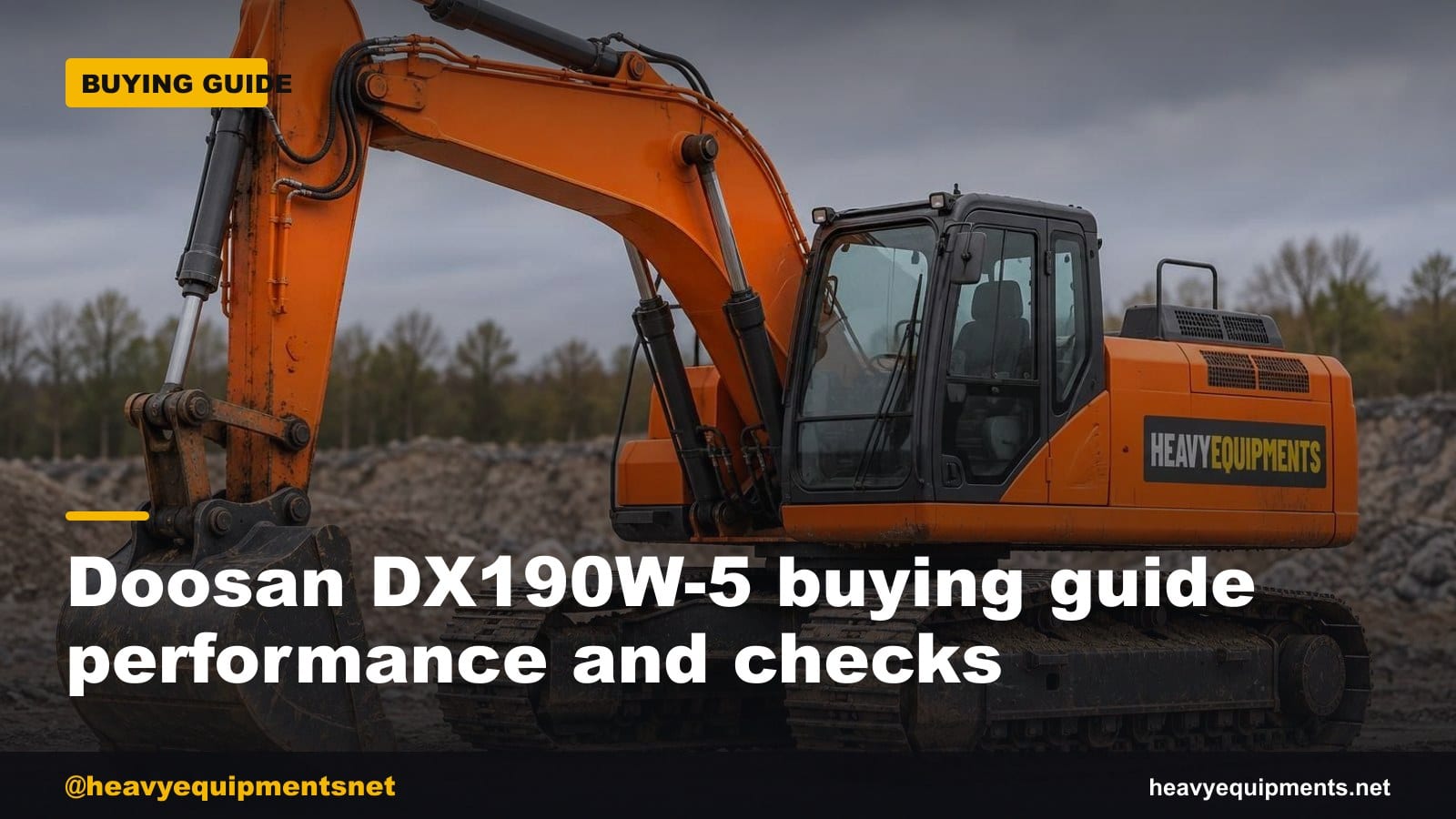
The Doosan DX190W-5 is a wheeled excavator with 19700 kg operating weight and 125 kW net power. It roads at a listed 35.1 km or 21.8 mph, so it can move site to site without a trailer in many cases and still carry the reach and depth needed for city utility work.
Buyers look at depth, reach, speed, and fluids first, then match that to trench runs, street openings, and plant work. This guide reads the numbers that matter, explains what they mean in the field, and lays out what to check before you sign on a new or used unit.
Power and torque on the job
The engine is Doosan branded and rated at 125 kW net power with a 129 kW gross figure. Rated power arrives at 1900 RPM, with 755.2 Nm of torque listed at 1400 RPM. That pairing tells you how the machine will feel when you load the hydraulics with travel, swing, and an implement at the same time. Peak torque down at 1400 RPM helps the excavator hold speed and response when you feather multiple functions in tight work, like setting structures or trimming a trench bottom next to traffic.
Net power at 125 kW, or 167 HP, fits the weight and geometry here. It is enough to keep cycles snappy without spinning the engine hard all day. The gross power number at 129 kW, or 173.5 hp, is a paper spec most shops glance at, but it gives you the margin the cooling and parasitics take before power reaches the pumps. For buyers, the takeaway is simple, this is not a light wheeled tool carrier, it has real excavator power for road and plant duty.
Dig depth reach and height
Max digging depth is 573 cm, and the digging depth spec repeats at 573 cm. That puts most municipal and site utility trenches in range without benching or extra repositioning. You can punch through crossings, get services in, and clean up without dragging a crawler undercarriage down the pavement.
Max reach along the ground is 905.3 cm, and max loading height is 676.7 cm. The reach number matters when you work off the shoulder and need to stay out of live lanes. The loading height gives you confidence when you side load high-sided trucks or stockpile against barriers. Match these to your common truck bodies and staging plans. Fewer moves mean better daily production on streets and in plants.
Travel speed and swing
Wheeled excavators earn their keep by moving. The DX190W-5 lists a max travel speed of 35.1 km or 21.8 mph. That lets a crew finish a patch, fold up, and run to the next cut without calling a lowboy, subject to your local rules. On big industrial sites, that speed makes long moves between gates and work fronts painless. It also reduces idle time and deadhead costs.
Swing speed is listed at 10.9 RPM. In practice, that supports smooth truck loading and quick slews across a trench when you need to boom down, grab, and swing back without hunting the control. A 268.2 cm wheelbase supports stability while slewing with the front gear facing the work. You still set up smart on hard ground and use supports if equipped, but the base geometry is set for real excavating, not just light duty.
Dimensions and site fit
The overall length is 877.8 cm. That matters for parking in tight yards and for how much rectangle you occupy when you nose up to a dig. Cab height is 313.9 cm, or 123.6 in., which helps you plan for door clearances, low utilities inside plants, and lowbridge moves when roading. Measure your gates and overheads and keep that number in mind.
Operating weight is 19700 kg, or 43431 lbs. That is the mass you feel in braking, lane changes, and on plates. It is also what you plan around for transport and permits when you do put it on a trailer. A wheeled machine at this weight gives you a steady platform for lifting and trenching on hardstand, yet it is still nimble enough for city blocks.
Fuel and service capacity
The fuel tank holds 310.0 l, or 81.9 gal. That is a full day for many road and plant shifts, with reserve to run lights and a cleanup at the end. Actual burn depends on load and operator, but the size gives you planning room for long roading legs and high idle accessory time.
Cooling system capacity is 24.2 l, and engine oil capacity is 25.0 l. Those are shop numbers with practical use on a prebuy, they help you verify fill levels and look for signs of neglect. Coolant color and oil condition tell stories. Match what you see to the stated capacities to spot low fills or foaming that signal leaks, cross contamination, or poor service practices. A machine that holds spec fluids cleanly is a machine you can put to work faster.
Prebuy inspection checklist
- Road test to the listed 35.1 km or 21.8 mph if possible, check straight line tracking, braking, and listen for driveline vibration or axle noise
- Check swing at slow and fast speeds, 10.9 RPM is the spec ceiling, feel for notchiness and look for slew bearing play or leaking seals
- Inspect boom, stick, and bucket linkage for cracks and pin wear, cycle the implement and hold against relief to check for drift and hose leaks
- Look over tires, steering joints, and hubs for cuts, loose knuckles, and oil weeps, then verify wheelbase stance is square under the upper when parked
- Open the covers, check coolant and engine oil against the 24.2 l and 25.0 l systems, look for blowby, hard starting, smoke at 1900 RPM, and clean radiator cores
Who it suits and how to decide
This machine fits municipal and contractor fleets that live on pavement and hardstand. With 573 cm max digging depth and 905.3 cm reach along the ground, it handles most service laterals, crossings, manhole work, and plant utility runs without moving mats or washing tracks all day. The 676.7 cm loading height works for side loading trucks and feeding bins. The travel number at 35.1 km or 21.8 mph cuts dead time between small jobs.
If you work soft ground, steep grades, or deep mass excavation, a crawler might suit those conditions better. If you need more reach or to dig deeper than 573 cm on a daily basis, you may want to size up. For buyers who split time between trenching, light lifting, and city patch work, the Doosan DX190W-5 brings a balanced set of numbers you can plan around.
Decision takeaway, if your work mixes paved roading, 573 cm digs, 905.3 cm reaches, and frequent truck loading to 676.7 cm, this model earns a hard look, check a clean road test, tight swing, and clean fluids, then go to the listing page to match a unit to your fleet.