Case 21F maintenance and running cost checklist guide
What drives upkeep on a compact wheel loader and how to judge a used unit. Fluids, hydrostatic drive, hydraulics, tires and the records to request on a Case 21F.
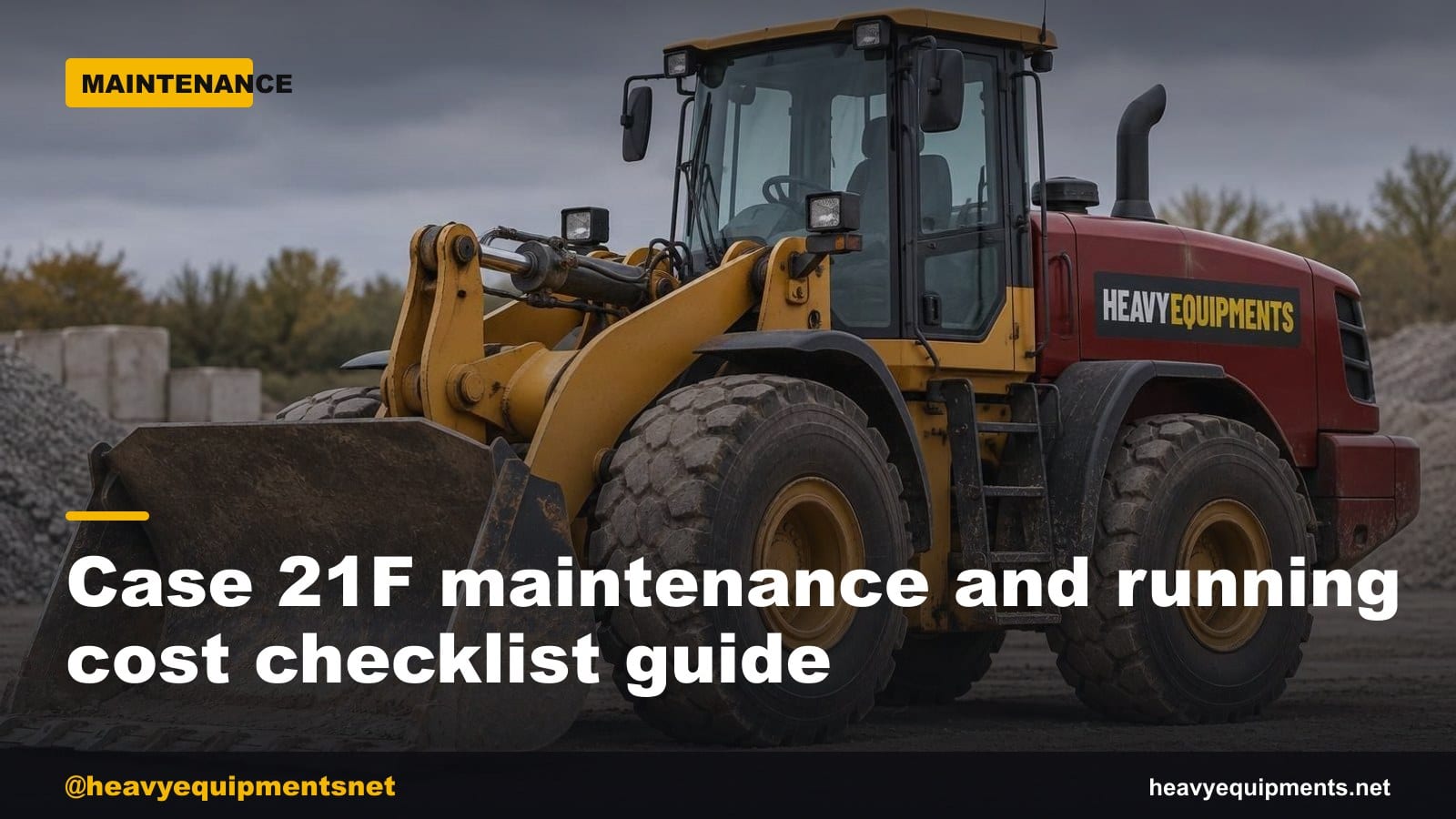
The Case 21F is a compact wheel loader with 41.0 kW net power and an operating weight of 5112.0 kg. Buyers like it for tight sites and light material handling, but its running cost still hinges on fluids, hydrostatic health, hydraulics, and tires. Use the capacities and layout of this model to plan upkeep and to judge a used unit before you buy.
This machine carries a 0.7 m³ heaped bucket, a breakout force of 4168.5 kg, and a 304.8 cm bucket hinge pin height. It tops out at 20.1 km/h. Those specs put it in the small-loader class, which usually means smaller fluid fills and tires than big loaders, so parts and service bills tend to be more manageable when maintained on time.
What drives operating cost on this loader
Fuel, fluids, tires, and wear parts set the tone for day-to-day spend. The Case 21F runs a 4-stroke FPT F5H FL463 B F001 engine rated 55 hp at 2500 RPM, with peak torque of 245 Nm at 1400 RPM. That torque curve helps it work at lower engine speed without constant stalling, which is friendly to fuel use and noise. An 86.3 l fuel tank dictates refuel frequency on long shifts. Engine oil capacity is 7.2 l, cooling system is 13.2 l, and the hydraulic system holds 53.4 l. Front and rear differentials hold 8.3 l and 9.8 l. These numbers matter, they are the fluid volumes you pay to replace during services.
The hydrostatic transmission and the gear pump hydraulic system shape repair risk and productivity. Hydrostatic drives reward clean fluid and filters. Gear pumps are simple, but they still need clean oil to protect spools and cylinder seals. Tires take a beating on hard surfaces and can be a top ticket item over the life of the machine. Operator behavior and job type will tilt costs as well. Frequent roading at 20.1 km/h, constant V-cycle loading in rock, or lots of cold starts all add up over time.
Engine and cooling system care
The 4-cylinder FPT engine with 3392.1 cc displacement is the heart of uptime. Ask for documented engine oil and filter service history, plus any oil analysis. With a 7.2 l oil fill, a missed change is not a huge parts bill to fix, but repeated neglect risks bearings and turbo health. Look for clean cold starts, steady idle at 2500 RPM rated speed when commanded, and no blow-by haze under load.
Cooling capacity is 13.2 l, so coolant condition matters. Check for scale or oily film in the expansion tank, and confirm coolant change records. Overheating shortens oil life and can warp a head. Inspect the radiator fins for packing and the fan area for belt dust. Pressure test if possible. A compact loader works in debris, so take time to look behind guards for packed chaff that drives temps up.
Electrical supply supports reliable starts and cab functions. The alternator is rated 120 amps. Verify charge voltage at high idle with lights and HVAC on, and check connectors for green corrosion. Weak charging makes glow plug and starting complaints look like fuel issues, which sends you chasing the wrong repair.
Hydrostatic drive and axle lube
The transmission is hydrostatic with 2 forward and 2 reverse ranges, up to 20.1 km/h in either direction. Smooth take-up from a stop and steady pull on a ramp tell you a lot about hydrostatic health. Jerky response, a loud whine, or fading torque when warm hint at wear. Ask for records of hydrostatic oil and filter changes, and any case drain flow checks or charge pressure checks done by a dealer.
The differentials hold 8.3 l in the front and 9.8 l in the rear. Request axle oil change receipts and magnet plug photos if the seller has them. Silver fuzz is normal, chunky metal is not. Inspect hub seals for weeping and look at tire inner sidewalls for sling marks. Drive the machine figure-eights to listen for clicking under load.
Because the loader weighs 5112.0 kg, it is light compared to full-size loaders, which helps tire and driveline life when operated within its limits. Still, repeated shock loads from curb hopping or running with an overfull bucket will show up as play in U-joints, axle bearings, or articulation pins, so plan to check those points.
Hydraulics and loader linkage
The hydraulic system capacity is 53.4 l and the pump is a gear type flowing 67.0 LPM. At the controls, you should feel consistent speed and no chatter when feathering. Slow or uneven function can be a sign of contamination, sticking spools, or a weak pump. Look at all hoses for chafe, and cylinder rods for nicks in the chrome. Shine a light into the tank if possible and check for dark, burnt-smelling oil.
Loader geometry drives wear patterns. This model lists a bucket hinge pin at 304.8 cm and a dump clearance at max raise of 91.4 cm with 91.4 cm reach at max lift and dump. Confirm the lift and dump in person against your trucks or bins so you do not buy a cycle that needs a ramp to reach your target. Cycle the arms up and down while watching the bucket pins. Any step in motion or knock at direction changes points to pin and bushing wear. With a 0.7 m³ bucket and 4168.5 kg breakout force, a sloppy bucket linkage can waste a lot of that force on slop rather than the pile.
Tires, steering, and frame
Wheel loaders pay for neglect at the tires. The width over tires is 182.9 cm and wheelbase is 213.4 cm, so it is a narrow, nimble machine. That helps in alleys and barns but makes sidewall scuffing likely against curbs and forms. Look for even wear across all four tires and matching brands on each axle. Mismatched rolling circumference can load the driveline.
Articulation is the steering heart. Park on level ground, set the brake, and rock the bucket while watching the center hitch. Play there translates into poor load retention and frame shock. Ground clearance is 30.5 cm, so watch for belly pan and driveline dings on rough quarry floors. The overall length of 548.6 cm and cab height of 243.8 cm affect transport and site access. Measure your trailer deck height against that cab if you have low doors on the shop.
Cab, controls, and electrical
With a 120 amp alternator, the electrical system should support lights, HVAC, and any auxiliary power without dimming. Toggle all work lights and hazards. Wiggle harnesses at the joystick base and behind the seat, then recheck for faults. Sticky switches or intermittent faults point to time spent in dust or moisture. The cab height is 243.8 cm, so check the roof for branch damage and the door for latch alignment. A quiet, rattle-free cab tells you a lot about how the machine was treated.
Service records to ask for
- Engine oil and filter changes, plus any oil analysis on the 7.2 l fill
- Cooling system flushes and leak repairs on the 13.2 l system
- Hydraulic oil and filter changes on the 53.4 l system, plus contamination reports
- Hydrostatic drive service records, including any charge pressure or case drain checks
- Front and rear differential oil changes, 8.3 l and 9.8 l, with magnet plug notes
Also ask for cylinder reseal invoices, hose replacement dates, and any steering or articulation pin work. A stack of small, regular receipts is better than one big repair after a failure.
Productivity fit and daily habits
Match the machine to the job so it does not age fast. The 0.7 m³ bucket and 12.5 mph top speed suit short V-cycles and yard work. If your dump targets sit higher than the listed 91.4 cm dump clearance, plan on a raised pad or a different bucket profile. With the bucket hinge pin at 304.8 cm, you can judge pile height you can safely skim without crowding the stop limits. The 86.3 l fuel capacity sets your refuel plan for multi-shift days. Short trips and long idle time waste fuel and add soot. Train operators to keep engine speed near the 1400 RPM torque peak during pushes and to back out of the throttle during travel. That habit reduces heat in the hydrostat and saves tires.
Daily care is cheap insurance. Grease the linkage, clean the cooling pack, and blow out the cab filters. Those steps hold cycle speed and keep the hydrostat and engine out of the red. Because the machine is small and nimble, it often gets used as a shop mule. Do not let that turn into chronic overloading or ramming, which shows up as bent cutting edges and cracked buckets.
Decision takeaway, if you can verify clean fluids against the listed capacities, smooth hydrostatic operation, tight pins, and even tires, a cared-for compact loader like this can stay cheap to own. If the seller cannot produce records for the big fluid systems or the hydrostat feels weak when warm, keep shopping.