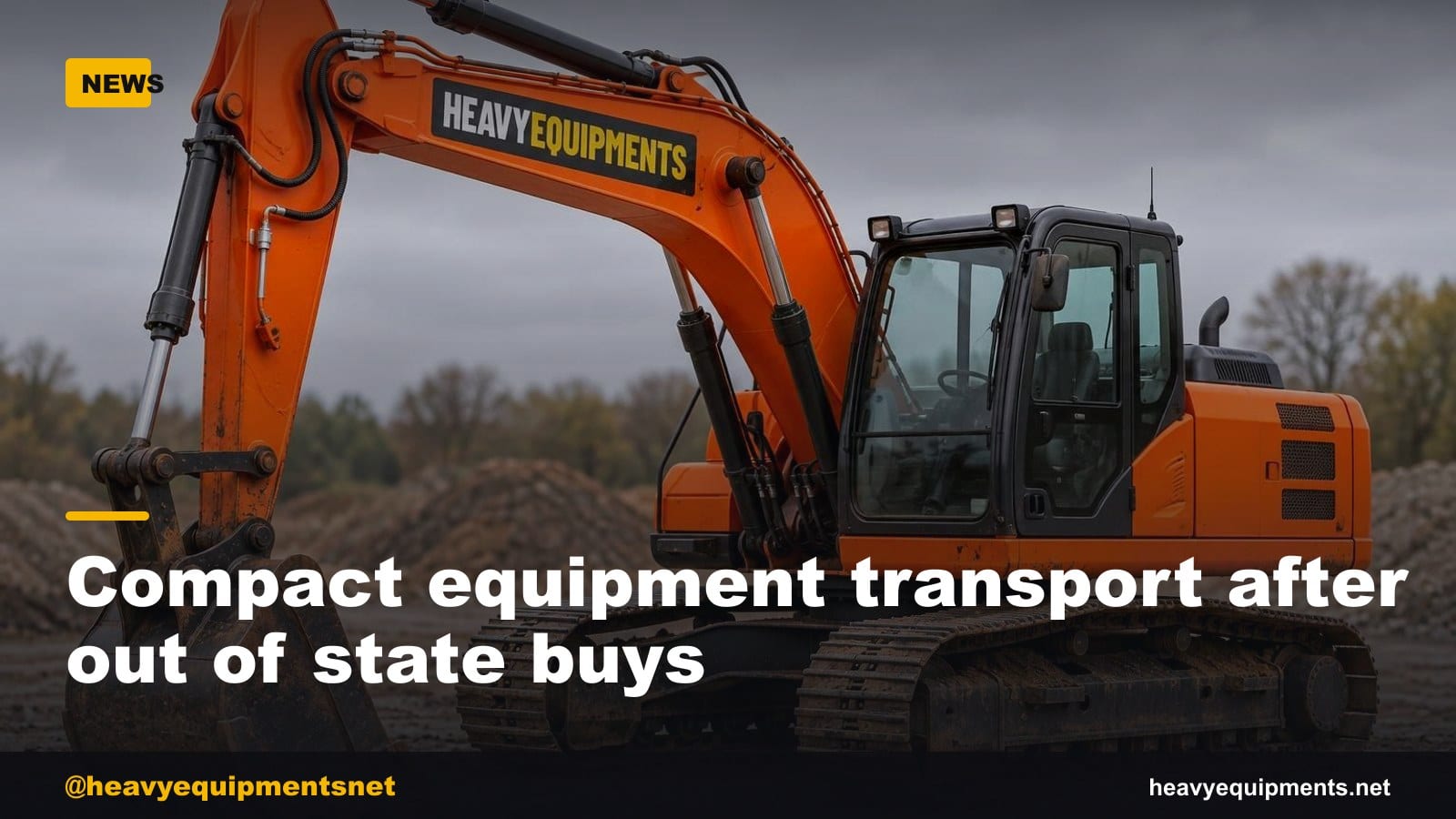
Compact equipment transport after out of state buys
Buying a compact excavator or skid steer out of state adds a second job, moving it home. Here is how to lock down release, dimensions, condition and delivery.
Compact equipment transport can go sideways fast after an out of state buy, so treat it like its own job. On November 16, 2026, compactequip.com published a practical transport checklist that starts with the exact machine on the ground, not a brochure spec or a model family.
The piece explains why a sale can be complete while the machine is still unready for pickup. It covers release documents, real travel dimensions, true operating condition and who is supplying ramps or lifting gear. The author, Jay Mays of Elevation Transport Services in Boca Raton, Florida, frames it simply, line up the facts that decide which truck shows up and whether it can load the first time.
Why this matters after an out of state buy
Buying a used compact excavator, skid steer or compact track loader from another state expands choices, then adds a second transaction, moving the iron home. If you skip the prep, you hand the problems to a driver at the gate. A yard that needs an appointment can turn a truck away. A machine that grew wider with a set of overhung tracks or forks can change the trailer you need. A unit that only “runs” but cannot climb a ramp will sit until someone produces a winch or a forklift.
According to compactequip.com, the way around this is to verify release and configuration before you dispatch a truck. Treat every change in dimensions, access or readiness as a trigger to update the load plan.
Release and pickup readiness
Start with the paperwork and the gate. Confirm the release number, paid status, pickup address, collection hours and whether you need an appointment. Identify the person who is authorized to release the machine and what documents the driver must show. Some facilities use separate entrances or have tight collection windows for commercial equipment, the driver needs to know where to go and when.
Do not send a carrier to solve ownership or payment questions. If you bought it remotely, get current photos and confirm the serial number or asset number matches the invoice. Ask if the machine is already staged in an accessible area or if yard staff must move it before loading. If the yard plans to swap a bucket or shift the unit to another lot, say so in advance since that can change timing and the load plan.
Dimensions, attachments and photos
Published specs are a starting point, not the exact load. Buckets, forks, hydraulic hammers, added counterweights, canopies and track packages can change overall length, width, height and weight. Ask for the machine’s current measurements in the configuration it will travel. For a compact excavator, record boom and stick position and whether the bucket will stay on. For a skid steer or a compact track loader, document what is on the front plate, forks, a bucket or another attachment.
If attachments will ride separately, list each item with its dimensions and weight. Request photos from the front, rear and both sides to show the configuration. Measure at the widest or tallest actual point, not just the base chassis. The measurements you hand a carrier drive the trailer selection and permit check, so they need to match what is on the deck on pickup day.
Running condition and loading plan
Runs does not always mean loads itself. Confirm whether the machine starts, moves, steers and brakes, and whether it can climb a suitable ramp under its own power. Ask directly about hydraulic leaks, flat tires, damaged tracks, disabled controls or a dead battery. If the unit is inoperable, plan for a winch, a forklift, a crane or another approved method. Spell out who is supplying an operator, ramps or lifting equipment, do not assume the seller will provide gear or labor.
Provide the actual condition to the transporter before a trailer is selected. A machine that only creeps or cannot steer may need a different loading method, a different trailer height or more deck space to make safe angles. The goal is simple, pick equipment that matches how the machine must be handled so the first attempt can load safely.
Trailer choice and permits
Flatbeds, step decks, lowboys and removable gooseneck trailers each solve different loading heights and angles. The right choice depends on shipping dimensions and weight, the loading method and the route. Combining multiple small machines or attachments on one trailer can make sense, but it must be checked, not assumed. Deck space, axle weights and securement points have to work for that specific set of items.
Permit needs ride with the loaded combination and with each jurisdiction on the route. A seller’s easy to ship comment is not a permit check. The carrier is still responsible for compliant loading and cargo securement, so give them true numbers and clear conditions. That is how you avoid a late permit discovery or a surprise reconfiguration in a parking lot.
Quote details and change control
Ask for a written quote that names the exact origin and destination, machine description, attachments, condition, the expected loading method and the anticipated pickup window. It should also separate pure transportation from yard storage, crane, forklift, escort or permit arrangements that might be needed. If the machine is not yet released, state that in writing so no one dispatches a truck to wait at the fence.
If the seller might substitute a different bucket or move the machine to another lot, flag that before finalizing the load plan. Changes in dimensions, access or readiness change the required equipment and the transport cost. Keeping the quote specific and current gives your carrier clear authority to pick the right trailer, arrive with the right gear and bill the right service.
Delivery site and receiving steps
Your job is not finished when the machine leaves the seller. Confirm the delivery address, the truck entrance, the surface conditions, the unloading equipment and who will accept the unit. A narrow driveway, soft ground or an overhead obstruction can make a simple delivery hard for a long trailer.
- Confirm a truck friendly entrance and turning room
- Check ground conditions where ramps will set
- Verify overhead clearance on the truck path
- Line up unloading gear or an operator if needed
- Name the person who will receive and sign
At delivery, compare the machine and attachments with the purchase and pickup records. Walk the unit, note visible condition and record any exceptions on the carrier’s delivery paperwork. Keep the serial number and accessory inventory together so any mismatch can be fixed while the truck is still on site.
Collect these 8 items before you approve transport. Invoice or auction release information, the make, model and serial or asset number, current photographs, the actual transport dimensions and weight, a separate attachment list, the starting, moving, steering and braking condition, loading and unloading responsibilities, and exact site contacts with access rules and timing.
The checklist from compactequip.com puts control of compact equipment transport back in your hands. If you are buying across state lines, pin down release, get current measurements with photos, state the true running condition and assign who brings ramps or a winch. Then book a carrier to match the load. That is how you keep the first truck from leaving empty and your new machine from sitting another week.