Walk Behind Skid Steers Capabilities, Limits, and Best Jobs
Thinking about a walk behind stand on mini skid steer? Here is when they shine, where a full size skid steer loader is the better fit, and how to match the tool to the task.
If you are weighing a walk behind skid steer (often called a stand-on or mini skid steer) against a full-size skid steer loader, the right choice depends on the work, the site, and your crew. The sections below outline what walk-behind and stand-on machines do well, where they struggle, and when a conventional skid steer is the smarter buy or rental. A spec table below shows how much more capacity and weight you get from popular full-size models.
What walk behind and mini skid loader mean
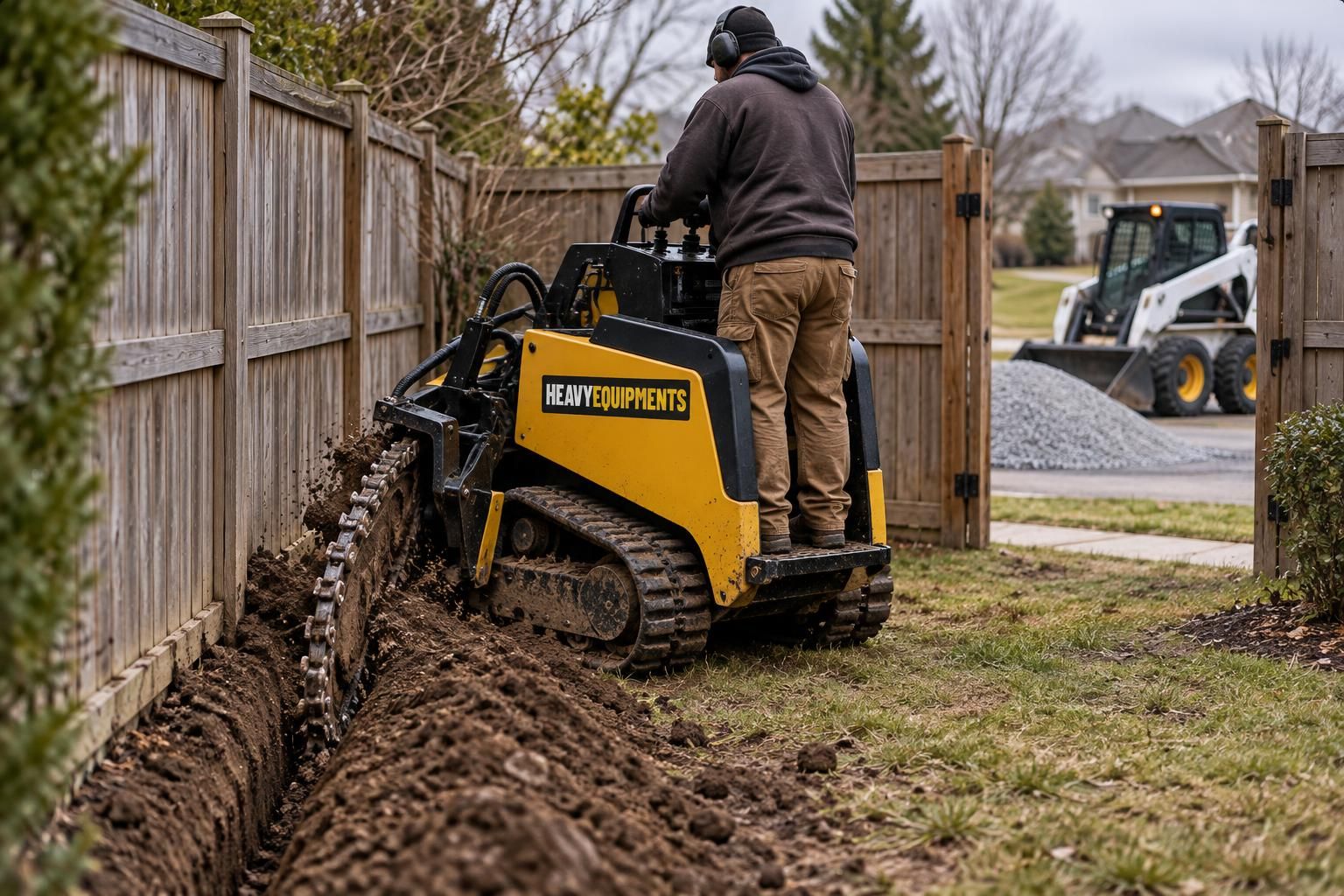
Walk-behind or stand-on mini skid steers are compact, operator-on-platform (or trailing) machines designed to move material and power attachments in tight, sensitive spaces. Think backyard hardscapes, interior demo, utility service work, and landscaping, places where a full-size skid steer loader is overkill or cannot physically fit. They accept many of the same attachment types (in appropriately scaled sizes) and are built to be quick to load, unload, and maneuver.
Where walk behind mini skid steers shine
- Tight access areas such as gates, side yards, alleys, and indoor work where a larger machine cannot enter or turn.
- Turf and finished surfaces that benefit from a lighter footprint and careful maneuvering.
- Short, frequent moves such as hauling spoils to a dumpster, moving pallets of pavers short distances, or feeding a trenching operation.
- Simple controls and quick on and off for one or two person operations.
- Buckets, forks, augers, trenchers and more (scaled to the machine) can cover a lot of ground. Browse common options on our attachments page.
Limitations to plan around
- Lower lift and carry than mid to large frame skid steers. Heavier pallets, spoil loads, or wet materials may exceed their safe operating capacity.
- Stacking and dump height can be limiting. Dumping into high sided trucks, loading hoppers, or stockpiling tall piles often calls for full-size lift heights and geometry.
- Smaller wheelbase and lighter weight require tighter attention to slope limits and load handling. Keep loads low and follow manufacturer guidance.
- Demanding hydraulic attachments (planers, large brush cutters, big cold saws) are typically better suited to higher horsepower, full-size loaders.
- Standing behind or on a small machine offers less protection from the elements and debris than a cabbed skid steer loader.
Full size skid steer capacity weight and power
When your work stretches beyond tight-access or light-duty material handling, a conventional skid steer brings significant gains in horsepower, rated operating capacity, and machine weight. The table below shows popular full-size models and their factory specs. Use it as a reality check when you’re deciding whether a walk-behind or a larger loader is the better match for a given task.
| Model | Lift Design | Horsepower | Operating Capacity (50% tipping) | Tipping Load | Operating Weight |
|---|---|---|---|---|---|
| Bobcat S595 | Vertical | 55.2 kW (74.0 HP) | 997.9 kg (2200 lbs) | 1995.8 kg (4400 lbs) | 3081.3 kg (6793 lbs) |
| Bobcat S650 | Vertical | 55.4 kW (74.3 HP) | 1220.2 kg (2690 lbs) | 2440.3 kg (5380 lbs) | 3777.1 kg (8327 lbs) |
| Bobcat S750 | Vertical | 63.4 kW (85.0 HP) | 1451.5 kg (3200 lbs) | 2903.0 kg (6400 lbs) | 4033.8 kg (8893 lbs) |
| Bobcat S770 | Vertical | 68.6 kW (92.0 HP) | 1519.5 kg (3350 lbs) | 3039.1 kg (6700 lbs) | 4161.7 kg (9175 lbs) |
| Bobcat S850 | Vertical | 68.6 kW (92.0 HP) | 1850.2 kg (4079 lbs) | 3700.0 kg (8157 lbs) | 4539.6 kg (10008 lbs) |
| Kubota SSV65 | Vertical | 47.7 kW (64.0 HP) | 884.5 kg (1950 lbs) | 1769.0 kg (3900 lbs) | 3197.8 kg (7050 lbs) |
| Kubota SSV75 | Vertical | 55.4 kW (74.3 HP) | 1220.2 kg (2690 lbs) | 2440.0 kg (5379 lbs) | 3819.8 kg (8421 lbs) |
| Case SR210 | Radial | 55.2 kW (74.0 HP) | 952.5 kg (2100 lbs) | 1905.1 kg (4200 lbs) | 3161.5 kg (6970 lbs) |
| Case SV280 | Vertical | 55.2 kW (74.0 HP) | 1270.1 kg (2800 lbs) | 2540.1 kg (5600 lbs) | 3669.6 kg (8090 lbs) |
| Case SR160 | Radial | 44.7 kW (60.0 HP) | 725.7 kg (1600 lbs) | 1451.5 kg (3200 lbs) | 2499.3 kg (5510 lbs) |
Reading the table for real jobs
- If your pallets or buckets routinely approach the operating capacities shown, a walk-behind will not be the right tool. A larger loader, like a Bobcat S750 or Case SV280, provides headroom.
- For truck loading, vertical lift models help with reach at height. Machines such as the Bobcat S595 and Kubota SSV75 are designed to handle repetitive loading tasks that would overtax a walk-behind.
- High demand tools are better paired to higher horsepower machines shown above. A compact loader can still run many attachments. Choose versions sized for its hydraulic output.
When a walk behind beats a skid steer
Use a walk-behind or stand-on mini skid loader when:
- Access is your main constraint and you still need a powered tool carrier to speed up labor.
- Material volumes are modest, and you can break up the work into smaller, safer loads.
- You’re working on sensitive lawns, patios, or interiors where finesse matters more than raw production.
- Transport simplicity is valuable, quick to load and unload, minimal setup, frequent short stops.
Choose a full-size skid steer when:
- You need to lift or carry heavier loads, load high-sided trucks, or stack materials efficiently.
- Cycle time and daily production targets are high enough to justify the bigger machine.
- Operator protection, comfort, HVAC, and visibility from a cab improve safety and productivity for long shifts.
Attachments and setup tips for walk behind machines
- Pick buckets, forks, augers, and trenchers scaled to your machine and the material. Oversized tools lead to stalling and unsafe loads.
- Keep loads low, centered, and within the rated capacity of your machine and attachment. Follow the manufacturer’s ballast guidance.
- For turf and pavers, plan travel paths and turning zones to reduce scuffing. Lay mats or plywood if needed.
- Shorter hauls and well placed stockpiles keep a compact machine highly productive.
If you’re building a walk-behind setup from scratch, price and availability of attachments matter almost as much as the base unit. Start with the tools you’ll use every week, then add specialty attachments as jobs demand. You can browse common options on our attachments and parts pages.
Try before you buy rentals and fleet mix
Many contractors carry both: a walk-behind for surgical jobs and a full-size skid steer loader for production. If you’re unsure, rent the form factor you don’t own and run it on a real job. Our marketplace has current rentals and for-sale listings, plus spec pages to help you evaluate alternatives.
Next steps for your skid steer search
- Compare full-size skid steer specs side by side using Specs Compare. Start with the models in the table above.
- Explore our skid steer database on Specs to research lift designs, operating capacities, and weights.
- Ready to source machines or attachments? Check current for-sale, rentals, and compatible attachments.
If your work leans toward tight-access, surface-sensitive tasks with moderate loads, a walk-behind mini skid steer can be a force multiplier. For heavy pallets, taller dump heights, and all-day production, step up to a full-size loader like those in the table, then use our tools to compare specs and find the best fit for your fleet.