Telehandler Forklifts, Boom Length, Load Charts and Attachments
A contractor’s guide to telehandler forklifts. Learn how boom length affects capacity, read a load chart, and choose attachments, plus when other machines fit better.
Telehandler forklifts, often called reach forklifts or rough terrain forklifts, bridge the gap between a traditional forklift and a crane. The telescopic boom gives you vertical lift and forward reach to place loads on second floors, into trucks, and over obstacles. Choosing the right machine comes down to understanding boom length, reading the load chart for your exact setup, and matching attachments to your work. Here is a practical guide to help you spec with confidence, plus a quick comparison to other lift options you might already run.
Telehandler forklift basics and tradeoffs
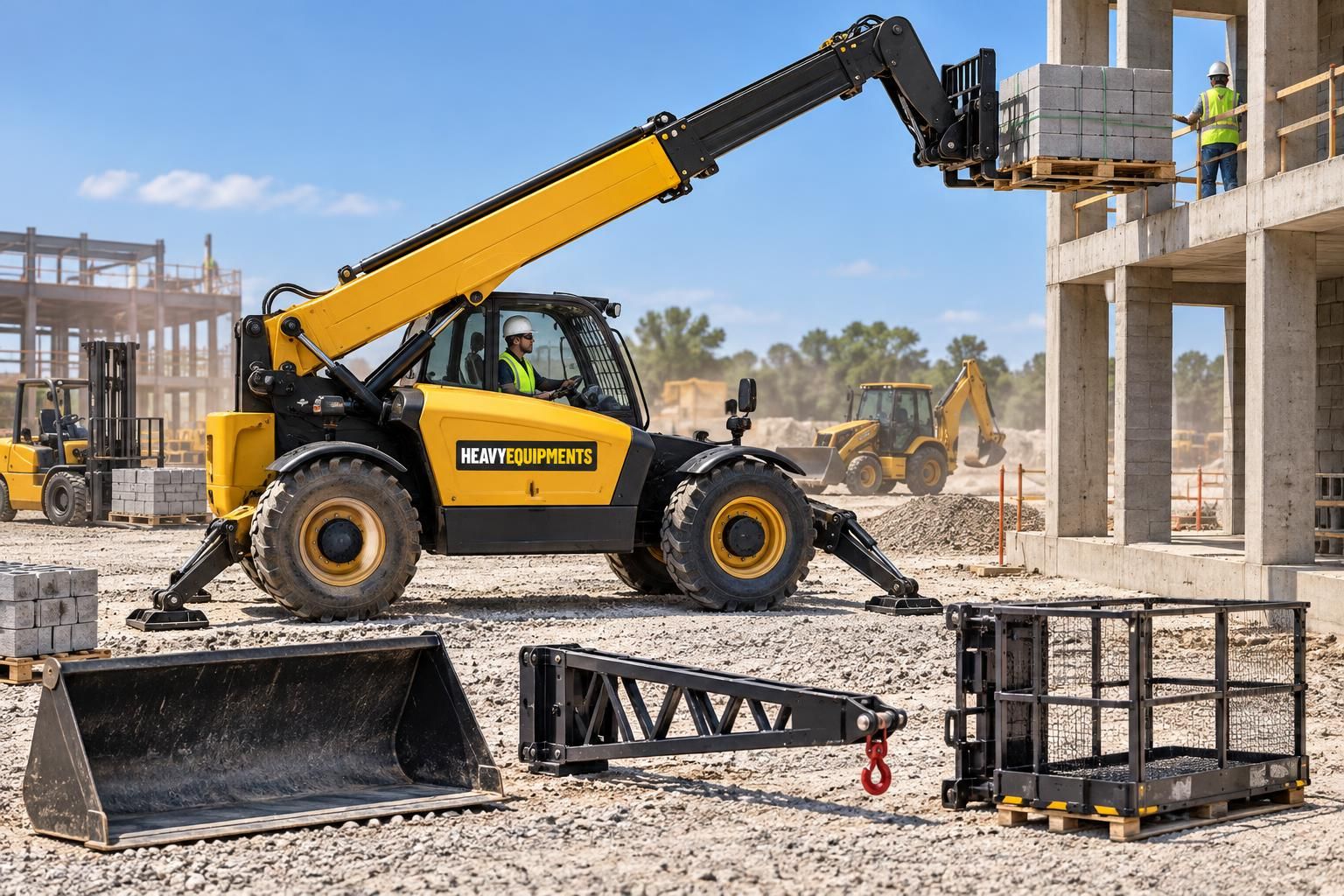
A telehandler’s advantage is reach. Unlike a warehouse forklift that lifts straight up, a telehandler’s telescopic boom lets you place loads forward and above grade (think roof trusses and masonry pallets, plus drywall onto upper floors). Large tires and high ground clearance make them ideal rough terrain forklifts for uneven jobsites.
Situations better suited to other machines:
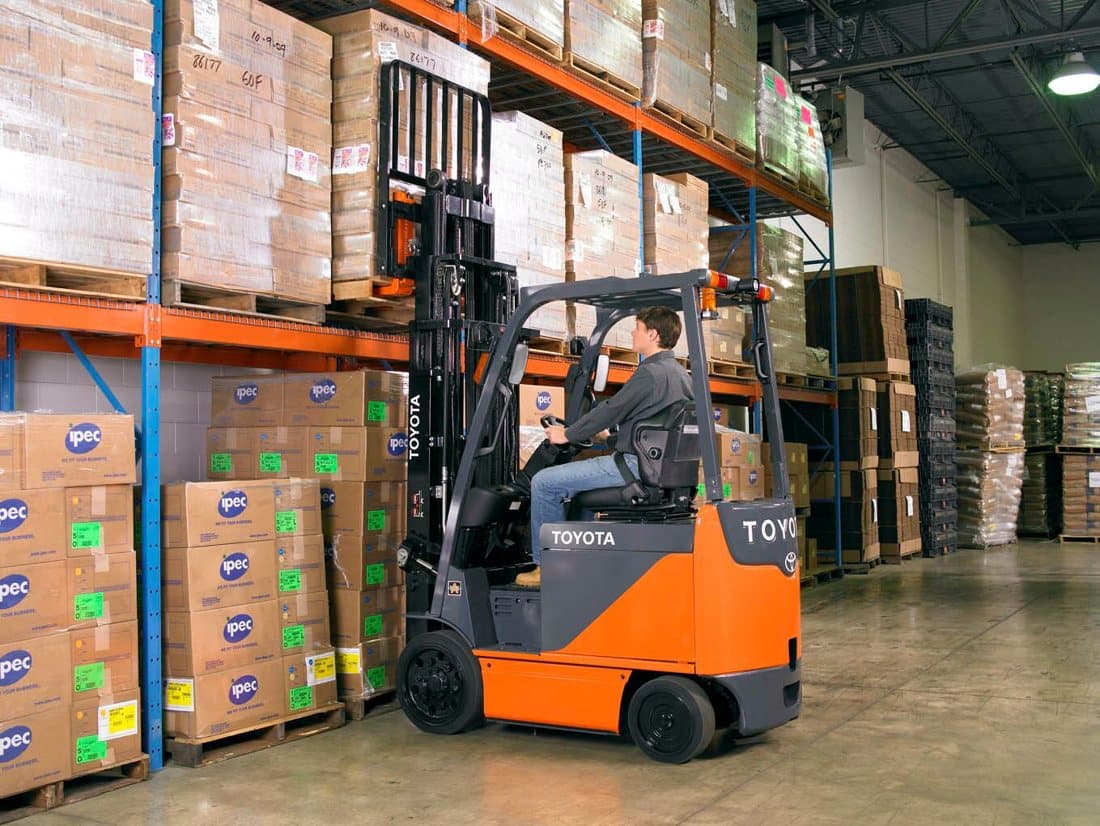
- Flat, indoor aisles with lots of pallet turns: a conventional electric forklift is more compact and efficient.
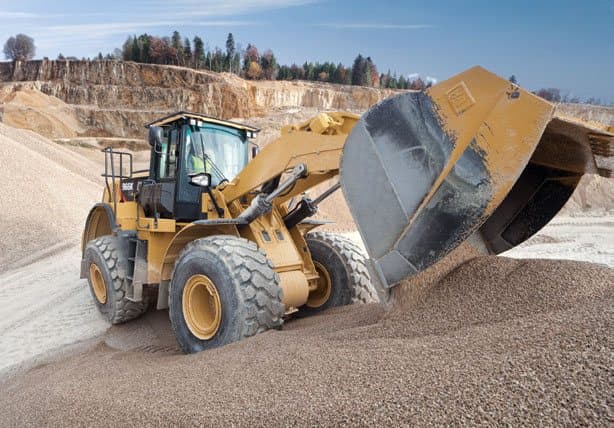
- High-volume loose material handling: a wheel loader moves more cubic meters per cycle.
- Primarily digging or trenching with occasional fork work: a backhoe or excavator with the right attachment may be a better buy.
Boom lengths and reach changes with extension
Telehandler booms are built in sections. As you extend:
- Forward reach increases, allowing you to place loads farther from the chassis, but the machine’s usable capacity drops.
- Maximum lift height climbs until the boom nears full extension; above certain angles, you may hit a geometry limit where incremental height adds little capacity.
- Stability margins tighten at long reach and high angle, especially without outriggers or frame leveling engaged (if equipped). Wind and slope further reduce what you can safely lift.
What to look for when choosing a boom class:
- Meet vertical needs. If you routinely set loads at second-story height, ensure the telehandler’s maximum lift height comfortably clears placement height with room for fork tip manipulation.
- Prioritize horizontal reach. Roof truss and steel work often demand more forward reach than vertical height, so choose models with longer boom extension and appropriate load chart capacity in that zone.
- Match stance and tires to terrain. A wider stance and rough terrain tires help on uneven ground. Where allowed by the manufacturer, stabilizers or frame leveling features expand your safe working envelope.
Reading a telehandler load chart step by step
Every telehandler has a load chart for the exact configuration: boom, carriage, forks or attachment, tire size, and any stabilizers. To avoid overloading, work the chart in this order:
- Identify the attachment and carriage. Load charts are attachment specific, and capacities change with forks, buckets, jibs, or platforms.
- Find your boom extension and angle. Charts typically map capacity by boom length (or section) versus boom angle or height.
- Choose the correct stability zone. Some charts split capacities by stabilizers deployed, frame leveling, or tires only. Use the zone that matches your setup.
- Locate the intersection. Where your extension and angle (or height or reach) intersect gives the maximum rated load for that position.
- Account for load center. Fork capacities assume a specific load center. Moving the load farther out reduces capacity. Make sure your pallet or bundle matches the specified load center for forks.
- Derate for attachments. Jibs, winches, buckets, and platforms have their own chart lines or deductions. Never assume fork capacities apply.
- Factor site conditions. Slope and wind on panelized loads, plus muddy ground and dynamic travel, all reduce practical capacity. Stay well within chart limits when traveling or booming while moving.
Bottom line: the number you can safely pick is specific to your exact boom position and attachment, not just the headline “max capacity.”
Attachments that pay off on a reach forklift
Attachments turn a telehandler into a multi-trade tool. Consider these common options and when they make sense:
- Pallet forks and carriages. Choose a fork positioner or side shift carriage if you place many pallets onto scaffolds or mezzanines. It saves multipoint setup time. A wider carriage helps with bulky, uneven loads.
- Truss boom or jib. Use this for placing trusses, HVAC units, or bundles beyond the roofline. Follow the attachment specific load chart and pick points.
- Light material bucket. Efficient for trash out, mulch, snow, or light aggregates between lifts. Match bucket width and volume to your machine’s chart to avoid overloading at extension.
- Work platform. Useful for short duration elevated work when a dedicated MEWP is not practical. Verify platform compatibility and required interlocks. Follow the platform specific capacity and occupant limits.
- Pipe handling grapples. Speeds utility and industrial yard work where round stock needs secure control.
- Sweepers and brooms. Enable quick site cleanup with hydraulic angle options. Check hydraulic flow requirements against the machine.
Tip: Standardize quick coupler interfaces across your fleet where possible to share attachments and reduce fleet count.
When another machine beats a telehandler examples
Telehandlers are versatile, but sometimes the simpler or heavier-duty tool is faster. Below are representative specs from common alternatives to help you sanity-check a “do-it-all” purchase. If your work is mostly pallet moves in tight aisles, a warehouse forklift like the linked model may be the better buy; if it’s primarily digging or heavy material handling, consider a backhoe, excavator, or wheel loader.
| Model | Type | Capacity/Bucket | Lift height/Dig depth | Operating weight | Power/Fuel | Undercarriage |
|---|---|---|---|---|---|---|
| Toyota 8FBMT30 | Forklift (electric) | Capacity 3,000 kg (6,614 lb); Load center 500 mm (19.7 in) | Standard lift height 3,000 mm (118.1 in) | N/A | Electric (80 V) | N/A |
| Linde H25 | Forklift (diesel) | Capacity 2,500 kg (5,512 lb); Load center 500 mm (19.7 in) | Standard lift height 3,150 mm (124.0 in) | N/A | Diesel | N/A |
| JCB 3CX | Backhoe loader (4x4) | N/A | Max digging depth 5,460 mm (215.0 in) | 8,000 kg (17,637 lb) | 68 kW; Diesel | Wheeled (4x4) |
| Caterpillar 950 GC | Wheel loader | Bucket 3.1 to 3.3 m³ (4.06 to 4.32 yd³) | N/A | 18,500 kg (40,785 lb) | 168 kW; Diesel | Wheeled |
| Caterpillar 320D2 | Excavator | Bucket 0.9 to 1.2 m³ (1.18 to 1.57 yd³) | Max digging depth 6,720 mm (264.6 in) | 21,900 kg (48,281 lb) | 108 kW; Diesel | Tracked |
How to use the table:
- If most work is pallet handling on flat floors, an electric forklift like the Toyota model above offers tight turning and zero emissions at point of use.
- For outdoor yards with short lift heights, a diesel forklift like the Linde example is often simpler and cheaper to run than a reach machine.
- If you mainly move loose material, the wheel loader’s bucket volume dwarfs what a telehandler bucket can safely lift at reach.
- For trenching and utility work, a backhoe or excavator brings dedicated digging geometry; add a fork or material handling attachment when needed for occasional lifts.
Spec tips before you buy or rent
- Work backward from your heaviest and farthest set. Identify the heaviest load you must place at the maximum reach and height. Then verify that point on the telehandler’s load chart with your intended attachment.
- Account for real pallets. Fork ratings hinge on load center. Deep pallets and uneven bundles shift the center of gravity forward. Suspended loads do as well.
- Plan for tires and terrain. Soft ground and slopes reduce what you can do at full stick. Choose tires and stabilization features accordingly.
- Right size attachments. Oversized buckets or platforms can push you out of the safe envelope at extension; match to the chart.
Next steps to compare specs and find equipment
Use our spec database and side-by-side comparison tool to verify boom reach, lift height, and attachment specific capacities for the exact configuration you need. If a conventional forklift, loader, or backhoe suits the work better, the model specs above provide a solid starting point.
When you’re set on a configuration, browse current equipment for sale or short-term rentals, and line up the right attachments and parts to keep your machine productive.