Skid Steer Rental Guide to Sizing, Tracks, Wheels, and Pricing
A practical skid steer rental guide for contractors and property owners. Covers sizing, tracks or wheels, hydraulic flow, attachments, hauling, insurance, and pricing a job.
Renting a skid steer is one of the fastest ways to add flexible muscle to your jobsite. You might be loading trucks, cleaning up demo, trenching for utilities, or clearing brush, and the right machine and attachment package can turn a two-day chore into a half-day push. This guide explains what a skid steer is, how to pick the right size, tracks vs. wheels, hydraulic flow, attachment choices (including mulchers), hauling and insurance basics, and how to approach real-world rates without surprises.
Skid steer basics
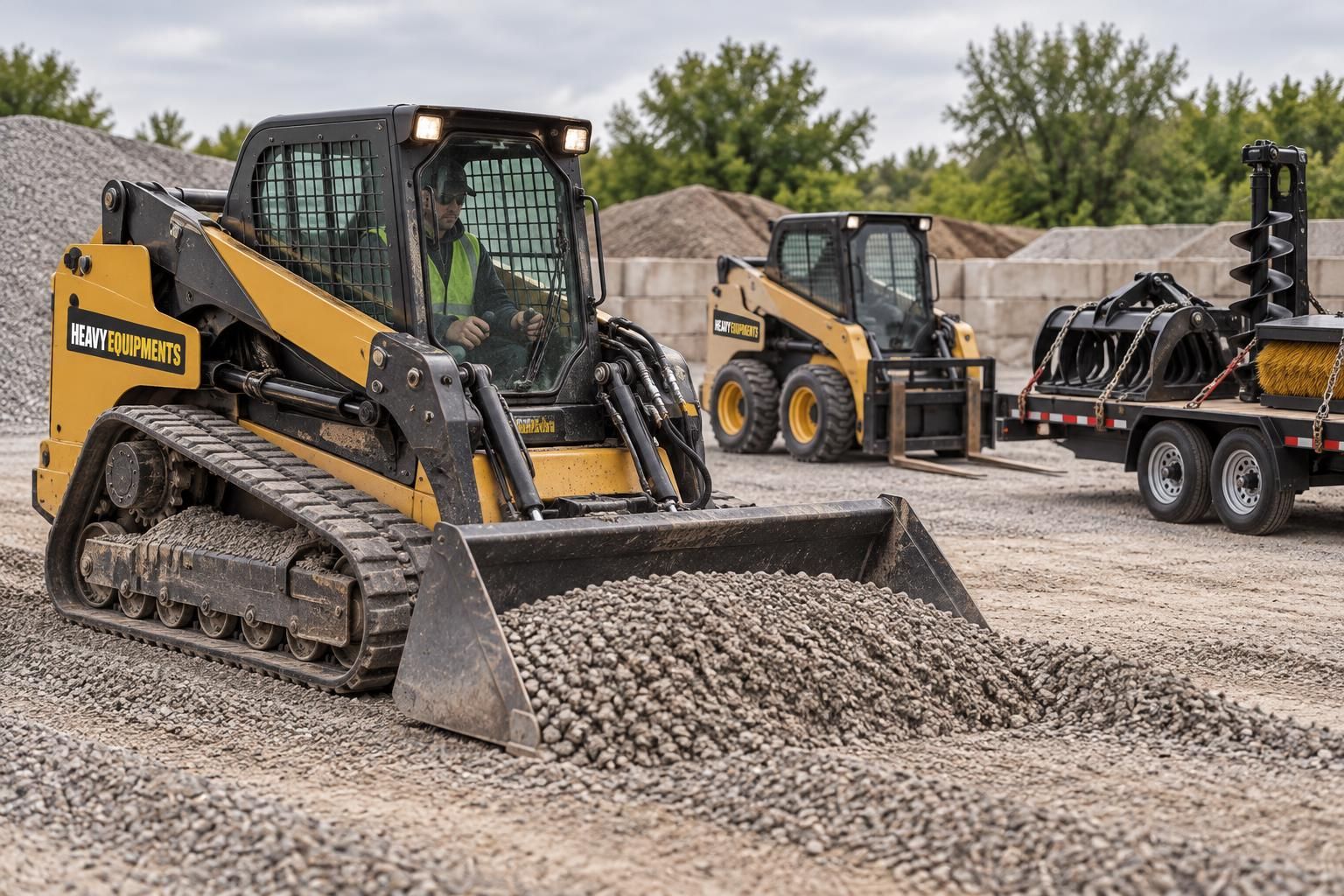
A skid steer is a compact, diesel-powered loader with a rigid frame and lift arms that accept a wide range of quick-attach tools. It “skids” by driving the left and right sides at different speeds or directions, allowing tight turns and precise maneuvering in confined spaces. Skid steers come in wheeled and tracked versions; both can run dozens of skid steer attachments from buckets and forks to planers and mulchers. If you’re searching “skid steer rental near me,” understanding a few basics will help you book the right machine the first time.
Size and lift path for your job
Skid steers are generally grouped by frame size and lift capacity. While exact numbers vary by model, think in terms of small, medium, and large frames:
- Small frame fits tight access, light material handling, landscaping, and interior demo (with proper ventilation).
- Medium frame suits general construction, pallet work, dirt work, and light grading.
- Large frame tackles heavy grading, high-production loading, milling or planing, and demanding attachments.
Also consider lift path.
- Radial lift favors digging and grading with strong breakout at mid lift heights.
- Vertical lift keeps the load closer to the machine through the lift arc, helpful for loading trucks and handling pallets.
When you call a skid steer loader rental yard, be ready to discuss the load you need to lift, the height you must reach, and any width or weight constraints for access and hauling.
Tracks or wheels for surface and cost
Choosing between a tracked skid steer and a wheeled unit has more to do with your surface and season than anything else:
- Tracked machines spread their weight and excel on soft ground, mud, and slopes. They are gentle on finished turf and can be more sure-footed in winter conditions.
- Wheeled machines typically shine on hard, dry surfaces like concrete and asphalt, turning faster and often being simpler to maintain. They are a solid pick for debris cleanup and frequent roading around a site.
Be mindful that tracks are consumables, and aggressive turns on abrasive surfaces can add wear you may be charged for. Conversely, tires can wear quickly in constant spinning or on sharp aggregate. Pick the undercarriage that reduces rework and surface damage, often the bigger cost driver than the rental itself.
Quick comparison tracked wheeled and mini skid steers
| Category | Where it shines | Surface impact | Transport/hauling | Attachment fit | Limitations |
|---|---|---|---|---|---|
| Tracked skid steer | Soft ground, slopes, turf protection, winter traction | Lower ground pressure; gentler on lawns | Heavier; plan for appropriate trailer and tie-downs | Excellent, including high-demand tools with proper flow | Track wear on abrasive surfaces; cleanup can take longer |
| Wheeled skid steer | Hard surfaces, quick turns, debris cleanup, pallet work | Can scuff turf when turning | Often lighter; easier to tow within limits | Broad compatibility; ideal for forks, buckets, brooms | Reduced flotation in mud or wet conditions |
| Mini skid steer | Gate access, landscaping, interior or tight sites | Light footprint; minimal disruption | Smaller and simpler to move; easier site access | Runs scaled-down tools; great for light-duty tasks | Lower lift/aux flow than full-size loaders |
Hydraulic flow and couplers for attachments
Attachment performance lives and dies by hydraulic flow and coupler compatibility:
- Standard flow runs common tools such as buckets with grapples, trenchers, augers, and brooms.
- High flow, and certain enhanced flow packages, is often required for energy hungry tools such as cold planers and many mulchers.
- Most rentals use a common quick attach plate, but verify hitch style, hydraulic quick couplers, and whether you need a case drain. Flat face couplers are common, confirm sizes match the attachment.
For skid steer mulcher rental, tell the rental counter which mulcher you plan to run. They’ll match flow requirements, check for a case drain, and advise on guarding and debris mitigation.
Attachments that change the game
One reason skid steers are staples in rental lots is the tool ecosystem. When you book, consider bundling the tools you will realistically use in the timeframe:
- General purpose and 4-in-1 buckets handle digging, grading, and carrying.
- Pallet forks cover material handling and unloading.
- Grapples sort demo debris, logs, and brush.
- Brush cutters and mulchers clear land; verify flow and case drain needs.
- Augers and trenchers build fence lines, footings, and utilities; call in locates before you dig.
- Dozer blades and box graders set finish grade and maintain roads.
- Cold planers mill asphalt and concrete; they typically need higher flow and a capable carrier.
- Brooms and snow tools handle site cleanup and winter work.
Browse popular options on our attachments page, or compare carrier specs to attachment needs using specs and compare.
Hauling site access and delivery
Before you finalize your skid steer rental, settle how the machine will get to and from the job:
- Confirm machine weight, width, and height for gates, trailers, bridges, and low clearances.
- Make sure your trailer and tow vehicle are rated for the machine plus attachments and fuel. Use proper chains or straps and tie down points.
- Use stable, non-slick ramps, and avoid loading on steep or uneven ground.
- Consider delivery versus pickup. Delivery adds convenience and may reduce risk, self haul can save money if you are properly equipped and insured.
If access is tight, a mini skid steer rental can be the right call; note gate widths, slope, and turning areas when you book.
Insurance damage waiver fueling and cleaning
Prevent headaches by lining up paperwork and end-of-rental expectations up front:
- Many rental companies require insurance and a COI, and may ask to be named on your policy. Clarify coverage for rented equipment and attachments.
- Understand the damage waiver, what is covered and excluded (wear parts, tracks or tires, glass, hydraulic lines). It is not a substitute for safe operation.
- Most machines are diesel. Ask whether you must return full and whether DEF service applies.
- Excessive mud, concrete splatter, or forestry debris can trigger cleaning charges. Plan time for cleanup.
Real world rates and what drives quotes
Published rates are only a starting point. Actual costs vary by region, season, demand, machine size, undercarriage type, and attachment package. Here is how to keep control of the total:
- Match the machine. Oversizing adds cost at booking and hauling. Undersizing adds cost in lost productivity and extra days.
- Bundle smartly. Booking all needed attachments together can be more cost-effective than adding tools mid-rental.
- Consider duration. Daily, weekly, and monthly structures differ. If your scope could spill into extra days, price the longer term while you are quoting.
- Plan timing. Weather windows and storm response spike demand. Off-peak scheduling can help availability and pricing.
- Account for delivery. Factor delivery or pickup versus self-haul, plus any after-hours fees.
- Return fueled and reasonably clean to avoid add-ons.
For current availability and quotes, start with our rentals marketplace and message local suppliers for a written estimate.
Proven booking checklist
- Job description and materials (soil, aggregate, brush, pallets, demo).
- Space constraints: max width/height, gate size, overhead hazards.
- Surface and grade: turf, mud, asphalt, slope; choose tracks vs. wheels accordingly.
- Lift and reach needs: pallet heights, truck loading, radial vs. vertical lift preference.
- Attachments and hydraulic flow; any case drain or specific coupler requirements.
- Control pattern: ISO vs. H-pattern; request what your operator prefers.
- Power and guarding for specialty tools (especially mulchers and planers).
- Hauling plan: delivery vs. pickup, trailer rating, tie-down gear.
- Insurance/COI and damage waiver decisions.
- Fueling, cleaning, and return timing.
Next steps to book smart
Move from research to action.
- Browse live skid steer rental listings and message suppliers directly.
- Compare carrier and attachment requirements with our specs and side-by-side compare tools.
- Need to buy instead of rent? See what’s for sale. Running a fleet? Keep projects moving with parts and attachments.
Plan a weekend cleanup or outfit a multi week project, then pick the right size, undercarriage, and attachment kit, and lock in the logistics. Done well, a skid steer rental can pay for itself in productivity.