Skid Steer Hydraulic Flow, Pressure, and Attachments
Plain-English guide to skid steer hydraulic flow and pressure, how standard and high-flow differ, when a case drain is needed, and how to match high-demand tools.
Attachment performance lives or dies by hydraulic flow and pressure. If you have wondered whether your machine can run a mulcher, cold planer, or snow blower efficiently, this guide breaks down skid steer hydraulic flow requirements in plain English, covering standard and high-flow, what "GPM for mulcher" means, when a case drain matters, and how to read spec sheets so you do not mismatch an attachment to your carrier.
Auxiliary hydraulics explained
On a skid steer, “auxiliary hydraulics” is the circuit that powers attachments. Two core specs matter:
- Flow, measured in GPM, is how much oil the machine sends to the attachment. More flow generally means faster motor speed or cylinder cycling.
- Pressure, measured in PSI, is how hard the oil pushes. Higher pressure increases torque or breakout force, and it also raises heat and component stress.
Flow and pressure combine to determine hydraulic power at the tool. Even if you have plenty of flow, too little pressure can still limit torque. Conversely, all the pressure in the world will not help if flow is too low for the tool’s motor.
Two more terms help frame attachment success:
- Continuous and intermittent duty. Some machines publish a continuous auxiliary flow rating. Running an attachment at its continuous rating helps manage heat and extend component life.
- Backpressure and return to tank. Certain motorized attachments, especially mulchers, are sensitive to return line backpressure. That is why some require a dedicated case drain line that routes low pressure leakage oil directly to tank.
High flow and standard flow skid steers
Most skid steers ship with a standard-flow auxiliary circuit. Many offer a high-flow option as an added or upgraded circuit. High-flow systems deliver more hydraulic oil per minute than standard-flow systems, which drives higher tool speed and productivity for specific attachment types. Key contrasts:
| Feature | Standard-Flow | High-Flow |
|---|---|---|
| Primary use | General tools (brooms, 4-in-1 buckets, grapples, small augers) | High-demand tools (mulchers, planers, large snow blowers, big cold planers) |
| Flow delivery | Baseline auxiliary flow | Higher auxiliary flow from an upgraded circuit |
| Heat load | Lower; easier to keep within continuous rating | Higher; cooling capacity and duty cycle matter more |
| Plumbing considerations | Two couplers (pressure & return) | Often includes additional plumbing and may require case drain for certain tools |
| Attachment fit | Broad set of everyday attachments | Purpose-built high-flow attachments sized to the machine’s rating |
If you are weighing high flow and standard flow skid steer options for your fleet, start with the attachment list you plan to run. High flow only pays when your workmix includes tools that need it, and that are specifically rated for your machine’s auxiliary spec.
GPM for mulchers and other high demand tools
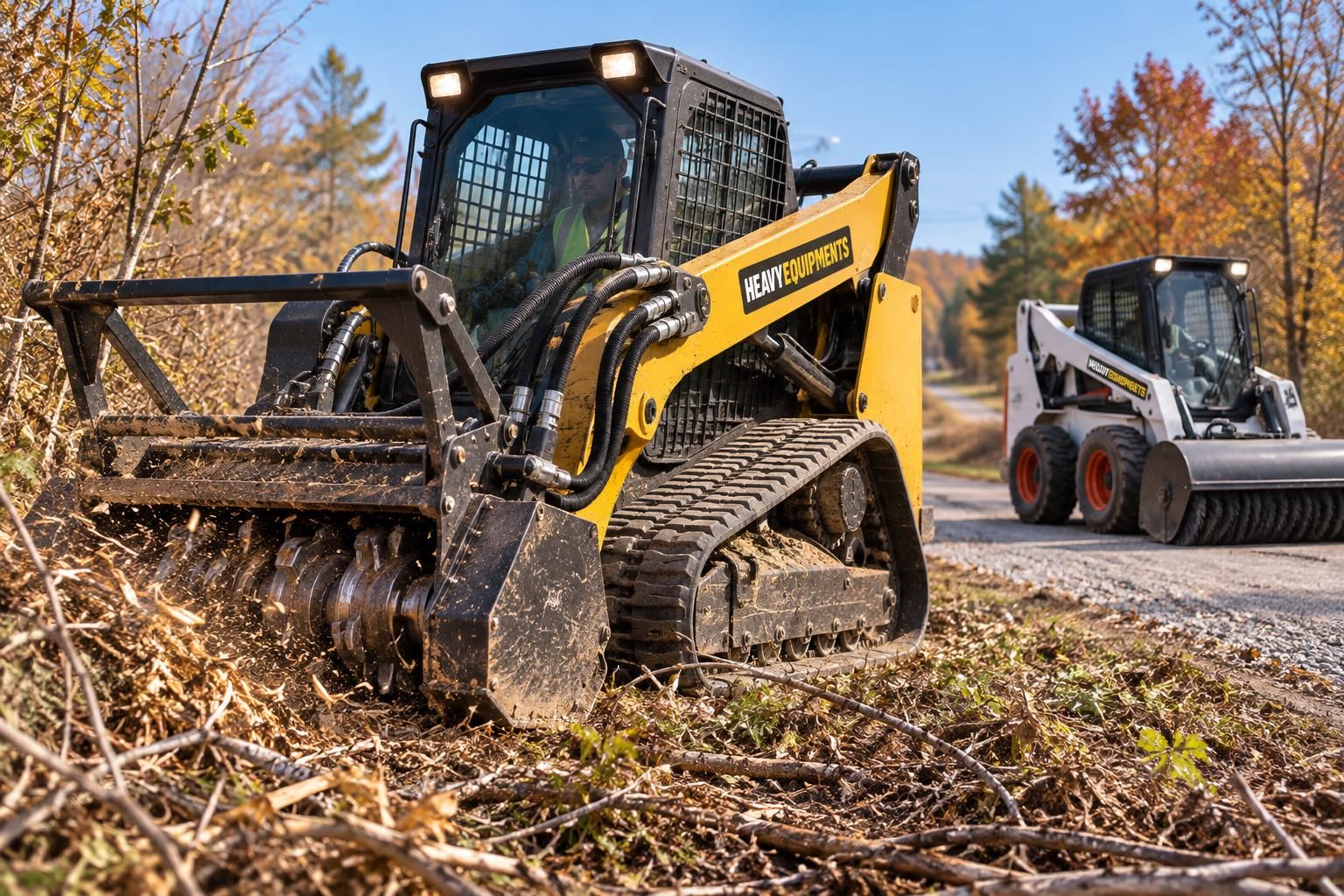
Mulching heads, cold planers, stump grinders, and large snow blowers are among the most flow hungry attachments in the skid steer world. When contractors search "GPM for mulcher," they are lining up the following:
- The attachment’s required hydraulic flow and pressure window
- The machine’s available auxiliary flow (standard or high-flow)
- The auxiliary pressure setting on the machine
- The duty cycle and cooling capacity needed to run continuously without overheating
Most mulching heads are designed around high-flow circuits and specify a case drain line. Always match the attachment’s published range to your skid steer’s auxiliary rating. If the attachment’s published minimum exceeds your machine’s auxiliary rating, choose a different head or a different carrier. Oversizing the tool leads to stalling, heat, and premature wear.
To show how flows can vary across machine types, consider that large excavators may list high total pump flow on their spec sheets. For example, the John Deere 890 lists a Hydraulic Pump Flow Capacity of 208 LPM (55 GPM), a figure that reflects its excavator hydraulic system, not a skid steer’s auxiliary circuit. Do not assume those numbers translate to a skid steer; always use the skid steer’s auxiliary ratings to size attachments.
Case drain lines on skid steers
A case drain is a small, dedicated, low-pressure return line that routes leakage oil from a hydraulic motor’s case directly back to tank. Many high-speed, high-torque motor attachments (mulchers and certain planers) require a case drain to protect seals and keep case pressure low.
Key points:
- Only connect a mulcher or similar tool if your machine has the required case drain port and you have the correct hose and fittings.
- Never tee a case drain into the standard return line.
- Keep the case drain clean and uncapped during operation so it can vent properly to tank.
- Verify direction-of-flow and quick-coupler cleanliness before hooking up. Contamination is a common cause of early failure.
If your current skid steer lacks a case drain and your attachment calls for one, consult your dealer or a qualified hydraulic shop about adding the correct return-to-tank plumbing. Do not improvise fittings or routes.
How to read spec sheets checklist
Whether you are matching a broom or a mulcher, use this simple process to avoid mismatches:
- Find the auxiliary hydraulic flow rating on your machine’s spec sheet and note whether it is standard or high-flow. If both are listed, write down both values and any continuous duty notes. Browse carrier specs and attachment details on our Specs and Attachments pages.
- Confirm auxiliary pressure and how it is controlled (factory setting, adjustable with dealer software, etc.). Never raise relief pressure beyond the manufacturer’s spec.
- Check the attachment’s required flow and pressure window. Many attachments list a minimum and maximum. Your machine should fall inside that window.
- Look for case drain requirements. If the attachment calls for a case drain, ensure your skid steer has the correct port and coupler.
- Match coupler sizes and hose routing. Using undersized hoses or couplers creates restriction and heat.
- Consider cooling and duty cycle. Even if your numbers match, plan for real-world heat: summer temps, dust-clogged coolers, and continuous work. If your machine lists a continuous auxiliary rating, size attachments to that figure rather than a higher intermittent number.
- Weigh and balance. Confirm the attachment’s weight and center of gravity are within the machine’s lift and stability limits.
Remember, flow moves the tool and pressure provides the muscle. Heat is the tax you pay when either spec is pushed too close to the limit for too long.
A quick word on cross platform specs
Hydraulic specs vary widely among equipment types. That is why you will see different information and values on an excavator, backhoe, or wheel loader sheet than on a skid steer’s auxiliary circuit rating.
- Large excavators sometimes publish total pump flow and system capacity. The John Deere 890 shows Hydraulic Pump Flow Capacity 208 LPM (55 GPM) and a Hydraulic System Capacity 348.3 L (92.0 gal). These are useful for excavator attachments but not a stand-in for skid steer auxiliary ratings.
- Backhoes like the JCB 3CX are built around different hydraulic architectures and tool interfaces than a skid steer.
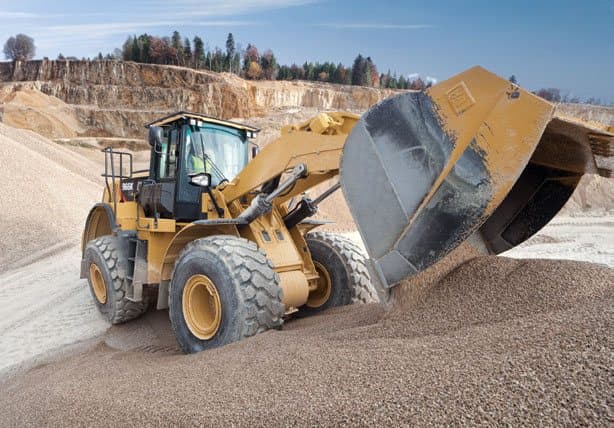
- Wheel loaders such as the Caterpillar 950 GC follow different attachment standards and system priorities. Do not assume compatibility or equivalent performance numbers.
- Even within excavators, size and purpose vary. Tracked machines like the Caterpillar 320D2 publish digging depth, bucket capacity, and operating weight prominently because those targets differ from skid steer priorities.
The takeaway: always use the skid steer’s auxiliary hydraulic specs when selecting skid steer attachments, and the carrier’s own attachment interface and hydraulics when selecting tools for any other machine type.
Troubleshooting poor attachment performance
- Tool spins but lacks torque. You may have adequate flow but insufficient pressure, or excessive return line backpressure. Verify machine relief settings and check for restrictions.
- Tool runs hot. You may be exceeding continuous flow, have a clogged cooler, or be operating in debris heavy conditions. Clean coolers and consider shorter cycles.
- Output fades after a few minutes. Heat or restriction can cause this. Reduce duty cycle and clean the cooling package.
- Couplers chatter or hoses jump. Check for incorrect quick couplers, trapped pressure during hookup, or a missing or blocked case drain on attachments that require it.
Next steps for specs and matching
Size attachments correctly for your carrier’s hydraulic capability before you sign a PO. Here is how to move forward with confidence:
- Pull your machine’s numbers on our Specs catalog and line them up against the attachment’s requirements.
- Use Compare to put multiple machines or attachments side-by-side and see how auxiliary flow and requirements stack up.
- Browse Attachments sized for your skid steer’s capabilities.
- Shop equipment For Sale, find short-term Rentals, and keep uptime high with the right Parts.
Matching hydraulic flow and pressure, along with plumbing, cooling, and duty cycle, to your attachment list turns a skid steer into a productive tool carrier. Do the homework once, and your team will not be wondering about "GPM for mulcher" in the field again.