Skid Steer Attachments for Jobs and Hydraulic Needs
A contractor's guide to matching skid steer attachments to brush, grading, snow, and dirt work, covering hydraulic flow classes, carrier weight and ROC, and case drain needs.
Picking the right skid steer attachments comes down to three things: hydraulic flow, carrier weight/ROC, and whether the tool needs a case-drain line. Get those right and the job goes smoothly, whether the task is brush, finish grading with a Harley rake for skid steer, pushing snow, or moving dirt. Below is a practical guide to selecting tools for common jobs and plumbing them correctly on Bobcat, Cat, Kubota, and other carriers.
Start with your carrier flow pressure and weight
Before shopping attachments, pull the carrier’s spec plate and manual:
- Check auxiliary hydraulic flow class. Standard-flow runs most brooms, grapples, buckets, and many trenchers and rakes. High-flow is typically required for power-hungry tools like a skid steer mulcher or cold planer. Some machines offer multiple selectable flows.
- Hydraulic pressure and cooling matter. Pressure complements flow, and more demanding tools generate heat. Make sure your cooler is clean, shrouds are in place, and you can monitor temps during long runs.
- Confirm rated operating capacity (ROC) and machine weight. Heavier attachments eat into ROC and stability. Keep the tool plus material within limits, especially on wheeled machines on side slopes.
- Verify electrical connectors and controls. Features like angle and tilt, variable speed, or trigger reverse require the correct harness (for example, a multi-pin connector). Verify compatibility.
- Confirm case-drain port availability. Tools with high-speed motors (mulchers, planers) often specify a case drain to control backpressure. If your machine lacks a case drain, do not run those tools.
Brush and vegetation cutters and mulchers
Skid steer brush cutter (rotary mower)
A skid steer brush cutter clears grass, weeds, and saplings. Deck styles vary from open-front for faster cutting to closed-deck for better containment. Most run on standard-flow and do not need a case drain. They are a great fit for many Bobcat skid steer, Cat skid steer, and Kubota skid steer models without high-flow packages.
- Pasture mowing, right-of-way trimming, light saplings.
- Balance deck width to machine width for visibility and stability. Watch debris, especially with open-front heads.
Skid steer mulcher (forestry head)
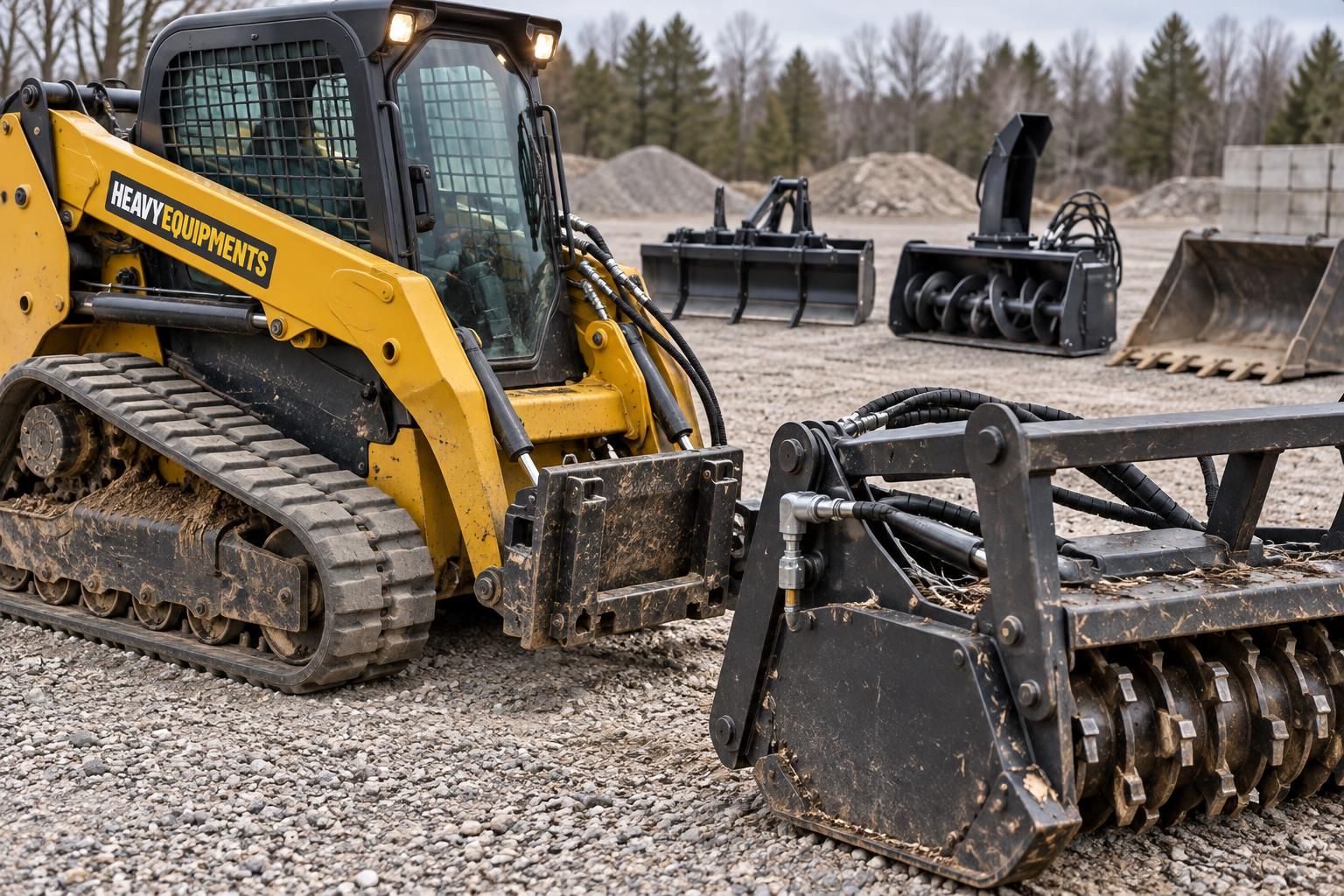
When brush turns woody and dense, a high-inertia or drum-style skid steer mulcher is the tool. Most require high-flow and a case drain. They ask more of your cooling package and reward heavier carriers with better stability. Guarding (door, roof, lights, hoses) is essential.
- Dense brush, saplings, and woody material where fine mulch is preferred.
- Confirm flow and pressure window, case-drain plumbing, guarding, and debris management. Mini skid steer attachments in this category are more limited due to flow and weight.
Grading and seedbed prep rakes boxes and blades
Harley rake for skid steer (power rake)
Power rakes excel at gravel drive rehab and seedbed prep, pulverizing and windrowing, then leveling in one pass. Most run on standard-flow and do not need a case drain. Angle and tilt improve productivity on long runs and crown work.
- Finish grading, topsoil prep, gravel reclamation.
- Track machines reduce hopping and improve finish. Stay off saturated subgrades to avoid corrugation.
Grading boxes and blades and laser kits
Box blades and 6-way dozer blades can be simple (manual) or feature hydraulic angle and tilt and laser control. Flow needs are modest, and accuracy depends more on the control system and operator technique.
- Pads, parking areas, final pass on stone or sand.
- Smooth pilot controls shine here. Keep cutting edges fresh.
Snow and ice pushers blades and blowers
Snow attachments split into containment (pushers/box plows), plows (angle/V), and blowers. Pushers and plows typically run on standard-flow and are friction-limited by tires or tracks. Snow blowers often benefit from higher flow to maintain throw and pace but may not require a case drain. Check the attachment manual.
- Lots and lanes with pushers or plows, sidewalks and long throws with blowers.
- Cold stiffens hoses, so warm up hydraulics. Keep couplers clean to avoid contamination and freeze-ups.
Dirt work buckets grapples augers trenchers planers
- General-purpose and 4-in-1 buckets need no special hydraulics. Weight and material density drive selection. A 4-in-1 adds clamshell functionality but weighs more, trimming payload.
- Grapples run on low flow and suit storm cleanup and demolition sorting. Hose routing and cylinder protection matter.
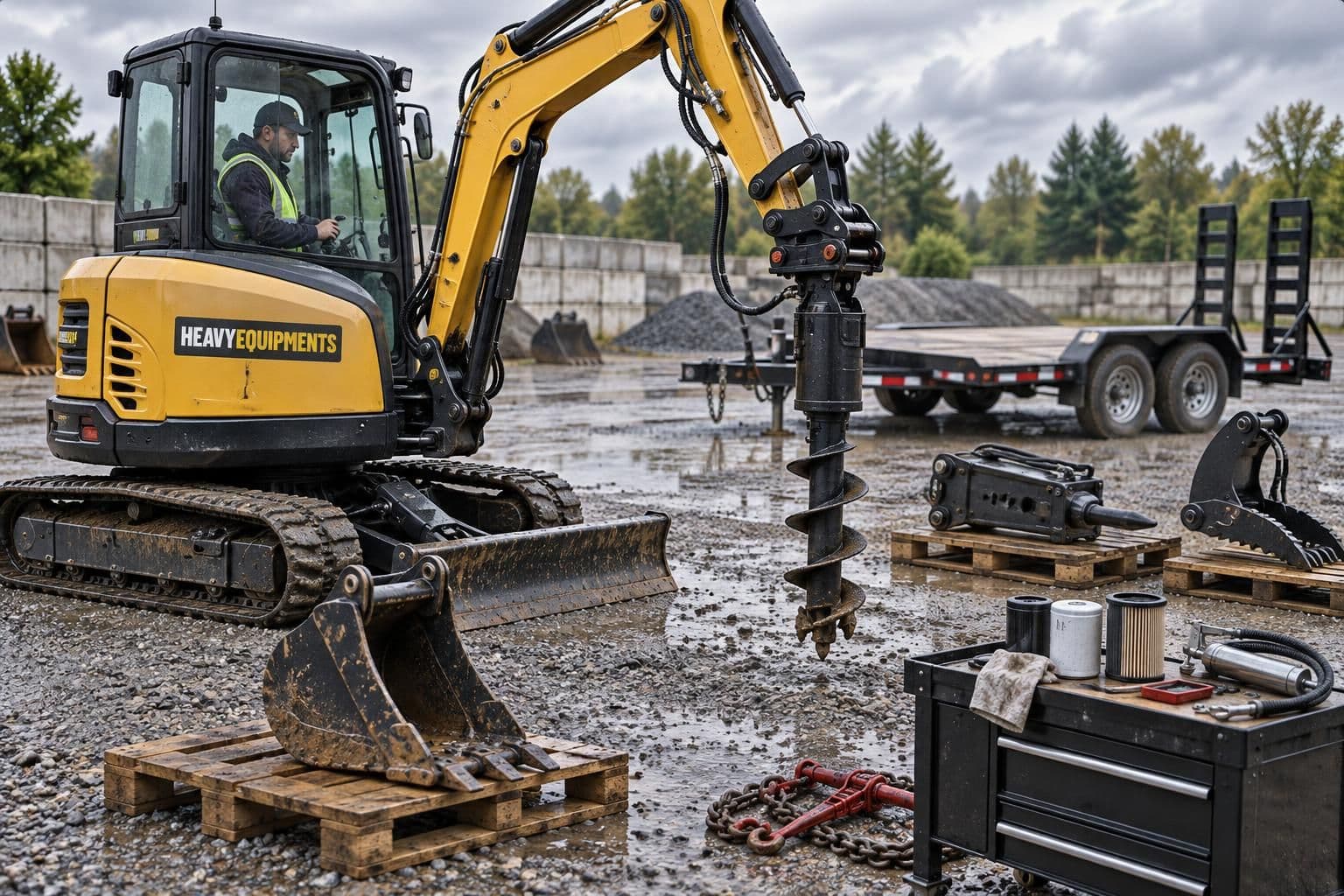
- Augers run on standard-flow. Choose torque and bit diameter for soils and rock, and keep down-pressure steady.
- Trenchers fit well in standard-flow. Match chain and boom to depth and soil, and use spoil augers for clean trenches.
- Cold planers typically need high-flow and often a case drain. They are sensitive to backpressure and cooling capacity.
Mini skid steer attachments fit and avoid
Mini skid steer attachments bring big versatility to tight sites, but flow and ROC are smaller. Brooms, narrow buckets, small trenchers, light grapples, and compact power rakes fit well. Avoid heavy forestry heads and large blowers or planers. Narrower widths match fence gates and sidewalks, and do not oversize tools that overwhelm traction or cooling.
Attachment requirements by job quick reference
| Job / Material | Go-to Attachments | Flow Class | Case Drain? | Weight / ROC Notes | Other Tips |
|---|---|---|---|---|---|
| Light brush & grass | Rotary brush cutter | Standard-flow | Usually no | Deck weight affects stability on slopes | Open-front cuts faster; closed-deck contains debris |
| Forestry & dense brush | Mulcher (drum or disc) | High-flow | Often yes | Heavier carriers preferred for stability | Install guarding; monitor hydraulic temps |
| Finish grading & seedbeds | Harley/power rake, box blade | Standard-flow | No | Keep within ROC for smooth finish | Tracks reduce hopping and washboarding |
| Snow lots & lanes | Pusher/box plow, angle/V plow | Standard-flow | No | Wide tools reduce passes; watch curb weight | Backdrag near docks and doors |
| Snow with long throws | Snow blower | Standard to high-flow | Check model | Heavier blowers reduce payload | Match width to sidewalks vs. lots |
| General dirt moving | GP bucket, 4-in-1 | N/A | No | 4-in-1 adds weight; reduce payload | Replace cutting edges to protect floor |
| Utilities & fencing | Auger, trencher | Standard-flow | No | Keep carrier balanced with longer booms | Choose chain/bit for soil conditions |
| Asphalt & milling | Cold planer | High-flow | Often yes | Heavy; transport and stability matter | Backpressure control is critical |
Hydraulic plumbing and setup avoid costly mistakes
- Confirm coupler types and quick-attach compatibility before delivery. If you’re cross-renting, adapters may be needed.
- Use the correct hose size to avoid choking high-demand tools. Shorten hose runs where practical.
- Case drain means case drain. Do not tee a return into the main coupler if the attachment specifies a dedicated low-pressure return.
- Purge and clean couplers to keep debris out of valves and motors, especially in winter.
- De-rate expectations at altitude/heat, and watch for signs like slow rotor speed and excessive heat, even premature relief.
When a job outgrows a skid steer
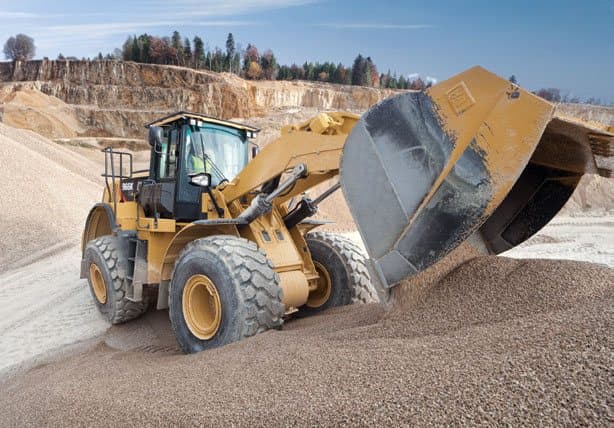
Some scopes are simply faster with larger iron. For mass loading, a wheel loader like the Caterpillar 950 GC brings an operating weight of 18,500 kg and a bucket capacity of 3.1 to 3.3 m³. For combined loading and utility trenching, a backhoe such as the JCB 3CX offers a max digging depth of 5,460 mm. For deep trenching and precision excavation, an excavator like the Caterpillar 320D2 pairs a 21,900 kg operating weight with up to 6,720 mm of digging depth. If your workload looks more like continuous digging, these platforms may be more productive than adding ever-larger skid steer attachments.
Shopping checklist and next steps
- Match attachment flow class to your machine, do not assume “fits” means “performs.”
- Verify case-drain requirements and electrical connectors.
- Weigh the attachment and confirm ROC and transport capacity.
- Choose widths to fit gates, trailers, and site constraints.
- Plan guarding and debris management for brush and forestry work.
Ready to dial in the right tool? Browse attachments, compare carrier specs in our specs database, and line up options in side‑by‑side compare. When you’re set to buy or try before you buy, check current for‑sale listings and nearby rentals. Need wear parts or hoses? Head over to parts to keep your setup working all season.