Rough Terrain Forklifts, Tires, Stability and Load Charts
What to consider when choosing a rough terrain forklift, from tire choices and masted or telehandler stability to reading load charts that match your ground.
When the ground is rutted, sloped or muddy, a rough terrain forklift keeps materials moving. Choosing the right machine and tires, understanding how stability really works, and reading a load chart correctly will determine whether your lift feels routine or risky. This guide covers practical jobsite choices contractors make every day, with a quick baseline spec comparison for context, tire selection advice, stability essentials, and a step-by-step way to work through telehandler load charts.
Rough terrain forklift basics and limits
“Rough terrain forklift” generally means a machine designed to travel and lift on unprepared surfaces. That includes two broad types:
- Masted rough terrain forklifts (straight-mast) with large pneumatic tires and, often, 4x4 for yard work and site handling.
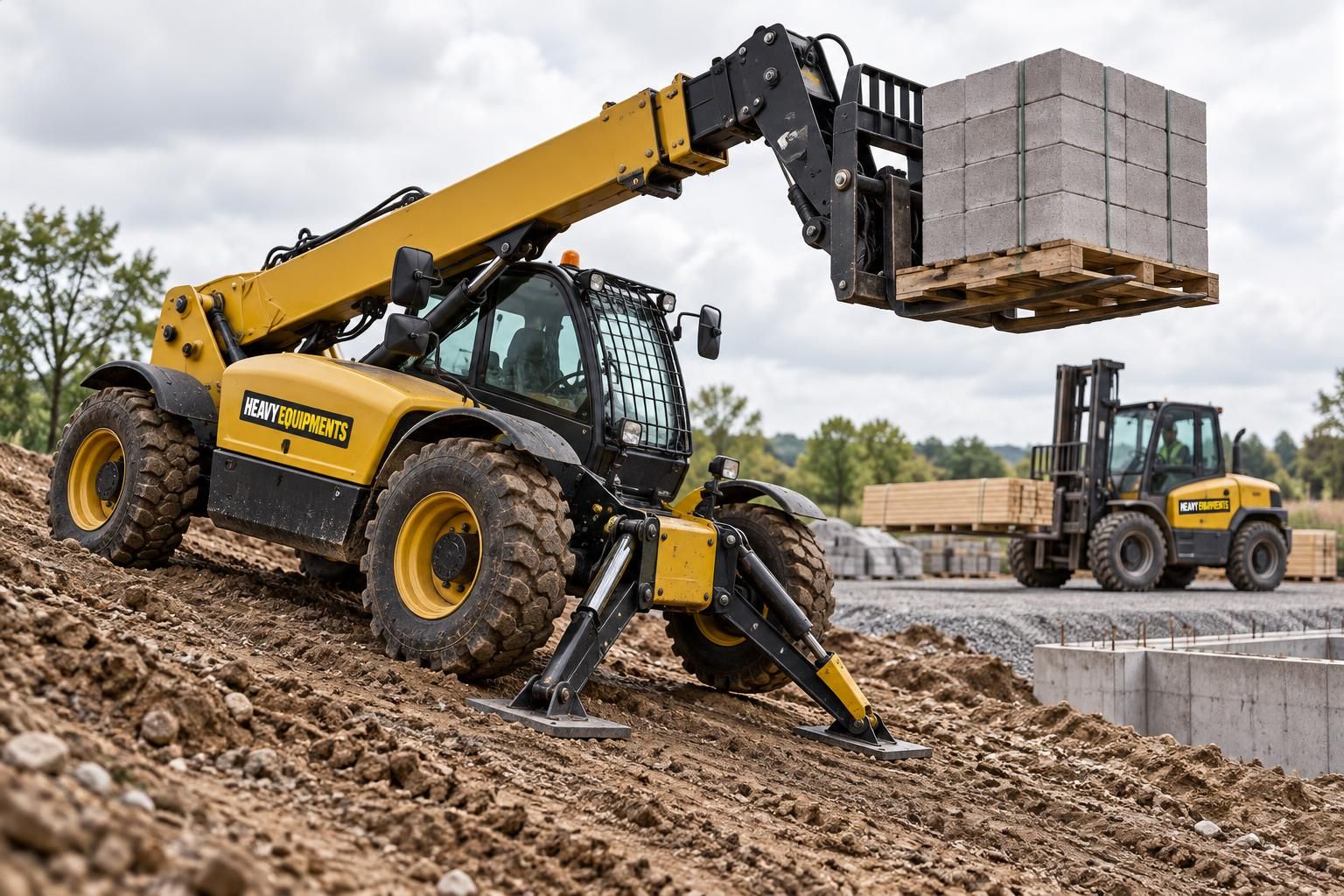
- Telehandler forklifts (telescopic handlers) with a boom and carriage for reach over obstacles and staging on uneven ground.
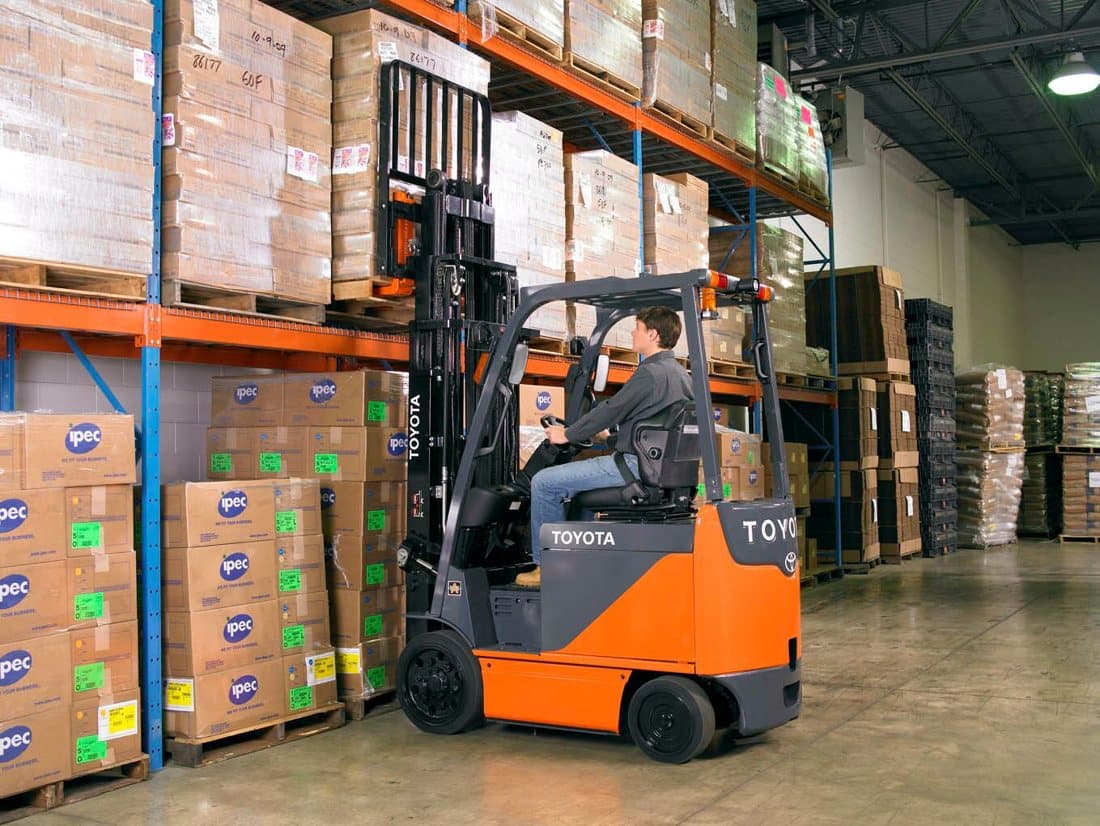
For context, compare an indoor electric warehouse forklift to a diesel yard forklift. They share the same basic load rating language, such as capacity, load center, and lift height, but their jobsite usefulness differs.
Baseline forklift specs for context
| Model | Rated capacity | Load center | Standard lift height | Power | Mast | Turning radius |
|---|---|---|---|---|---|---|
| Toyota 8FBMT30 | 3,000 kg (6,614 lb) | 500 mm (19.7 in) | 3,000 mm (118.1 in) | Electric (80 V) | Duplex / Triplex options | 2,200 mm (86.6 in) |
| Linde H25 | 2,500 kg (5,512 lb) | 500 mm (19.7 in) | 3,150 mm (124.0 in) | Diesel | Duplex / Triplex options | , |
Notice both models are rated at a 500 mm (19.7 in) load center, and each lists a standard lift height. On real dirt and gravel, a diesel masted forklift like the Linde H25 is commonly chosen over an indoor electric like the Toyota 8FBMT30. For true reach over foundations or into trucks from uneven approaches, a telehandler forklift is often the better tool because its load chart accounts for boom extension and height.
Tires for rough terrain traction and protection
Tires determine where you can go, how smoothly you get there, and how much abuse the machine takes. Match them to the ground you actually have, not the ground you wish you had.
- Pneumatic (air-filled) tires: Best ride and traction in mud, gravel and ruts. They conform to uneven surfaces and spread load. Plan for puncture risks; keep a service plan or spares if your site has debris.
- Foam-filled pneumatic: The “no-flat” option for nails and rebar fields. Heavier and firmer ride than air; helpful for uptime on demolition or rebar-intensive sites.
- Solid pneumatic: Durable for sharp debris and high-cycle yards. Less shock absorption; operators will feel rough ground more. Good choice where uptime and puncture resistance matter most.
- Tread pattern and width: Deep-lug patterns provide bite on soft ground. Wider tires lower ground pressure, which helps in sand and clay but can reduce clearance between tire and chassis, verify clearance through full steer and suspension travel.
- Chains and studs: Reserve for ice/snow with site approval. Ensure clearance at fenders and counterweight and verify they don’t contact hoses or wiring at full lock.
Whatever you choose, keep tires matched on an axle and verify the tire’s load rating meets or exceeds the forklift’s maximum axle load for the tasks you expect. If you anticipate frequent curb climbs or cribbing, spec the tire for impact resistance, not just puncture resistance.
Stability essentials for masted and telehandler forklifts
Every lift is a balance between the machine, the load, and the ground. A few principles keep you out of trouble:
- Masted forklifts use the stability triangle. The rated capacity (for example, 2,500 to 3,000 kg at a 500 mm load center on the models above) assumes firm, level ground, a centered load, and a standard mast configuration. As the load’s center of gravity moves forward (because the forks are long, the load overhangs, or the mast tilts forward), your effective capacity drops.
- Height magnifies small mistakes. Any mast deflection, side-shift offset, or uneven ground moves the system center of gravity. Keep forks low when traveling and position the load as close to the carriage as practical.
- Side slopes are risky. Even with large tires, avoid crossing significant slopes with a raised load. If travel across a slope is unavoidable, keep the load on the uphill side and as low as possible, and reduce speed.
- Telehandlers add boom dynamics. Extending the boom increases forward reach and raises the center of gravity. That’s why telehandlers rely on a load chart instead of a single capacity number. Features like frame leveling and stabilizers (if equipped) change what the chart allows. Verify their status before you read the chart.
Bottom line: treat the nameplate capacity as a starting point, not permission to lift anything under that number in any situation.
Read a telehandler load chart step by step
Load charts look dense until you follow a consistent path. Before you pick, walk through these steps:
- Identify the exact attachment. Charts differ for standard forks, carriage with sideshift, bucket, or other attachments. Make sure the chart in the cab matches the attachment installed.
- Confirm machine configuration. Note stabilizers stowed or deployed, frame leveling centered or offset, and tire type if the chart specifies.
- Find the load center for your load. Many materials on forks extend beyond the heel of the forks; compare your load’s center of gravity to the chart’s reference (masted forklifts often use 500 mm; telehandlers call out fork position and load center in the chart).
- Locate the working zone. Charts divide by boom extension (or section), boom angle, and sometimes height. Start with your planned height and horizontal reach, then read the allowed capacity in that box.
- Check approach and ground. If you’ll be on a slope, ruts, or soft fill, apply a safety margin by choosing a configuration that keeps you well under the charted limit. If you can’t, re-stage closer, build up a level pad, or upsize the machine.
- Rehearse the pick. Dry run the boom path and travel route without the load to verify clearance and footing. If anything changes, attachment, boom angle target, or approach line, re-check the chart.
Never extrapolate between boxes or assume you “have a little extra.” If you’re operating at the edge of a chart, change the plan: reduce reach/height, lighten the load, improve the ground, or choose a larger telehandler forklift.
Jobsite tire and lift planning checklist
- Surface: Map your worst-case travel path (deep ruts, soft spots, curbs). Choose tires and a machine that can handle those, not just the easy path.
- Slopes: Measure or at least walk the path both directions. If the forklift must cross a slope with material, consider regrading, mats, or a different approach.
- Load handling: Know the load center, packaging, fork pockets, and whether you’ll need sideshift or a rotating carriage. Secure loose bundles with approved methods.
- Visibility and spotting: Assign a spotter in congested or blind areas. Plan hand signals and radio channels.
- Staging: Build level, compacted pads where you’ll stack or unload. Avoid stacking on uncompacted fill.
- Weather: Wet clay and thawing ground change everything. Reassess traction and chart margins after storms or freeze thaw cycles.
- Inspection: Check tires, forks, carriage, mast or boom chains, and hydraulics before shifts. Replace damaged forks and address leaks before lifting.
Rent or buy and find the right machine
If you only need rough terrain capability for a short window, look at forklift rentals. Renting lets you match tire type, mast height, or boom reach to this project’s demands, then return it. For longer-term needs, browse machines for sale and plan for the right tire package and attachments from day one. If your current forklift just needs forks, carriages, or specialty tools, see attachments and parts.
Next steps for your forklift plan
Start by exploring our equipment specs and use Compare to stack models side by side. If your job requires reach and variable loads, bring a telehandler forklift into the comparison so the load chart matches your work. When you are set, line up rentals for short term needs or start shopping listings to build your fleet.