Mini Excavator Rental Sizing, Rates, and Transport Tips
Half the battle is sizing your mini excavator. Match depth and reach to the job, scan real specs, and avoid surprises on delivery, hauling, and rates.
Picking the right mini excavator rental hinges on size, the setup, and logistics. Size means reach, lift capacity, and fit on site. Setup covers attachments and hydraulics. Logistics includes delivery, transport, and real all in rates. Below, we break down how to choose a size with confidence, show verified specs from widely rented minis, and share practical transport and quoting tips.
Pick the right size for your job
Start with the work, not the brand. A Cat mini excavator, a Kubota mini excavator, and a Yanmar mini excavator in the same class will feel similar on trenching tasks, the difference is whether that class is big enough and whether the machine fits your site and trailer.
- Match digging depth to the work. If your utility run is 1.5 to 2.5 m deep, a 1.5 to 3 t mini is often sufficient. Deeper utilities around 3 to 4 m push you toward 4 to 6 t minis. For example, the Kubota U35 lists a max digging depth of 317 cm (125 in.), while larger minis like the Bobcat E55 reach 393 cm (155 in.) and the Bobcat E63 reaches 411 cm (162 in.).
- Plan for reach and dump height. Trenching along setbacks or loading into high-sided trucks requires enough reach along the ground and sufficient loading height. In the 3 to 6 t range, reaches around 5.0 to 6.2 m are common; see the table below for model-by-model numbers.
- Check access width and tail swing. Micro and 1 to 2 t minis can squeeze through tight gates and pathways. For tight access, note overall width: the Yanmar SV08-1B is 85.3 cm (33.6 in.) wide and the Yanmar VIO17-A is 97.5 cm (38.4 in.). Zero or short tail swing helps when digging next to structures or in lanes.
- Be realistic about lift expectations. If you plan to set structures (vaults, tanks) or run a breaker, size up. Heavier minis 5 to 6 t offer more stability and power than 1 to 3 t units.
When a standard excavator makes more sense
If you truly need deep cuts or big buckets, step out of the mini class. A standard excavator like the Caterpillar 320D2 lists an operating weight of 21,900 kg, a bucket capacity of 0.9 to 1.2 m³, and a max digging depth of 6,720 mm, well beyond mini capabilities. Right size your rental to the heaviest task you cannot avoid.
Mini excavator specs at a glance
Use this table to quickly gauge size classes by weight, power, max digging depth, and reach. All figures are from our verified database. For deeper research, browse all models in Specs or compare up to four at once in Specs Compare.
| Model | Weight | Power | Max digging depth | Max reach along ground |
|---|---|---|---|---|
| Bobcat 316 | 760 kg (1676 lbs) | 7 kW (10 HP) | 155 cm (61 in.) | 277.4 cm (109.2 in.) |
| Yanmar SV08-1B | 1065 kg (2348 lbs) | 7 kW (10 HP) | 162 cm (64 in.) | 273.1 cm (107.5 in.) |
| Takeuchi TB016 | 1598 kg (3524 lbs) | 10 kW (13 HP) | 241 cm (95 in.) | 390.1 cm (153.6 in.) |
| Yanmar VIO17-A | 1740 kg (3836 lbs) | 10 kW (14 HP) | 235 cm (92 in.) | 381.0 cm (150.0 in.) |
| Takeuchi TB23R | 2600 kg (5732 lbs) | 13 kW (18 HP) | 256 cm (101 in.) | 435.9 cm (171.6 in.) |
| Takeuchi TB228 | 2810 kg (6195 lbs) | 17 kW (23 HP) | 259 cm (102 in.) | 457.2 cm (180.0 in.) |
| Takeuchi TB28FR | 3095 kg (6823 lbs) | 16 kW (22 HP) | 259 cm (102 in.) | 463.3 cm (182.4 in.) |
| Kubota U35 | 3735 kg (8234 lbs) | 21 kW (28 HP) | 317 cm (125 in.) | 515.1 cm (202.8 in.) |
| Bobcat 331E | 3519 kg (7758 lbs) | 30 kW (40 HP) | 393 cm (155 in.) | 563.9 cm (222.0 in.) |
| Bobcat E50 | 4843 kg (10677 lbs) | 37 kW (49 HP) | 354 cm (139 in.) | 594.4 cm (234.0 in.) |
| Bobcat E55 | 5536 kg (12204 lbs) | 37 kW (49 HP) | 393 cm (155 in.) | 609.6 cm (240.0 in.) |
| Bobcat E63 | 6250 kg (13779 lbs) | 44 kW (59 HP) | 411 cm (162 in.) | 621.8 cm (244.8 in.) |
Attachments hydraulics and setup questions to ask
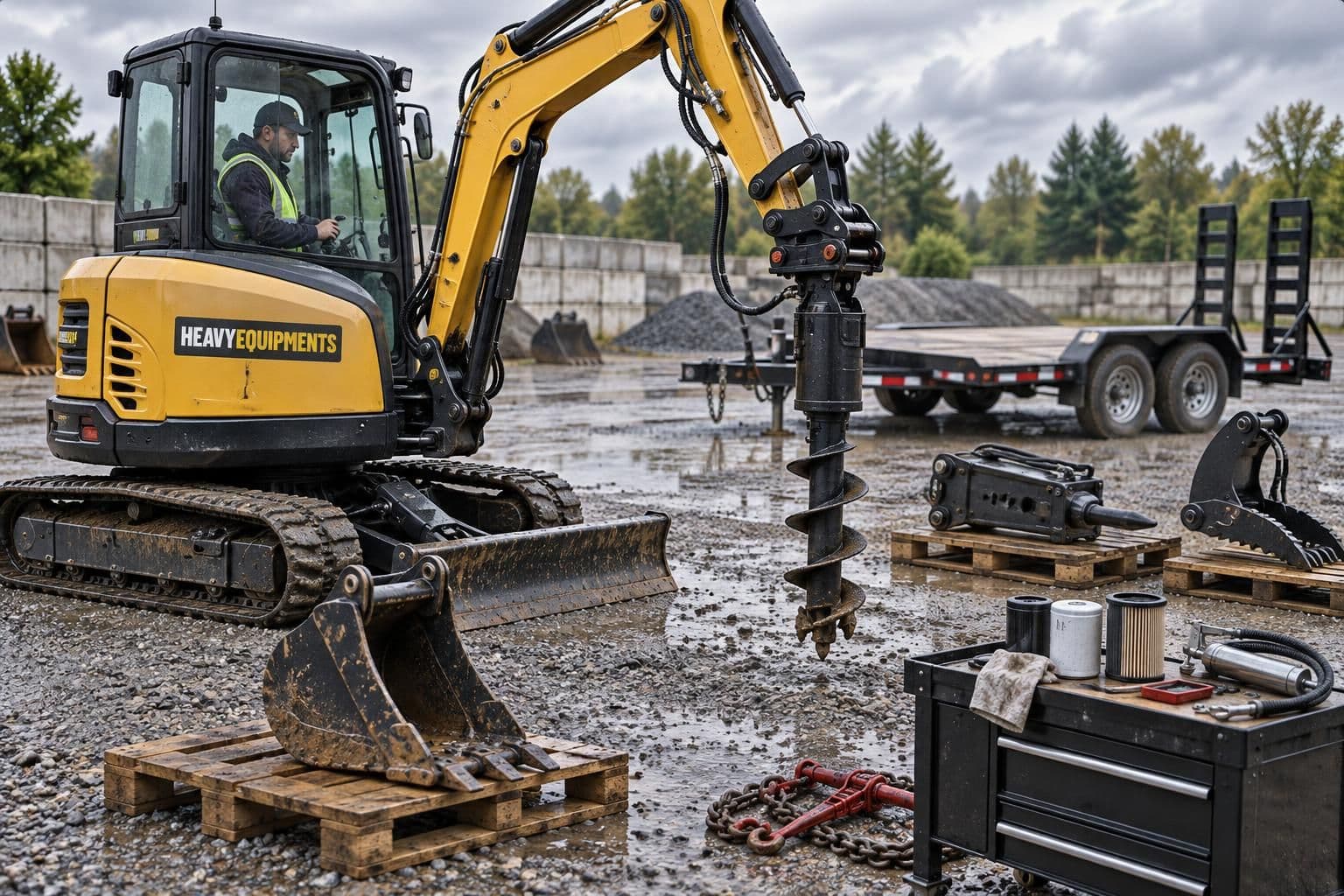
Attachments can make or break productivity on a mini excavator rental. Before you book:
- Get the bucket lineup right. Confirm trenching widths and ask for a grading bucket if you plan to backfill or finish. Ask if a hydraulic thumb is included if you are handling debris.
- Verify hydraulic circuits and compatibility. If you need an auger or breaker, confirm the machine is plumbed and the couplers match what the rental yard supplies. Verify flow and pressure compatibility with the attachment provider.
- Choose the coupler approach. Pin on versus quick coupler changes how quickly you can swap tools. If multiple bucket changes are planned, ask for a compatible quick coupler.
- Check tracks and undercarriage. Rubber tracks are typical for minis and are gentler on hardscapes. Inspect track condition at delivery to avoid downtime.
Transport and access hauling and fit considerations
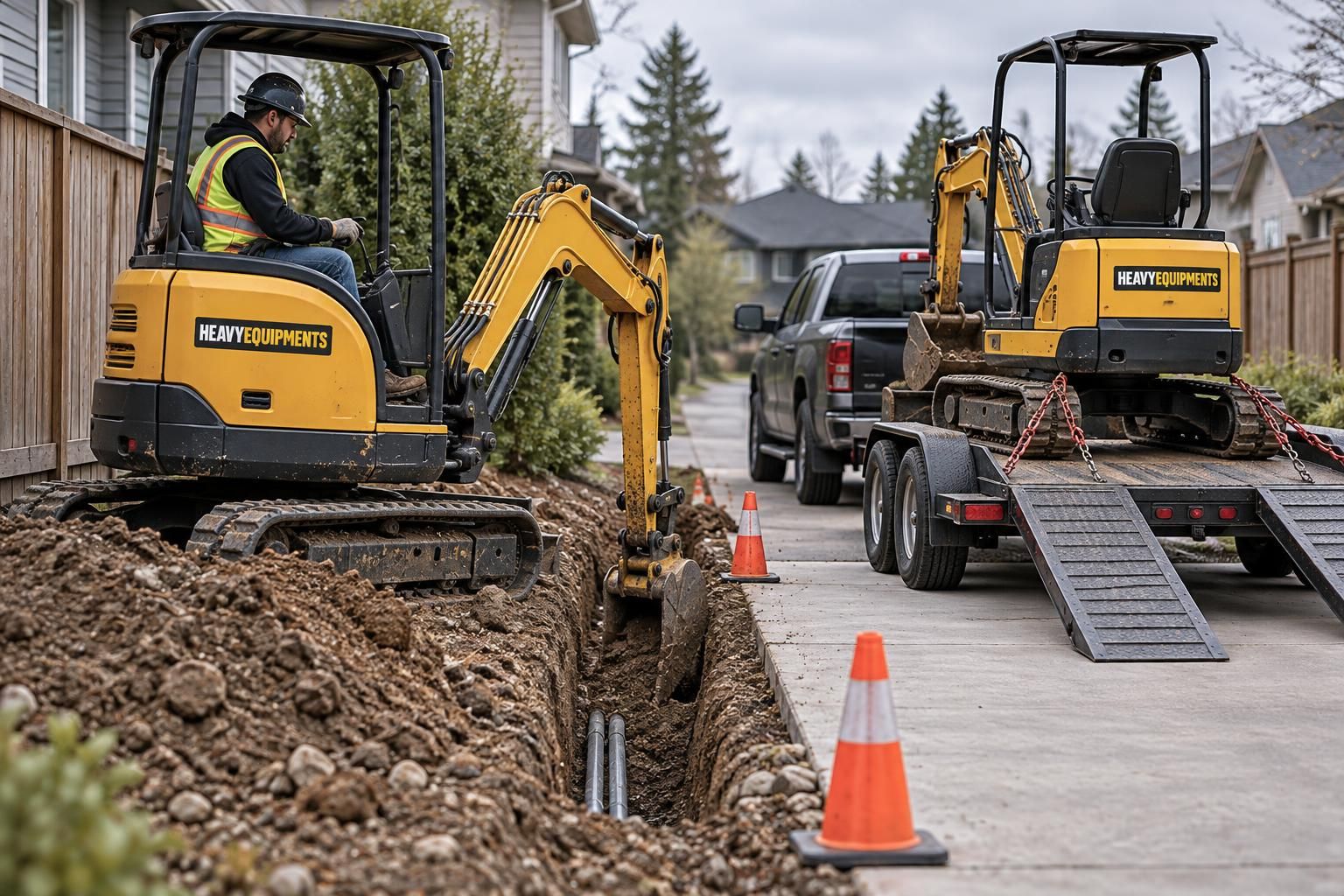
Minis are popular because many can be trailered, but weight and dimensions still matter. Build your transport plan around verified machine weight plus the weight of the trailer, attachments, and fuel. Examples from the table:
- Sub 1 t micros. The Bobcat 316 is 760 kg (1676 lbs). These can be easy to place in tight courtyards or backyards.
- 1 to 2 t class. The Yanmar SV08-1B is 1065 kg (2348 lbs) and the Takeuchi TB016 is 1598 kg (3524 lbs). Some can pass through gates; the SV08-1B width is 85.3 cm (33.6 in.).
- 3 to 4 t class. Models like the Kubota U35 at 3735 kg (8234 lbs) offer more reach and stability.
- 5 to 6 t class. Bobcat E55 at 5536 kg (12204 lbs) and Bobcat E63 at 6250 kg (13779 lbs) are heavier and may require larger trailers and tow vehicles.
Checklist before you tow or accept delivery:
- Confirm the machine’s listed weight and dimensions against your trailer and tow vehicle ratings.
- Account for attachments and fuel in total haul weight.
- Measure access points (gates, alleys, doorways). For very tight sites, note narrow models like the SV08-1B at 85.3 cm (33.6 in.) wide or the VIO17-A at 97.5 cm (38.4 in.).
- Plan firm, level loading and unloading areas; bring adequate chains, binders, and chocks.
- Check local transport regulations and any permits required.
What sets rental rates and all in quotes
While we don’t publish dollar amounts for every market, here is what consistently drives a mini excavator rental rate:
- Size class affects price. Heavier, more powerful units, for example 5 to 6 t, cost more than micros and 1 to 2 t minis.
- Duration changes the structure. Daily, weekly, and monthly terms differ. Multi week commitments often improve the effective daily rate.
- Delivery and pickup are separate. Freight is commonly separate from the machine rate. Distance, scheduling windows, and jobsite access affect this line item.
- Attachments add fees. Breakers, augers, and extra buckets typically add per day or per month charges.
- Hour caps matter. Many rentals include an hourly usage cap per day, week, or month; overages are billed.
- Protection, cleaning, and fuel. Damage waivers, environmental fees, cleaning, and fuel charges can add up.
- Season and demand shift pricing. Storm work, municipal shutdowns, and peak building seasons tighten supply.
To lock a real, all in number, ask every supplier to quote the same scope:
- Exact model or equivalent size class, with listed weight and digging depth you need
- Included buckets and coupler type; price and availability for thumb, auger, or breaker
- Delivery and pickup to your site, with dates and time windows
- Hour cap, damage waiver terms, cleaning/fuel policy, overtime and weekend policies
You can start with nearby inventory in our Rentals directory, then shortlist and request side by side quotes.
Next steps to book your rental
- Dial in your size using verified specs: browse all mini excavators in Specs and compare models in Specs Compare.
- Find a local mini excavator rental and request an all in quote via Rentals.
- Need tooling? Browse Attachments. Keeping a crew running? Source Parts fast.
- If you’re renting often, you may be close to a break even on ownership. Shop current listings in For Sale.