Get Forklift Certified and Meet OSHA Standards
Plain English guide to OSHA forklift certification, who can certify, truck classes, and how to find training near you. Includes a quick look at electric and diesel counterbalance trucks.
If you are asking how to get forklift certified, you are not alone. For operators seeking forklift jobs and small fleet owners working to stay compliant, this guide explains what OSHA expects, how certification works, which forklift classes matter for training, and how to choose the right path, employer led or third party. It also shows, with real machine examples, why training must match the truck type you will run.
What forklift certified means under OSHA
OSHA treats forklifts as powered industrial trucks. Certification is not a government license, it is a record your employer keeps showing you were trained and evaluated to safely operate the specific truck type(s) you will use, in the conditions you will face. In practice, a compliant program has two pieces:
- Complete formal instruction that covers stability and load handling, with attention to site hazards.
- Get hands on training and an evaluation that include practice on the truck you will use, capped by an observed skills check to confirm safe operation.
Third-party schools can deliver training and even perform evaluations, but your employer is the one who authorizes you to operate on their site. That is why a card from a class is not the whole story, you still need site-specific orientation and authorization.
Truck types drive the training you need
OSHA expects training to be specific to the truck and the workplace. A warehouse electric counterbalance feels and handles differently from a diesel yard truck or a narrow-aisle machine. Attachments (clamps, booms) also change how a lift behaves and require additional instruction.
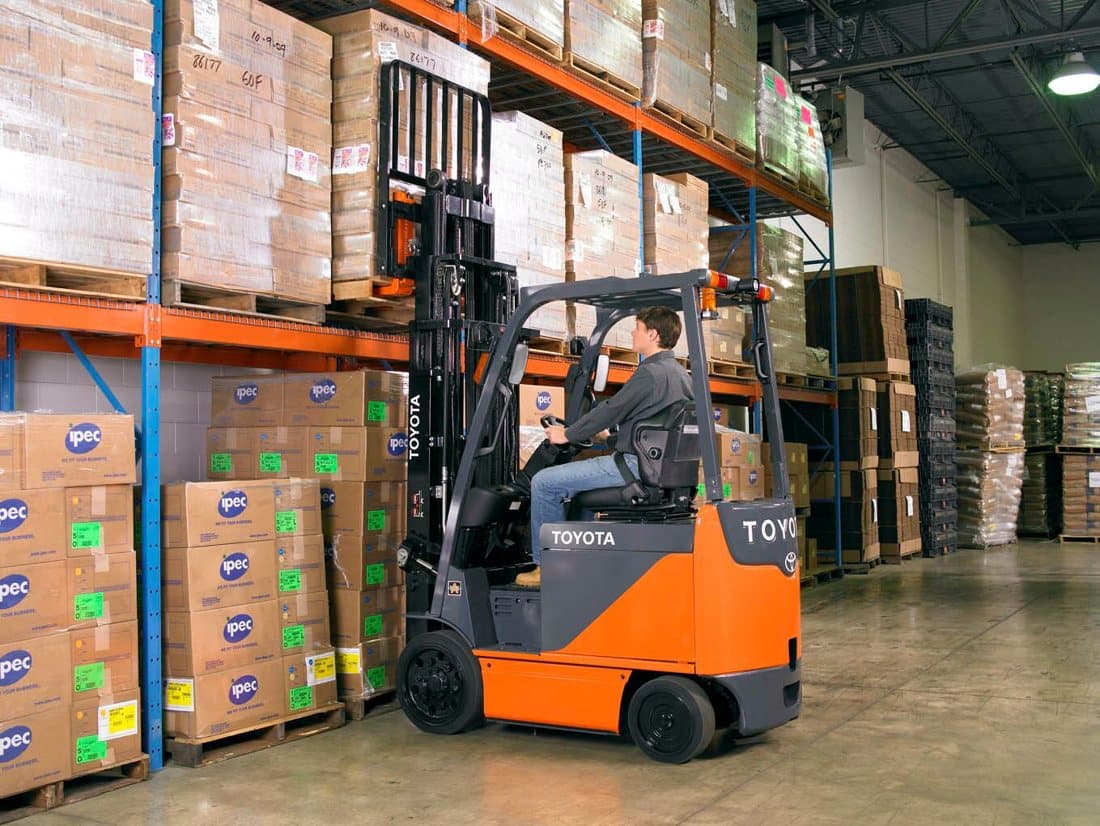
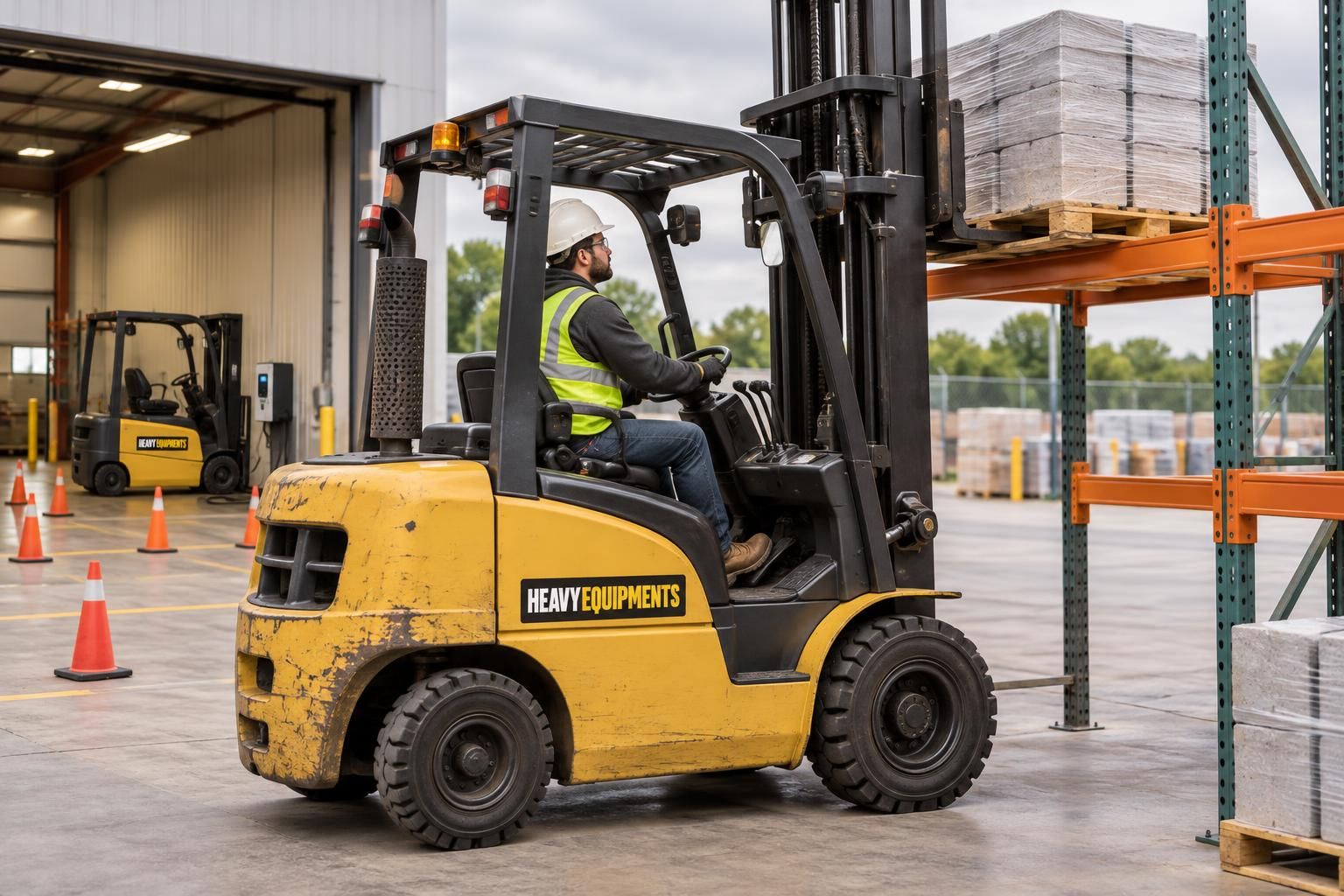
As a real-world contrast, compare an electric warehouse rider and a diesel counterbalance:
| Model | Capacity | Load Center | Standard Lift Height | Power | Mast Type |
|---|---|---|---|---|---|
| Toyota 8FBMT30 | 3,000 kg (6,614 lb) | 500 mm (19.7 in) | 3,000 mm (118.1 in) | Electric (80 V) | Duplex / Triplex options |
| Linde H25 | 2,500 kg (5,512 lb) | 500 mm (19.7 in) | 3,150 mm (124.0 in) | Diesel | Duplex / Triplex options |
Even among counterbalance trucks, feel and performance differ. The Toyota 8FBMT30 is electric and designed for tight indoor work; its turning radius is 2,200 mm (86.6 in), which matters in narrow aisles. The Linde H25 is a diesel counterbalance better suited to outdoor yards and mixed surfaces. The truck type and your environment (not just capacity) should guide your training.
Forklift classes explained in plain English
When people say “forklift classes,” they usually mean OSHA’s groupings of truck types. You do not have to memorize labels to choose training, you just need to match the category you will operate:
- Electric rider counterbalance, common in warehouses (example: the electric Toyota above).
- Internal-combustion counterbalance, cushion tire for smooth indoor floors or pneumatic tire for outdoor yards (example: the diesel Linde above).
- Narrow-aisle and reach trucks, specialized warehouse lifts that steer and handle differently.
- Hand pallet and walkie/rider pallet trucks, walk-behind or stand-on pallet movers.
- Tow tractors, tugs used in manufacturing, distribution, and aviation.
- Rough-terrain forklifts/telehandlers, jobsite machines for construction and agriculture.
Your certification should list the truck category(ies) you trained on. If you change to a different type later (for example, from an electric rider to a rough-terrain telehandler), you will need additional, truck-specific instruction and a fresh skills evaluation.
How to get forklift certified simple path
- Pick the truck type(s) you will run. Warehouse electric, IC counterbalance for yard work, narrow-aisle, pallet trucks, or rough-terrain. If you will use attachments like clamps, note those too.
- Choose a training route.
- Employer led training, many companies train in house using qualified trainers and your actual equipment.
- Third-party class, search “forklift certification near me” and verify the provider covers your truck type and includes hands-on practice plus an operator evaluation.
- Union or trade school, good for pre employment skills, coordinate with your future employer for site authorization.
- Complete formal instruction. Expect coverage of stability principles, load charts, controls/instruments, operating surfaces, ramps/docks, pedestrian safety, refueling/charging, and inspection.
- Do hands-on training and a skills evaluation on the same type you will operate. Your evaluator will observe starting/stopping, maneuvering, stacking/unstacking, traveling with and without a load, and parking/shutdown.
- Get authorized to operate at your site. Even with a school card, your employer must confirm you are trained for their hazards (aisle layouts, product types, traffic patterns) and keep a record of your training and evaluation.
What employers need to cover in a compliant program
Employers can run a solid, right-sized program with these essentials:
- Provide truck-specific content using your actual models. If you run both electric warehouse riders and outdoor diesel pneumatics, train for each.
- Include workplace-specific content. Address your aisles, racks, docks, slopes, pedestrians, and product hazards (e.g., paper rolls, long lumber).
- Use qualified trainers and evaluators who know the trucks and can judge safe performance.
- Give operators hands-on practice with time on the truck before evaluation.
- Document the evaluation and authorization. Keep records noting the operator, truck type(s), evaluation date, and evaluator.
- Set refresher triggers. Retrain and re-evaluate when there is an incident or near-miss, unsafe operation, changes in equipment, or significant changes in conditions.
Finding forklift training and certification near you
For individuals seeking forklift jobs or upskilling before applying:
- Search locally for “forklift training” or “forklift certification near me,” then check that the course matches your target truck type and includes both classroom and hands-on components.
- Ask if they can perform the operator evaluation on the same truck category and provide documentation your employer can use to authorize you at their site.
- Confirm the course addresses battery charging (for electric) or fuel handling (for diesel/LP), whichever applies to your path.
For employers building a pipeline, partner with a nearby provider for foundational training, then finish with site-specific practice and evaluations on your own equipment.
Pro tips to pass your evaluation the first time
- Perform a pre use inspection. Be methodical: forks, mast, chains, hydraulics, tires, horn, lights, brakes, seat belt, and for electrics, battery connections; for diesel, fluid leaks and fuel level.
- Know your load center. Both examples above reference a 500 mm (19.7 in) load center, and longer or oddly shaped loads reduce capacity.
- Apply stability basics. Keep the load low and tilted back while traveling, and slow down on turns and rough surfaces.
- Use aisle awareness. If you are on a tight-aisle electric like the Toyota with a 2,200 mm (86.6 in) turning radius, plan your turns and keep forks centered.
- Give pedestrians the right of way. Make eye contact and use your horn at intersections, and never obstruct fire exits or emergency equipment.
When to refresh training
You will need refresher training and another skills check if there is an incident, observed unsafe operation, you switch to a different truck type (for example, moving from an electric rider to a rough-terrain unit), or your workplace changes substantially (new layouts, surfaces, or hazards). Employers should also re-evaluate operators periodically to confirm continued safe performance.
Next steps compare trucks then line up training
If you are planning which forklifts to operate or buy, browse our equipment specs and use Compare to see differences across models and truck types. For acquisition, check current for-sale listings or short-term rentals. If you will use attachments that change handling and capacity, explore attachments and make sure they are included in your training. For upkeep, source parts to keep your fleet inspection-ready.
Bottom line: to get forklift certified, match your training to the truck and the site, complete formal and hands on instruction, pass an operator evaluation, and secure employer authorization. Do that, and you will be ready to work safely and confidently, inside the warehouse on an electric rider or outside in the yard with a diesel counterbalance.