Heavy Equipment Rental Delivery, Insurance and Utilization Guide
A practical playbook for heavy equipment rental that covers delivery logistics, damage waivers and insurance, and a utilization strategy that keeps jobs moving.
Getting heavy equipment rental right is less about finding a machine and more about controlling time and risk while protecting uptime. This guide covers delivery and mobilization, what damage waivers and insurance actually cover, and how to build a utilization strategy that keeps your crews productive. You’ll also find an excavator comparison table from our spec database to help right size your next excavator rental.
Right size the rental for the job
Before calling the yard, confirm what the work actually demands, who will run the iron, and where it has to operate. That prevents oversizing (higher transport and fuel burn) and undersizing (missed production). Keep these points in view:
- Define the job limits: trench/footing depth, reach, lift requirements, dump height, and underfoot conditions.
- Pick a size class your crew can run safely and productively. For excavator rental, depth and reach drive the choice; for skid steer rental, think attachment flow and maneuvering room; for bulldozer rental, balance blade capacity with traction and finish-grade needs.
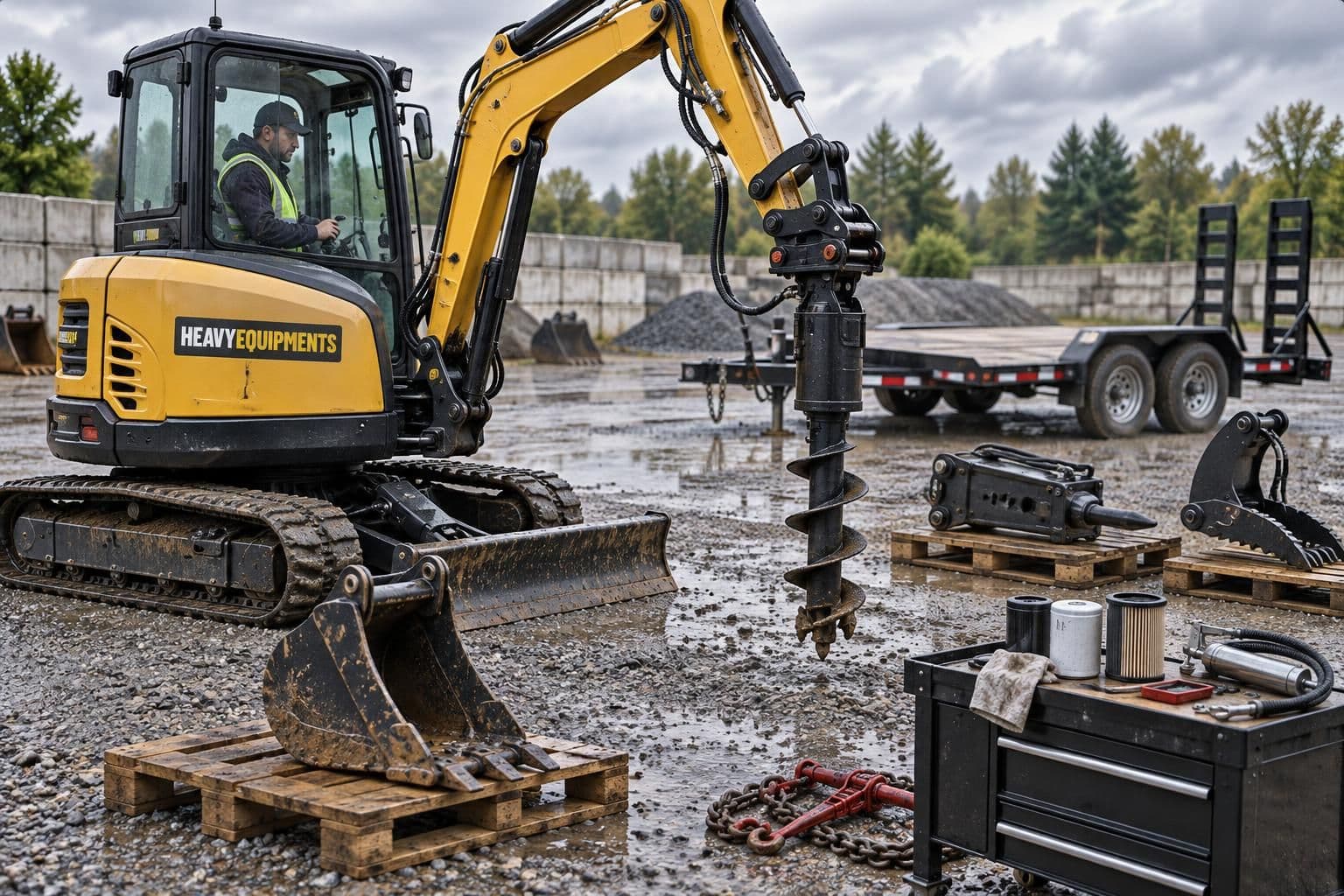
- Lock in attachments up front (buckets, thumbs, breakers, forks). Browse compatible options on attachments and confirm coupler type with the supplier.
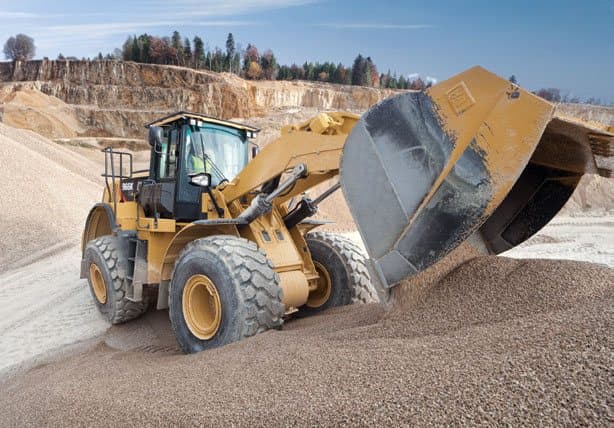
- Check transport feasibility. A large excavator requires different routing, permits, and offload room than a mini. If you need wheel loader capacity on site, a model like the Caterpillar 950 GC lists a bucket capacity of 3.1 to 3.3 m³ and runs on diesel power, plan ground conditions and dump targets accordingly.
If you’re deciding between mid-size and large excavators for general earthwork, a model such as the Caterpillar 320D2 (tracked) pairs a digging depth of 6,720 mm with bucket capacities of 0.9 to 1.2 m³, often a productive middle ground for utilities and sitework without the mobilization footprint of a larger machine.
Delivery pickup and site readiness
Most rental waste happens between the lowboy and the first bucket in the ground. Treat delivery like an operation:
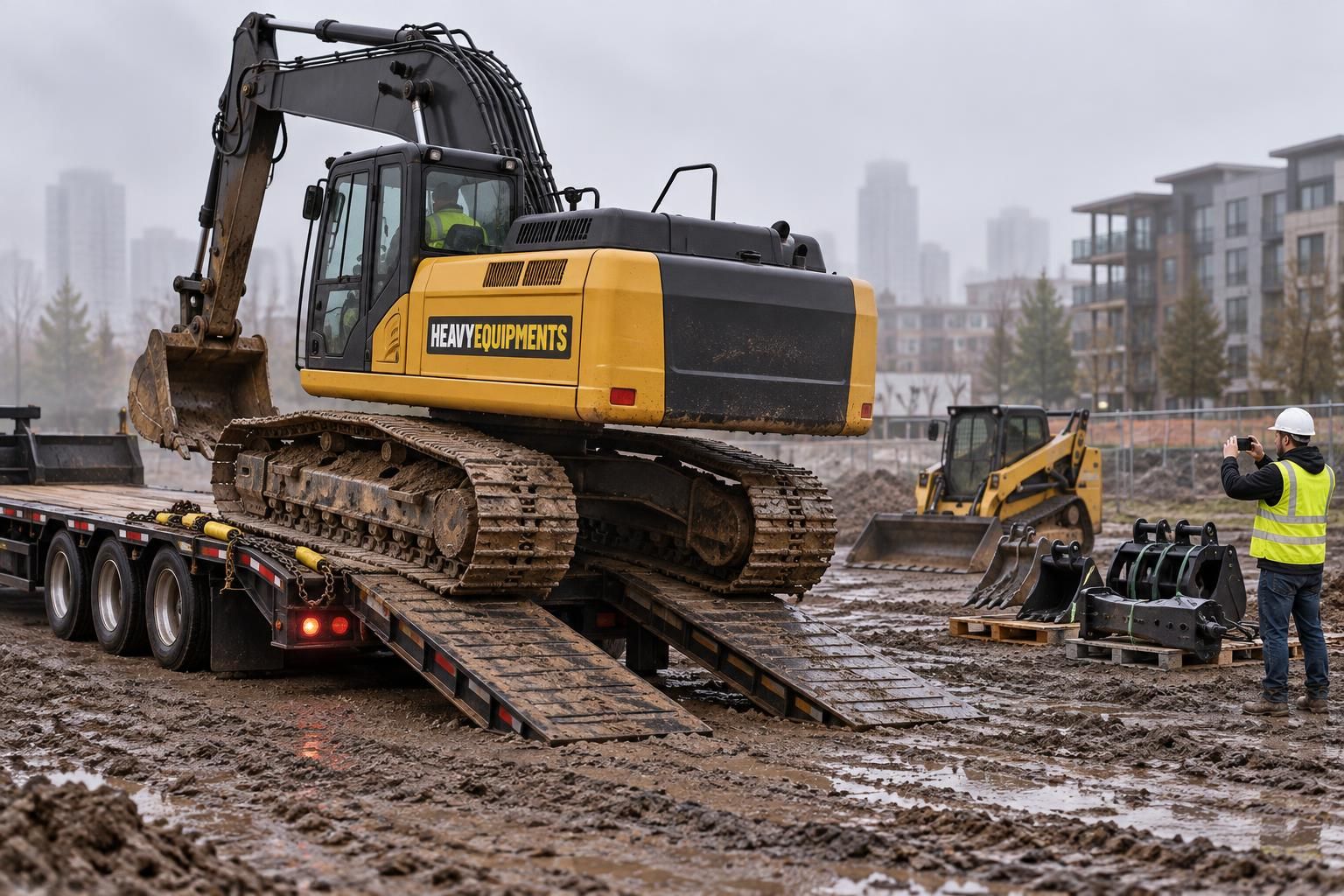
- Ensure the truck has a clear approach, turning room, and stable offloading ground. For tracked machines, provide mats if soil is soft.
- Mark a safe drop zone away from overhead lines and traffic. Have key people on site for walkarounds and to verify the hour meter at drop off.
- Inventory buckets, pins, and hoses on delivery. Note each item on the delivery ticket and photograph condition.
- Confirm who fuels and when. Many contracts require full tanks on pickup.
- Call off the machine the moment work is done and clear a path for loading. Delays at demobilization can add extra days.
Damage waivers and insurance coverage
Two separate protections usually apply to a heavy equipment rental, your liability and physical damage insurance and the rental company’s damage waiver. Treat them as different tools.
- A damage waiver typically reduces your responsibility for certain accidental damage to the rented equipment. It usually excludes misuse, overloading, loss of use, and third party injury or property damage.
- Contractors commonly provide proof of general liability and physical damage for rented equipment. Confirm limits, deductibles, theft and vandalism coverage, and any requirements to list the rental provider as additional insured or loss payee.
- Complete a documented inspection at delivery and pickup with photos and the hour meter. Note preexisting wear. Keep serial numbers and attachment lists with your job file.
- Allow only competent operators and keep the machine within rated capacities. Contract exclusions often hinge on use outside normal operation.
Discuss specifics with your broker and the rental counter before the machine rolls. Clarity on who covers what prevents disputes later.
Utilization strategy schedule and idle control
High utilization without damage is the goal. A few practices keep rental ROI on track:
- Build the schedule around the machine. Stack tasks so the rented unit arrives ready to dig, load, or grade without waiting on stakeout or trucks.
- Right size by task, not by habit. Use the table below to match depth and reach. For example, a mini excavator can handle tight utilities. Step up to a large unit where reach along the ground and dump height control cycle times.
- Trim idle time. Track key on versus working hours, then shut down during extended waits. Assign a lead who calls off the machine the moment work completes.
- Prepare operators with a short toolbox talk on controls and safety devices, plus quick coupler checks to reduce mishaps.
- Keep common wear parts handy. See parts to minimize downtime mid rental.
Excavator comparison mini to large
The table summarizes a cross-section of excavators from mini to large. Use it to gauge whether a compact unit can hit your depth and reach targets, or if a larger machine is justified. All figures are from our verified listings.
| Model | Type | Weight | Horsepower | Max Digging Depth | Max Reach Along Ground |
|---|---|---|---|---|---|
| Bobcat 316 | Mini Excavator | 760 kg (1676 lbs) | 7 kW (10 HP) | 155 cm (61 in.) | 277.4 cm (109.2 in.) |
| Kubota U35 | Mini Excavator | 3735 kg (8234 lbs) | 21 kW (28 HP) | 317 cm (125 in.) | 515.1 cm (202.8 in.) |
| Bobcat E63 | Mini Excavator | 6250 kg (13779 lbs) | 44 kW (59 HP) | 411 cm (162 in.) | 621.8 cm (244.8 in.) |
| Komatsu PC400LC-6 | Large Excavator | 42600 kg (93917 lbs) | 228 kW (306 HP) | 680 cm (268 in.) | 1085.1 cm (427.2 in.) |
| Komatsu PC490LC-11 | Large Excavator | 47370 kg (104433 lbs) | 268 kW (359 HP) | 680 cm (268 in.) | 1085.1 cm (427.2 in.) |
| Volvo EC480D | Large Excavator | 48300 kg (106483 lbs) | 260 kW (348 HP) | 683 cm (269 in.) | 1109.5 cm (436.8 in.) |
| Volvo EC700CL | Large Excavator | 71699 kg (158070 lbs) | 316 kW (424 HP) | 725 cm (286 in.) | 1121.7 cm (441.6 in.) |
| John Deere 992E LC | Large Excavator | 44271 kg (97600 lbs) | 213 kW (285 HP) | 728 cm (287 in.) | 1118.6 cm (440.4 in.) |
Reading the table: if your trench is 3 to 4 m deep with tight access, the minis above cover that depth with a smaller footprint. For mass excavation or long-reach trenching where cycle time and dump height drive production, the large class (e.g., PC490LC-11 or EC480D) offers the reach along the ground and horsepower to move material efficiently.
Contract controls that protect your margin
- Document tire or undercarriage wear, bucket edge or teeth condition, and any codes on arrival. Record hour meter readings at drop off and pickup.
- Clarify how days and weeks are counted, how transportation hours apply, and what happens if pickup is missed.
- Agree on who bears recovery costs if a machine gets stuck or roads are impassable.
- List every bucket or tool by serial on the ticket. Mismatched couplers or missing pins lead to idle time.
Renting across the fleet
Mix rentals to match daily sequencing. For example, pair an excavator with a wheel loader or backhoe for material handling and cleanup so trucks never wait. A backhoe like the JCB 3CX offers wheeled mobility and a digging depth of 5,460 mm, which can be useful on spread-out sites where travel speed matters more than pure digging performance.
Next steps for your rental
- Compare detailed specs side by side on Specs Compare, or browse the full specs catalog.
- Ready to source? Check current rentals, or if repeat use is likely, browse machines for sale.
- Line up job-ready tools on attachments and keep downtime low with parts coverage.
With clear delivery plans, the right protection in place, and a utilization-first mindset, your next heavy equipment rental can hit the site, do the work, and roll off without surprises.