Forklift for Sale Inspection Guide, Battery, Mast and Hours
Shopping a forklift for sale? Use this inspection guide for battery health, mast and chain wear, and hour meters, plus a quick spec comparison of a popular electric warehouse unit and a diesel yard workhorse.
When you are sizing up a forklift for sale, the fastest way to protect your budget is a disciplined inspection. This guide focuses on three make or break items, battery life (for electric units), mast and chain wear, and hour meters. It then closes with a quick comparison of two proven models and a short checklist you can use on site.
Match forklift specs to tasks
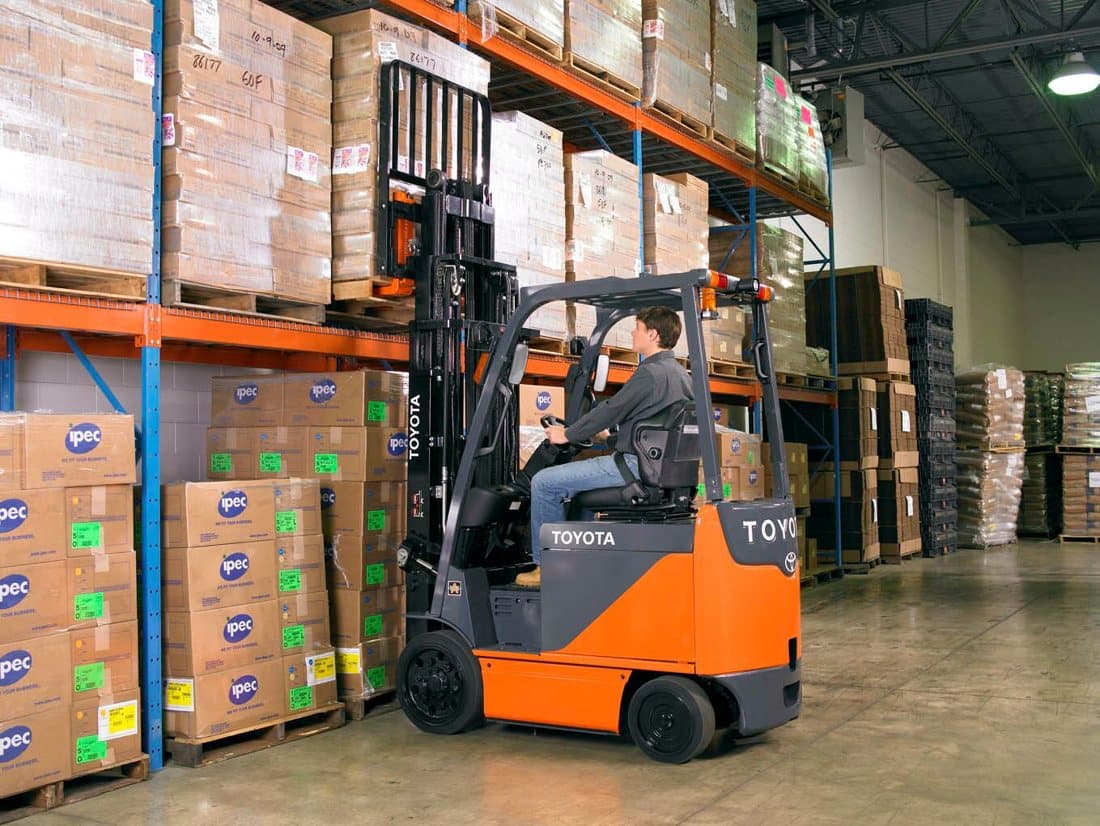
Before you get into condition, verify that the forklift’s basic specs fit your loads and work area. Rated capacity is only valid at the stated load center. Standard lift height tells you if you will clear your racks. Turning radius matters in tight aisles. Power type also drives suitability. An electric forklift is typically ideal as a warehouse forklift, while diesel shines outdoors and on uneven ground similar to a rough terrain forklift application.
Electric and diesel spec snapshot
Here are two widely used models buyers often cross-shop. Use this table to confirm baseline fit, then dig into condition.
| Model | Power | Rated capacity @ load center | Standard lift height | Mast type | Turning radius |
|---|---|---|---|---|---|
| Toyota 8FBMT30 | Electric (80 V) | 3,000 kg (6,614 lb) @ 500 mm (19.7 in) | 3,000 mm (118.1 in) | Duplex / Triplex options | 2,200 mm (86.6 in) |
| Linde H25 | Diesel | 2,500 kg (5,512 lb) @ 500 mm (19.7 in) | 3,150 mm (124.0 in) | Duplex / Triplex options | , |
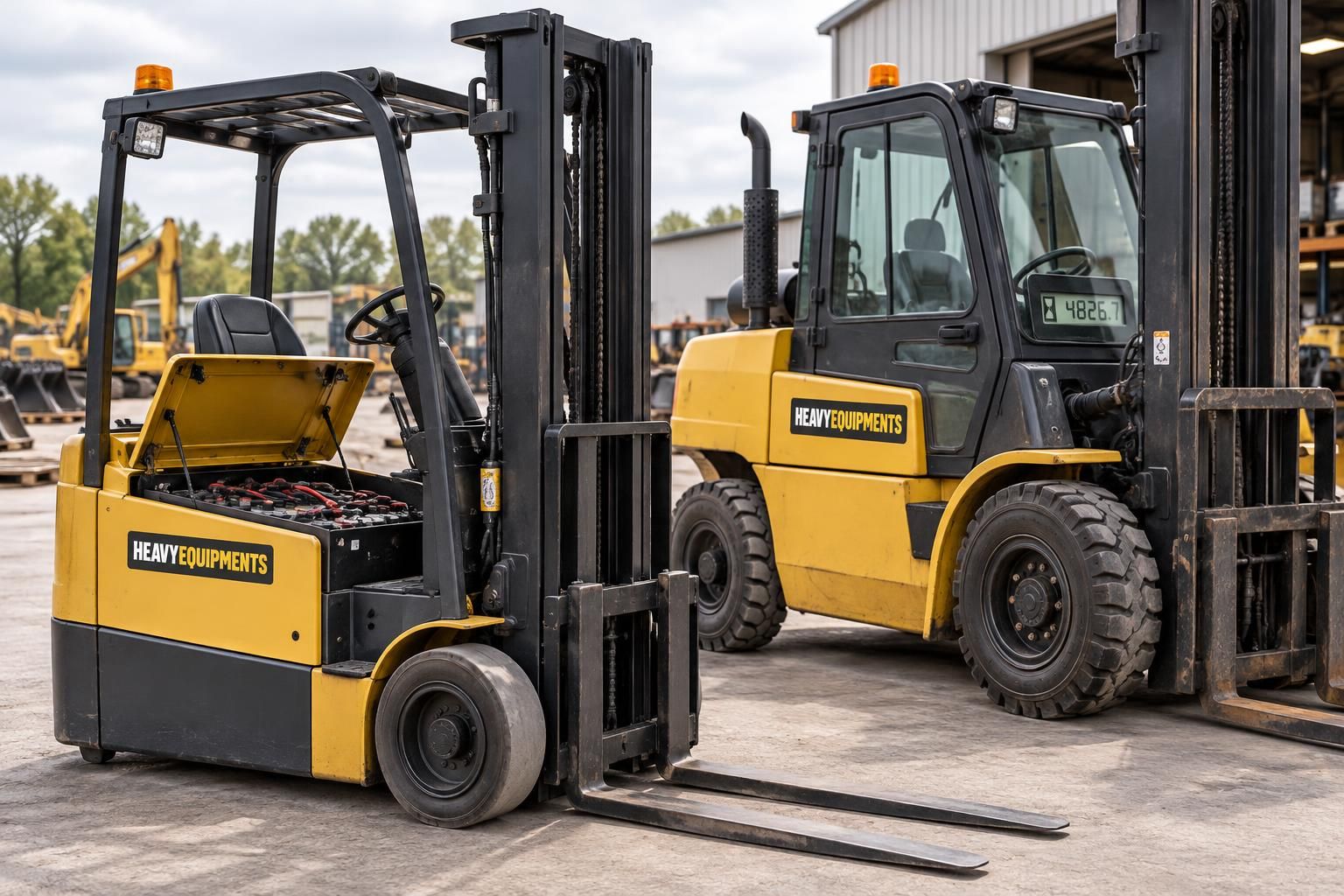
Note the difference in power: the Toyota is a battery-electric 80 V unit suited to indoor work, while the Linde is a diesel machine better for outdoor yards and mixed surfaces. Both list capacity at a 500 mm load center; longer load centers or attachments will reduce actual capacity.
Evaluate battery life on electric forklifts
For an electric forklift like the Toyota 8FBMT30, the traction battery is the biggest operating cost driver and a major determinant of uptime. A quick, structured assessment will tell you a lot about remaining life:
- Visual condition: Open the battery compartment and look for case swelling, acid staining on the tray, cracked cells, and heavy cable corrosion. Any melted insulation or discolored connectors suggests heat and resistance issues.
- Cables and connectors: Wiggle-test Anderson or DIN connectors and main lugs; they should be tight with no arcing marks. Check the strain reliefs and look for stiff, brittle cable jackets.
- Vent caps and electrolyte: Caps should be intact and uniform. If permitted, confirm electrolyte presence in each cell; dry plates indicate neglect. Ask whether watering has been done to schedule.
- Charger compatibility: Verify the charger matches the battery’s voltage (the Toyota is specified Electric at 80 V) and chemistry. Inspect the charger leads and plug condition.
- Runtime expectations: Instead of guessing hours-per-charge, ask for recent shift patterns and any mid-shift “opportunity charging.” Look for consistent reports that align with your duty cycle.
- Records: Request battery maintenance logs (watering, equalization, specific gravity/voltage checks). Regular care is a strong predictor of remaining life.
Tip: If you are comparing an electric to a diesel option like the Linde H25, weigh battery replacement timing against diesel fuel and engine maintenance. Your utilization pattern (single vs multi-shift) often makes the decision clear.
Check mast chains and forks
Mast and chain condition drive safety and lifting accuracy. Both the Toyota 8FBMT30 and Linde H25 are available with Duplex or Triplex masts; either way, use the checks below:
- Mast rails: Look for scoring and pitting on the inner and outer channels. Flaking is another warning sign.
- Rollers and shims: Inspect load and side rollers for flat spots and spalling. Watch for looseness. Shims should be present and not crushed; missing shims can mask wear.
- Lift chains: Examine both sides end-to-end. Look for rust, tight links, peening, and uneven tension. Chain anchors and pins should be secure with intact cotters. If available, use a chain gauge to check elongation against the OEM’s service limit.
- Sheaves (pulleys): Spin by hand (engine off, mast supported) to feel for roughness. Grooved sheaves accelerate chain wear.
- Hydraulic cylinders and hoses: Check for chrome pitting, weeping seals, hose abrasion, and cracked fittings, especially near the mast hinge and carriage.
- Forks and carriage: Inspect fork heels for thinning and the top hooks for cracks. Carriage bars should be straight; look for excessive wear on the fork locks.
Function test: With a safe test load, raise to near the model’s standard lift height (3,000 mm for the Toyota; 3,150 mm for the Linde) and hold. Watch for drift and chatter. Asymmetry is a red flag. Cycle tilt and side-shift (if equipped) through full travel to confirm smooth operation and no leaks.
Read and verify forklift hour meters
An hour meter helps only if the reading is credible. Use these steps to interpret it and validate what you are told:
- Type and location: Note whether the meter is analog or digital and whether it counts key-on time or seat-occupied time. Some units track hydraulic actuation time; ask the seller to clarify how the meter is wired on that machine.
- Consistency check: Compare indicated hours to overall wear (pedals, steering wheel, seat, mast rollers, and attachment pins). Mismatch suggests meter replacement or wiring changes.
- Service records: Look for hour-stamped PMs (oil, filters on diesel; battery maintenance on electric). Gaps or generic notes reduce confidence.
- Error indicators: On digital panels, look for non-factory screws on the instrument cluster and loose meter leads. Recent battery disconnects noted only on the meter but not in records are another warning sign.
Do not rely on hours alone. A lower-hour forklift that has been overloaded (for example, routinely lifting above the rated 3,000 kg at a 500 mm load center on the Toyota 8FBMT30) can be in worse shape than a well-kept higher-hour unit used within spec.
Operational test steering brakes and hydraulics
Take 15 minutes for a full controls check. It is the best predictor of immediate repair needs.
- Cold start (diesel): On a diesel like the Linde H25, observe cold idle quality and smoke on start. Check throttle response. Listen for injector knock and check for oil or fuel leaks post-start.
- Drive and steer: Verify smooth acceleration and deceleration. Check power steering assist and free play. In tight spaces, a smaller turning radius (2,200 mm on the Toyota 8FBMT30) is an advantage. Simulate your tightest aisle or trailer entry.
- Brakes and parking brake: Perform a controlled stop from transit speed. Parking brake should hold on a slight incline.
- Hydraulics: Raise, lower, tilt, and side-shift (if fitted) throughout travel. Note pump whine and cylinder stick-slip. Control lag is another sign to address.
- Attachments: If a side-shifter is installed, verify full travel and centered alignment. Do the same for a clamp or fork positioner. Remember, attachments reduce net lift capacity; plan accordingly.
Fit to environment indoor or outdoor
For predominantly indoor, food, or pharma settings, the electric Toyota 8FBMT30’s 80 V power avoids exhaust and typically suits a warehouse forklift role. For outdoor yards, loading docks, or mixed surfaces closer to a rough terrain forklift use case, the diesel Linde H25 offers refuel-and-go convenience and resistance to weather exposure.
Paperwork and consumables that add up
- PM currency: Review the last preventive maintenance and any recent corrective work. Fresh filters and fluid changes on diesel units are a plus; battery service receipts matter on electric units.
- Safety gear: Confirm the presence and function of seat belts, alarms, lights, and the data plate that lists rated capacity and mast configuration.
- Tyres: Check tread and sidewalls; mismatched or worn tyres affect stability and travel comfort.
Choose the right truck then verify condition
Use the comparison table above to choose the basic configuration that fits your loads, heights, and space. If an electric forklift meets your environment and duty cycle, scrutinize battery health first. If you are leaning diesel, engine condition and maintenance history take center stage. For every unit, mast, chain, and fork condition, and a believable hour meter, are nonnegotiable.
Next steps for buyers
- Compare detailed specs across multiple models with our tool: /specs/compare/
- Browse current forklift for sale listings: /for-sale/
- Check broader specification data: /specs/
- For a short-term solution, see /rentals/
- Keep your fleet running with /parts/ and /attachments/
Bring this guide to your next inspection and you will move faster from shortlist to a safe, productive purchase.