Excavator Rental Sizing, Buckets, Breakers, and Real Costs
Right size your excavator rental, match buckets and breakers, and build a clean quote. Includes a quick spec table to benchmark popular models.
If you are planning an excavator rental, start with three decisions: size and bucket choice, plus whether you will need a hydraulic breaker. Get those right and the quote and the job go a lot smoother. Here is how to choose the right carrier for your site, how to match attachments, and what typically drives rental cost (without guessing numbers). We also include a spec table so you can benchmark models from mini excavator rental up to mass excavation carriers.
Choose the right excavator size
Think about the work and the site, plus the attachments you will run. Then choose the smallest machine that safely meets the dig depth and reach, along with material handling needs.
- Confined sites and services work: A compact machine like the Volvo ECR25D (mini excavator class) keeps tail swing tight and transport simple. It lists a weight of 2,490 kg (5,490 lbs) and a reference bucket capacity of 0.2 m2 (0.2 cu yds).
- General utility, pads, small basements, truck loading: A mid-size tracked excavator such as the Caterpillar 320D2 (operating weight 21,900 kg; bucket capacity 0.9 to 1.2 m³; max digging depth 6,720 mm) is a common rental sweet spot.
- Production earthmoving, mass excavation, quarry/reclamation: Large carriers deliver longer reach and higher tool capacity. Examples include the Komatsu PC490LC-11, Volvo EC480D, or heavy hitters like the Volvo EC700CL and Cat 390D L.
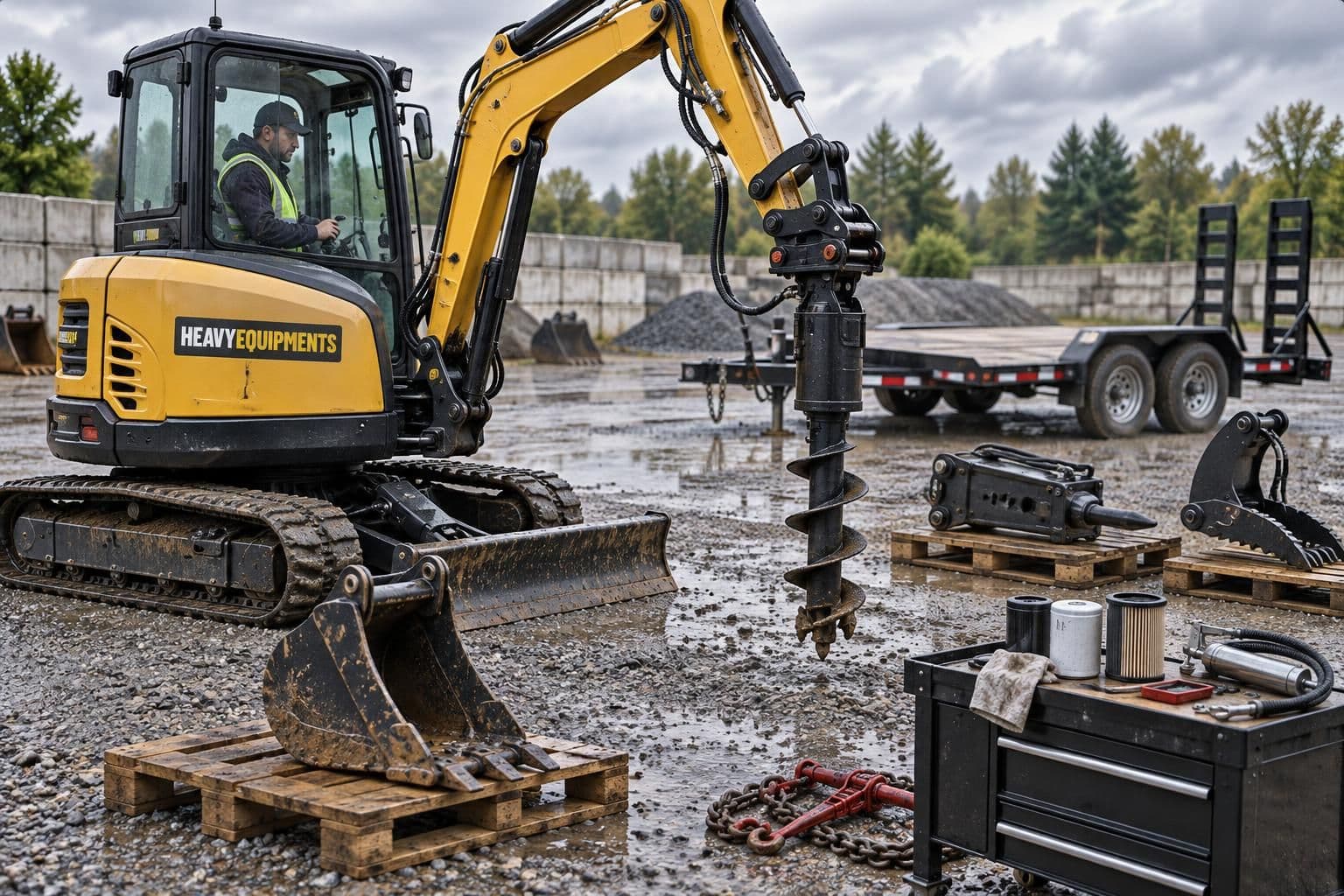
- Attachment-driven jobs: Breakers, large rock buckets, or wide cleanup buckets favor heavier carriers with the hydraulic power and weight to stay stable.
Access matters, too: tracked undercarriages dominate these classes (the 320D2 is tracked), which is ideal for soft ground. Confirm transport widths and weights with your rental house when planning mobilization.
Spec examples across rental sizes
Use this table to benchmark a mini, several 45 to 55 t class carriers, and larger mass excavation machines. Max reach reflects each model’s listed reach metric (Max Digging Reach or Max Reach Along Ground) as shown in the specs.
| Model | Weight | Horsepower | Max digging depth | Max reach (as listed) | Bucket capacity |
|---|---|---|---|---|---|
| Volvo ECR25D | 2490 kg (5490 lbs) | 15 kW (20 HP) | 2954 cm (1163 in.) | 5379.7 cm (2118.0 in.) | 0.2 m2 (0.2 cu yds) ref. |
| Komatsu PC490LC-11 | 47370 kg (104433 lbs) | 268 kW (359 HP) | 680 cm (268 in.) | 1085.1 cm (427.2 in.) | - |
| Volvo EC480D | 48300 kg (106483 lbs) | 260 kW (348 HP) | 683 cm (269 in.) | 1109.5 cm (436.8 in.) | - |
| Hitachi ZX470LCH-3 | 48100 kg (106042 lbs) | 260 kW (348 HP) | 579 cm (228 in.) | 1021.1 cm (402.0 in.) | - |
| Kobelco SK500LC-10 ME | 51700 kg (113979 lbs) | 275 kW (369 HP) | 783 cm (308 in.) | 1332.0 cm (524.4 in.) | - |
| Volvo EC700CL | 71699 kg (158070 lbs) | 316 kW (424 HP) | 725 cm (286 in.) | 1121.7 cm (441.6 in.) | - |
| Cat 390D L | 86190 kg (190016 lbs) | 390 kW (523 HP) | 1067 cm (420 in.) | 1624.6 cm (639.6 in.) | - |
| Cat 385C FS | 90600 kg (199739 lbs) | 400 kW (537 HP) | - | 1036.3 cm (408.0 in.) | 3.0, 5.4 m2 (3.9, 7.1 cu yds) |
For additional mid-size context, the Caterpillar 320D2 lists 21,900 kg operating weight, 108 kW engine power, a 0.9 to 1.2 m³ bucket, and 6,720 mm max digging depth.
Buckets match width capacity and coupler to job
Bucket choice affects productivity as much as the excavator. Think in three steps:
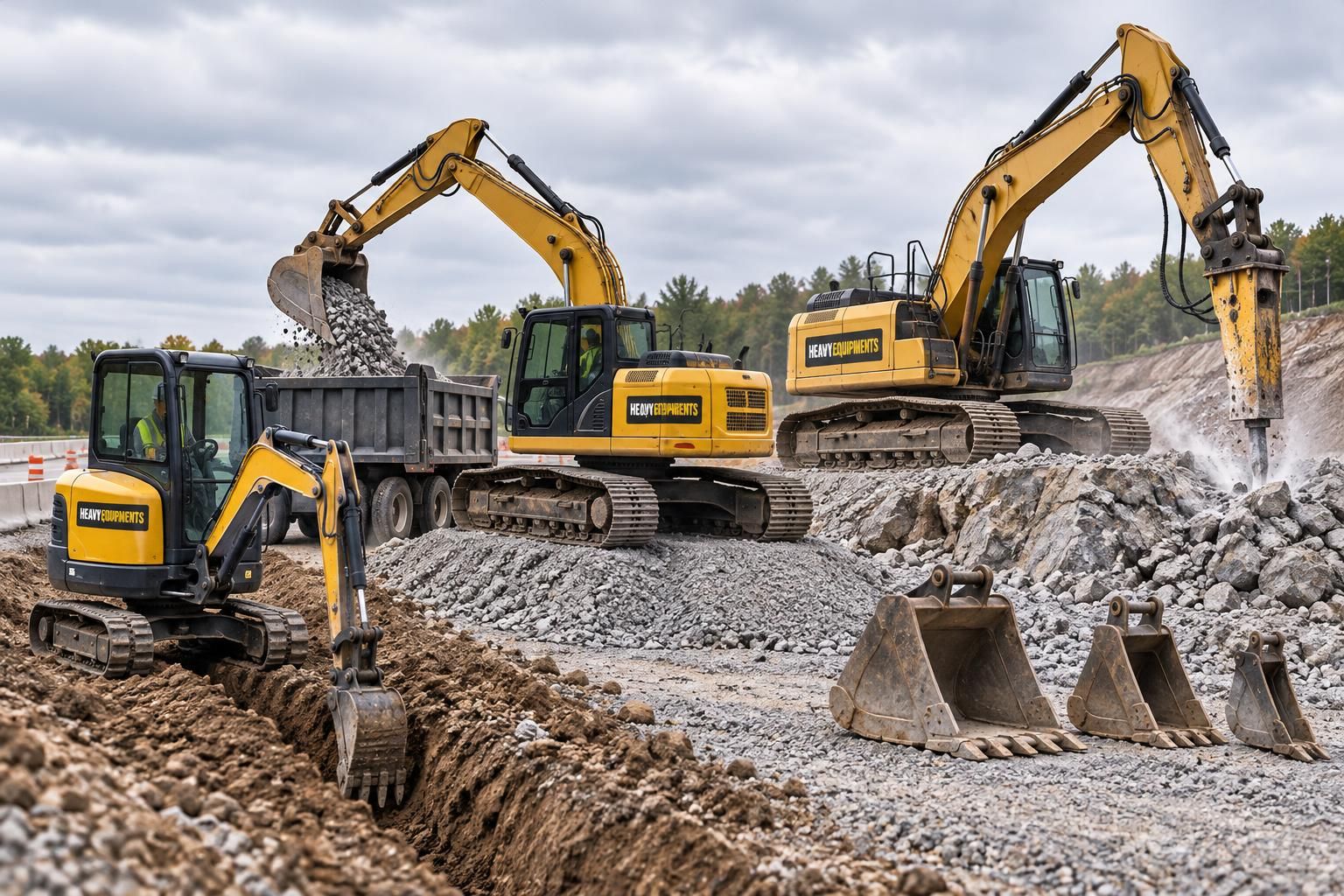
- Match task to bucket type: general-purpose for common digging, trenching for narrow utilities, rock buckets for abrasive ground, and grading/ditching for shaping and cleanup.
- Right-size capacity to the carrier: Large carriers can safely swing bigger buckets. For example, the Cat 385C FS lists a reference bucket capacity of 3.0 m2 (3.9 cu yds) and a max bucket capacity of 5.4 m2 (7.1 cu yds). Mid-size machines like the Caterpillar 320D2 list 0.9 to 1.2 m³ buckets, while another large-class example, the Hitachi ZAXIS450LCH, shows a reference 1.9 m2 (2.5 cu yds) and max 3.1 m2 (4.0 cu yds).
- Confirm coupler/pin compatibility: Ask your rental house for the coupler style (pin-on vs. quick coupler) and verify bucket fit. If you need multiple buckets, request all in the same quote.
If you will work near structures or need smooth finish work, include a grading bucket. Trenching widths should align with your pipe or conduit plus bedding and compaction needs.
Hydraulic breaker checks before you rent
Breakers must match the carrier. Heavier excavators handle larger hammers and reduce recoil. A compact unit like the Volvo ECR25D is suitable for small breakers in tight spaces, while large carriers such as the Volvo EC700CL or Cat 390D L are appropriate for heavy demolition tools. When you request a breaker with your excavator rental, confirm:
- Carrier weight class and compatibility with the hammer size you need.
- Auxiliary hydraulics: flow/pressure requirements, case drain if needed, and whether the machine is plumbed bi-directionally.
- Tooling and wear parts included (moils, chisels), and replacement policy.
- Mount/coupler interface, breaker transport stand, and any special lifting points.
Excavator rental costs scope and compare
Actual rates vary by market, season, duration, and availability, so instead of guessing numbers, here is how to structure a quote so you know what you are paying for:
- Base rate and term: Day/week/month on the specific model or weight class you requested.
- Attachments: Price each bucket and the breaker separately; note any quick coupler charge.
- Delivery/pickup: Mobilization to and from your site, including any escort or permit if you are renting a very heavy unit.
- Fuel and cleaning: Whether the machine must be returned full and clean; charges if not.
- Damage waiver or insurance, coverage details, exclusions, and your deductible.
- Operating hour limits: Overage rates if you exceed the included hours.
- Ground engaging wear, how wear on teeth and cutting edges is billed, plus breaker tool wear.
- Standby or off-rent: How to stop the clock during weather or schedule delays.
If a “cat excavator” is specified on your bid, ask the supplier to quote a named model so you can verify capability against your dig depth, reach, and bucket needs in the specs.
Checklist for comparable heavy equipment rental quotes
- Excavator size and model preference (e.g., Komatsu PC490LC-11 vs. Volvo EC480D)
- Required max digging depth and reach from your plans
- Bucket count and types (trenching widths, GP, grading) and coupler type
- Hydraulic breaker size and plumbing requirements
- Transport dates, site access constraints, and ground conditions
- Rental term, included hours, delivery/pickup, fuel/cleaning policy
- Insurance/waiver, wear charges, and overage rates
Next steps for renting excavators
Do a quick pass through our excavator spec database for models that meet your depth/reach and attachment needs, then line them up in side by side compare. When you are ready, request quotes from local suppliers on our rentals marketplace, and include the checklist above so you get comparable pricing. If you need extra buckets, breakers, or wear parts, browse attachments and parts. And if your job will run long enough that buying makes more sense, you can also review current listings on for sale.