Excavator Cost Per Hour, Fuel, Undercarriage and Maintenance
A practical breakdown of excavator cost per hour, what drives it, and how specs like weight and horsepower matter. Estimate fuel, undercarriage, and maintenance with real models.
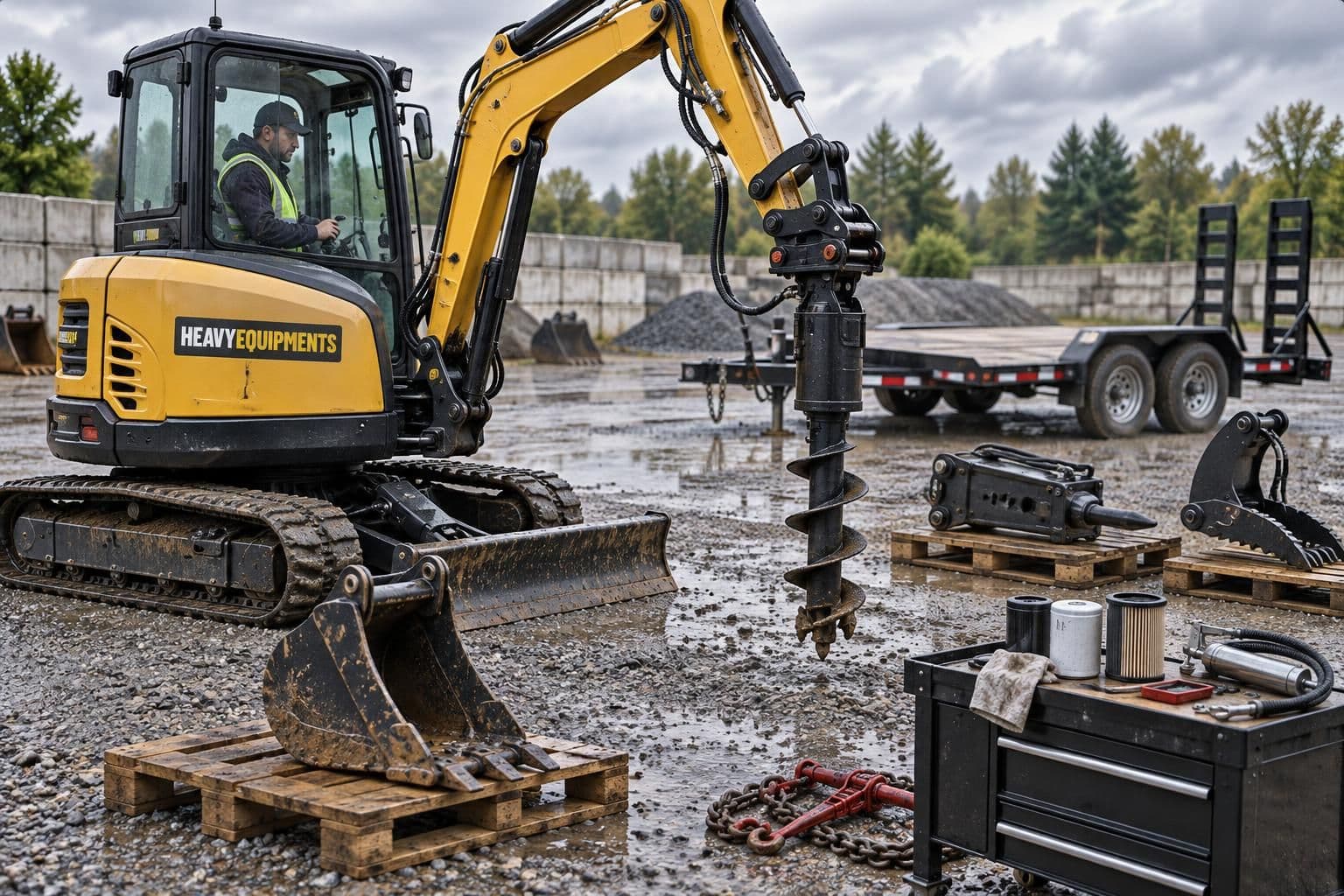
Ask five crews how they calculate excavator cost per hour and you will hear different answers. But most totals come from the same buckets: fuel, undercarriage, routine maintenance and wear parts, plus the ownership items behind the iron. Below, we explain each driver in plain language and show how specs like operating weight, horsepower, digging depth and reach influence your budget (using verified figures from models you can look up in our database).
Ownership and operating what to count
Before you sharpen your pencil, separate what you pay to own from what you pay to run the machine:
- Excavator ownership costs include purchase financing or opportunity cost, taxes, insurance, storage, and planned replacement. These accrue whether the machine digs or sits.
- Excavator operating cost per hour covers fuel, undercarriage wear, tires (for wheeled units), filters and fluids, teeth/edges, pins and bushings, and unplanned repairs driven by actual use.
Field teams usually track operating items daily and allocate ownership items across the hours you expect to put on the meter.
Fuel the biggest variable in excavator cost per hour
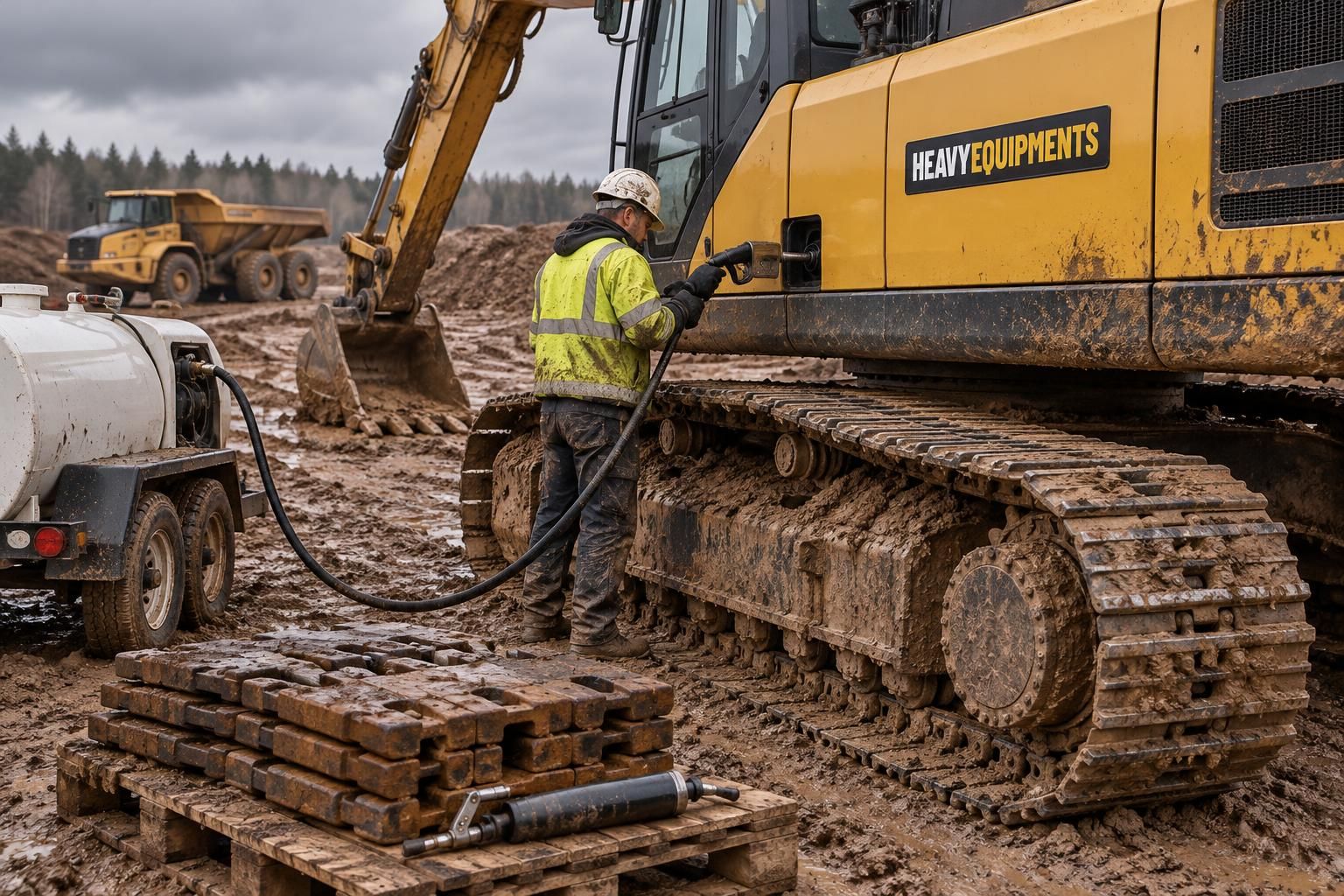
Fuel spend moves the most day-to-day, and it scales with duty cycle, the machine’s engine output, and how hard the hydraulics work. Specs help you frame this:
- Engine power is a quick proxy for potential fuel burn. A mid-size 20 to 22 tonne class excavator like the Caterpillar 320D2 lists 108 kW engine power at an operating weight of 21,900 kg, with bucket capacity of 0.9 to 1.2 m³. This is the class many teams mean when they discuss 20 ton excavator fuel consumption.
- Comparable models such as the John Deere 200C LC carry 105 kW (141 HP) at 20,924 kg. Engine output and weight are in the same neighborhood, so fuel expectations should be, too, subject to the work mix.
- Duty cycle matters. Trenching all day at max reach is not the same as loading short trucks with minimal swing. Hydraulics, auxiliary flow, and idling discipline all change the picture.
To make fuel part of your excavator cost per hour, record liters or gallons added between fills and divide by the engine hours logged. Over a week of typical work, this smooths out light and heavy days and gives you a credible site-specific average you can multiply by fuel price.
Undercarriage cost ground and weight effects
On tracked excavators, undercarriage is one of the largest lifecycle expenses. Wear rate depends on soil abrasiveness, slope, travel distance, and how the machine is balanced for the task.
- Operating weight influences contact pressure and component stress. For instance, the John Deere 200 LC lists 20,298 kg, while the John Deere 200C LC is slightly heavier at 20,924 kg. All else equal, more weight means faster wear when you are tracking long distances or working abrasive ground.
- Track geometry and ground contact length also matter. The John Deere 200C LC LONG FRONT specifies a length of track on ground of 368.8 cm (145.2 in.), which influences ground pressure and stability at reach.
- Work style impacts chains and rollers. Frequent turns, high travel speed, and rocky spoil piles chew components faster than stationary digging with minimal repositioning.
Build undercarriage into your per-hour number by tracking link wear (percent worn), roller and idler condition, and sprocket tooth profile at regular intervals, then allocating replacement and labor across the hours it took to reach that condition.
Maintenance and wear parts application effects
Filters, fluids, and scheduled checks are the steady cadence behind your excavator operating cost per hour. Application pushes the variability:
- Heavy-class machines move bigger loads and stress components more. For example, the 48,300 kg, 260 kW Volvo EC480D will see different wear dynamics than a 20-ton unit simply because every duty cycle moves more mass.
- At the top end, the Sumitomo SH800LHD-5 lists 80,100 kg with 397 kW (532 HP). Higher output and weight can increase consumption of wear parts like bucket teeth and bushings in demanding material handling or mass excavation.
- Hydraulic attachments add load. Hammering, mulching, or running continuous-flow tools changes service intervals for filters and can affect oil analysis results.
To reflect maintenance accurately, plan based on your PM schedule and the actual parts you use (filters, oil, teeth, edges, pins/bushings). Allocate these to the hours between services or replacements.
Case study three 20 ton John Deere variants
These three machines sit in the same weight/power class but are configured for different jobs. Their specs illustrate how capability affects costs, even before you turn a track.
| Model | Type | Operating Weight | Engine Power | Max Digging Depth | Max Reach Along Ground | Max Loading Height |
|---|---|---|---|---|---|---|
| John Deere 200 LC | Mid-Size Excavator | 20,298 kg (44,750 lbs) | 104 kW (140 HP) | 597 cm (235 in.) | 908.3 cm (357.6 in.) | 640.1 cm (252.0 in.) |
| John Deere 200C LC | Mid-Size Excavator | 20,924 kg (46,130 lbs) | 105 kW (141 HP) | 671 cm (264 in.) | 975.4 cm (384.0 in.) | 679.7 cm (267.6 in.) |
| John Deere 200C LC LONG FRONT | Long Reach Excavator | 20,321 kg (44,800 lbs) | 105 kW (141 HP) | 1,167 cm (460 in.) | 1,542.3 cm (607.2 in.) | 1,149.1 cm (452.4 in.) |
What these specs mean for cost
- Fuel expectations Engine outputs are within a narrow band (104 to 105 kW), so fuel use per hour will be driven more by duty cycle than horsepower differences.
- Productivity vs. reach The long-front version dramatically extends reach and depth. If your job is slope work, canal maintenance, or dredging, that capability can reduce repositioning and potentially the number of machines on site. If most of your work is standard trenching or truck loading near the machine, the standard boom/stick may deliver faster cycles.
- Undercarriage exposure Operating weight is similar across all three, so undercarriage cost per hour will hinge on ground conditions and how often you travel. The long-front’s geometry shifts load distribution at extreme reach, operator technique (e.g., avoiding over-reaching into swing) helps minimize scrub and side loading on components.
Right sizing per hour and per unit cost
Excavator cost per hour is only half the story; what you pay per cubic meter moved or per truck loaded often decides profit. A larger machine like the 260 kW Volvo EC480D can raise hourly fuel and wear costs but may lower cost per unit by moving more material each cycle. A mid-size unit like the Caterpillar 320D2 can be the sweet spot where access, transportability, and fuel align with production targets. Match machine to task, not just to an hourly rate.
Build your own per hour number
- Lock the scope. Decide what you include: fuel, DEF (if applicable), undercarriage, wear parts, PM labor, and ownership allocation.
- Use real fuel logs. Over a representative week, record fuel added and hours run to get site-specific consumption for your application.
- Track undercarriage wear. Note percent wear on links, rollers, and sprockets at fixed hour intervals; allocate replacement parts and labor to the hours that produced that wear.
- List scheduled maintenance. Pull your PM checklist (filters, oil, inspections) and divide the total spend by the hours between services.
- Capture wear parts. Bucket teeth, edges, pins/bushings vary with material. Log changeouts and spread cost across the hours those parts lasted.
- Add ownership. Allocate insurance, taxes, and planned replacement across expected annual hours to get a full-loaded rate if you need it.
- Benchmark with specs. Use engine power and operating weight from our specs to sanity-check expectations when you bid with unfamiliar models.
Large excavators expect bigger inputs
When you step up from the 20‑ton class, both capability and inputs scale. For instance, the Sumitomo SH800LHD-5 pairs 397 kW (532 HP) with 80,100 kg operating weight, reflecting the demands of mass excavation. Higher engine output and weight typically mean higher fuel per hour and faster wear on teeth and pins in hard digging, albeit with much higher productivity. Your estimate should reflect the specific material, haul distances, and duty cycle on your site.
Next steps for estimating costs
- Compare these John Deere configurations side-by-side on our specs compare tool, or explore other classes in the full specs catalog.
- Price options by browsing excavators for sale or for rent, and line up parts and attachments to support the work.
- Pull your own fuel logs and PM records, then plug them into the framework above to turn today’s assumptions into a documented excavator cost per hour for your next bid.