Guide to Electric Forklift Charging and Power Planning
A practical guide to charging electric forklifts in warehouses. Covers charging methods, power planning, battery swaps or fast charge, safety, and a quick spec snapshot.
Switching to an electric forklift brings clear benefits for indoor air quality, noise, and maintenance. Success depends on getting charging right. This guide explains charging options, power requirements, battery swap workflows, and safety practices for warehouse forklift fleets, with a quick spec snapshot to help you align equipment with the job.
How electric forklift power works
An electric forklift stores energy in a traction battery and feeds it to an electric drive and hydraulic system. Voltage is one of the basic specs you’ll see. For example, the Toyota 8FBMT30 is an Electric (80 V) counterbalance truck rated for a 3,000 kg (6,614 lb) capacity at a 500 mm (19.7 in) load center. Voltage tells you the general class of charger and cabling the unit will use; higher-voltage trucks typically pair with higher-capacity chargers.
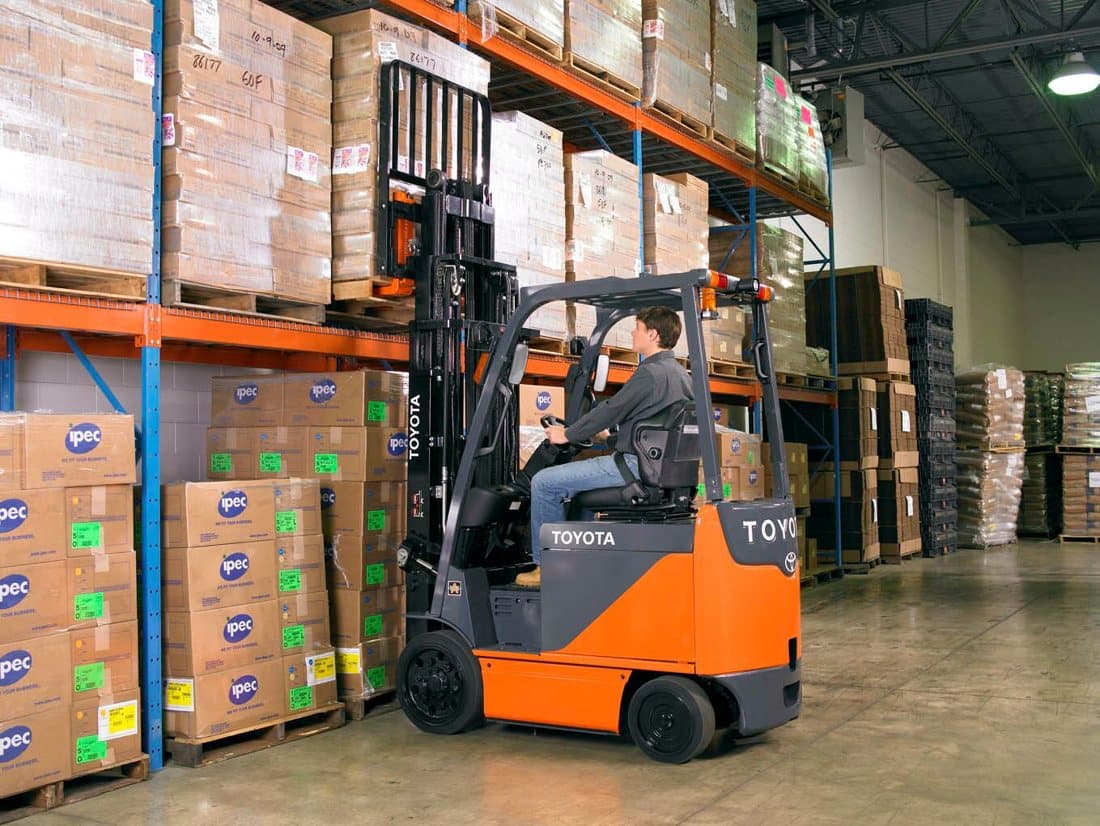
Whether you run a sit-down counterbalance or a stand up forklift, the battery is your “fuel tank.” Charging strategy and infrastructure need to match your shifts, loads, and travel distances. Most warehouse forklift fleets can run continuously using either opportunity charging or scheduled battery swaps when the plan fits the duty cycle.
Power requirements and infrastructure
Before adding chargers, assess your building power with a qualified electrician and your utility. The goals:
- Confirm sufficient service capacity for the number of chargers you plan to run.
- Provide dedicated circuits and appropriate protection for each charger.
- Place chargers to minimize travel and cabling across pedestrian paths.
- Plan ventilation and eyewash where flooded lead-acid batteries are in use; lithium battery systems typically reduce these needs but still require clearances and thermal management per the manufacturer.
- Label parking/charging bays and provide cable management so plugs aren’t damaged by traffic.
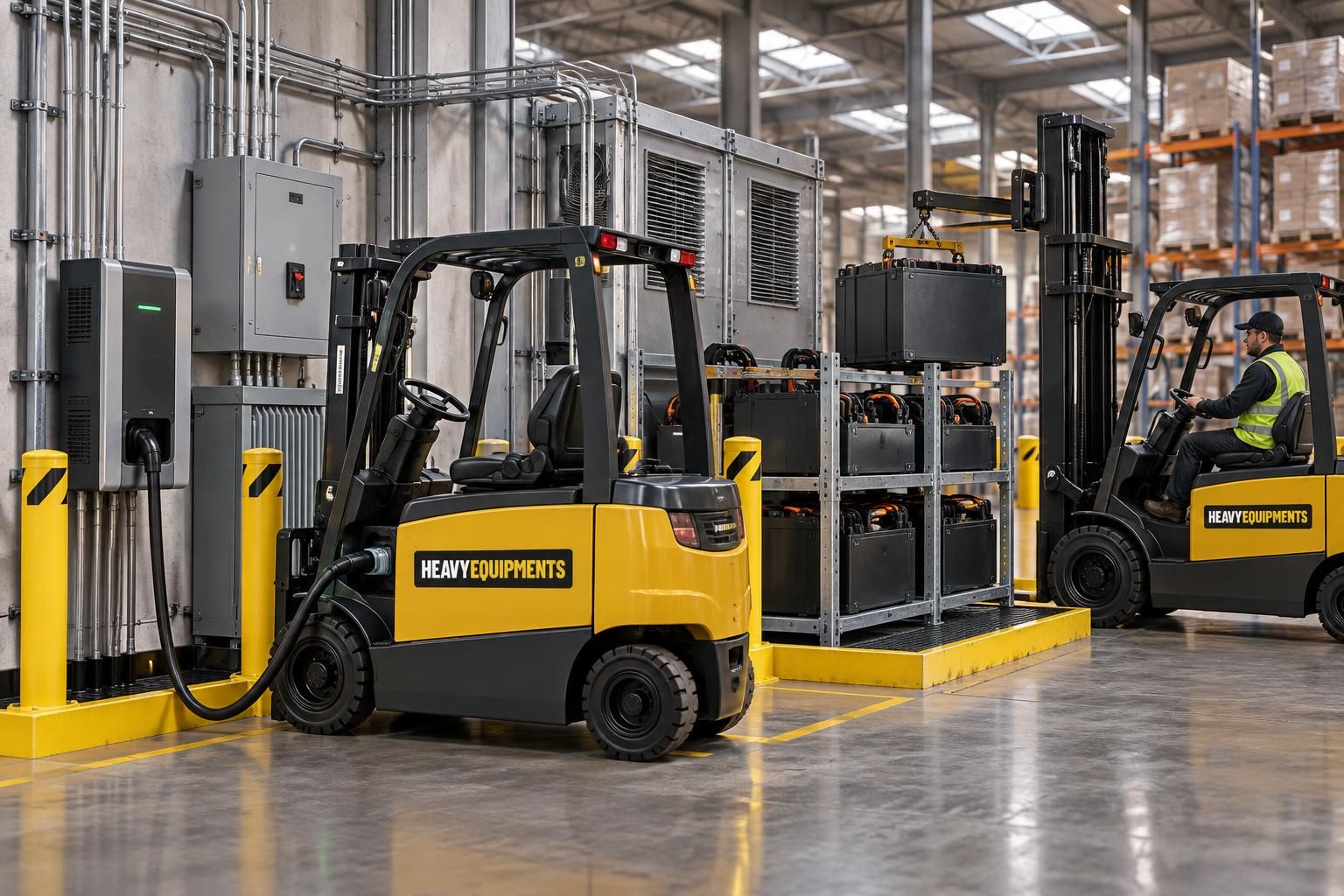
Charger placement matters. Ideally, forklifts park nose-in to wall-mounted chargers or at end-of-aisle islands, with bollard protection and cord reels to keep walkways clear. For cold storage, consider buffer areas for charging so batteries aren’t exposed to extreme temperature swings.
Charging strategies explained
Most electric forklift fleets use one or a blend of these approaches:
- Overnight charging means parking at end of shift and returning to full by morning. This works when each truck has long idle windows and one battery can cover a full shift.
- Opportunity charging tops up during breaks, dock waits, and task changes. It supports multi-shift operations when frequent short charges keep state of charge high.
- Fast charging uses higher power to quickly recover energy during short windows. It is useful when you cannot add batteries or swap, but it concentrates load on your electrical system and may require stricter thermal and battery management.
Battery chemistry influences what’s practical. A lithium battery generally accepts frequent partial charges well and does not require watering. Traditional flooded lead-acid batteries are proven and widely supported but usually prefer full charge cycles and periodic equalization, plus watering and ventilation procedures. Match the chemistry to your duty cycle and maintenance capabilities.
Battery swaps and fast charging
Two common paths to all-day runtime are battery swaps and fast (or opportunity) charging. Each has trade-offs in space, equipment, and workflow.
- Battery swap workflow keeps a spare battery per truck (or per two trucks, depending on uptime). Use a hoist, roller rack, or side-extraction carriage to exchange batteries during breaks. Benefits include flattening electrical demand across the day and keeping trucks in service. This requires a battery room or area, lifting gear, safety gear, and trained operators. Works well with both lead-acid and lithium systems designed for swapping.
- Fast or opportunity charging keeps the same battery in the truck and tops up during planned intervals. That reduces space and handling risk but concentrates demand on your charger circuits. Lithium battery systems are commonly paired with this approach. For lead-acid, follow manufacturer guidance on allowable partial charges and equalization schedules.
If you already operate a battery room, swapping may slot easily into your process. If your facility has stronger electrical capacity than floor space, fast charging and opportunity charging at parking spots may be a better fit.
Safety ventilation and maintenance
Safety is non-negotiable. Build your charging plan around the following:
- Provide ventilation to disperse gases during charge and equalize cycles when using flooded lead-acid, and install eyewash or safety showers per your EHS plan.
- Position chargers to avoid crushed plugs and trip hazards. Use hooks, reels, or stands to keep connectors off the floor.
- Train staff on lockout or tagout for battery handling, proper PPE, and the correct steps to connect and disconnect chargers.
- Keep batteries within recommended temperature ranges. Avoid stacking pallets or materials against chargers that restrict airflow.
- For lead-acid, maintain watering schedules, terminal cleaning, and equalization. For a lithium battery, follow BMS alerts, firmware updates, and inspection intervals as directed by the manufacturer.
Spec snapshot for electric and diesel roles
Charging doesn’t change the fundamentals of what a forklift can lift or how high it can stack, but model specs help you pick the right chassis for your loads and aisles. Below is a simple snapshot comparing a battery-electric counterbalance to a diesel model to illustrate typical capacity and lift-height considerations alongside power type. Use it as a starting point, then review turning radii and mast options as you set aisle widths and plan charger parking.
| Model | Power | Rated Capacity | Load Center | Standard Lift Height | Turning Radius | Mast Type |
|---|---|---|---|---|---|---|
| Toyota 8FBMT30 | Electric (80 V) | 3,000 kg (6,614 lb) | 500 mm (19.7 in) | 3,000 mm (118.1 in) | 2,200 mm (86.6 in) | Duplex / Triplex options |
| Linde H25 | Diesel | 2,500 kg (5,512 lb) | 500 mm (19.7 in) | 3,150 mm (124.0 in) | , | Duplex / Triplex options |
The electric Toyota 8FBMT30 offers a 3,000 kg (6,614 lb) rating at a 500 mm (19.7 in) load center with a standard 3,000 mm (118.1 in) lift height and a 2,200 mm (86.6 in) turning radius, suitable for many warehouse forklift applications. The Linde H25 diesel counterpart shown here highlights that load and lift envelopes vary by model and mast; your choice is really about duty cycle and emissions constraints, as well as how you will supply energy, diesel fuel versus electricity and charging.
Plan your charging layout
Use this checklist to right-size your charging solution for an electric forklift fleet:
- Quantify the work. Count pallet moves and average load weights, plus lift heights per shift to select the right class and mast.
- Pick a charging strategy, overnight, opportunity, fast charging, or battery swaps, then size chargers and spare batteries accordingly.
- Map the floor. Place chargers near dock doors and staging areas, close to break areas, to support opportunity charging without clogging aisles.
- Protect the gear. Add bollards and cable reels with clear striping so chargers and connectors last.
- Address safety and EHS. Ventilation (for lead-acid), eyewash, spill kits, PPE, and training.
- Coordinate with facilities. Confirm electrical capacity and install dedicated circuits for the number of chargers you expect to use simultaneously.
- Standardize connectors and procedures. Make plugs and charge levels consistent, and standardize swap steps across your warehouse forklift fleet.
- Track performance. Log state of charge at shift changes and charging time, then record battery condition to fine-tune charger count and placement.
Next steps
To spec your fleet, browse forklift and equipment data in our specs catalog and line up options side by side with specs compare. If you are adding or replacing units, check current for-sale listings or short-term rentals. For replacement batteries, chargers, or related components, explore parts. To refine handling, review forks, sideshifts, and more in attachments.