Compact Tractor Hydraulics and PTO Basics, Flow Explained
Clear up compact tractor hydraulics and PTO in one guide. Learn pump flow, SCVs, rear remotes, and see a table comparing popular models' flow.
On a compact tractor, two systems do the heavy lifting, hydraulics for lifting and actuating, and the PTO for spinning power. Spec sheets list pump flow, SCVs, and rear remotes, but it is not always obvious how they translate to real work with tractor implements and attachments. Below are the points that matter most. You also get a comparison of hydraulic flow on popular models and practical setup advice to match your tractor’s power delivery to the jobs you need done.
Hydraulics Basics Pump Flow SCVs and Remotes
Hydraulics move oil to create motion and force. Three terms you will see on compact tractor spec sheets:
- Pump flow is the oil volume the hydraulic pump delivers per minute. More flow usually means faster loader, hitch, and cylinder movements, and it can better support continuous flow attachments with hydraulic motors.
- SCVs, selective control valves, are the directional control valves you operate with a lever or joystick. Each SCV controls one hydraulic function, extend and retract. When mounted at the rear and fitted with couplers, they are often called rear remotes.
- Rear remotes are quick coupler outlets at the back of the tractor. Use these to connect cylinders or hydraulic motors on rear mounted implements, or for top and tilt on a 3 point hitch.
A loader usually has its own valve operated by a joystick, rear remotes or SCVs let you run additional hydraulic functions on other implements. Many compact tractors allow you to add rear remotes as a dealer or aftermarket kit.
Hydraulic Flow And Model Examples
Among compact and utility class machines, pump flows vary meaningfully. Older row crop models like the John Deere 50 and John Deere 60 list 33.7 LPM (8.9 GPM). Kubota’s MX utility line typically falls around the mid 30s LPM, while a modern utility like the New Holland T4.75 reaches 47.3 LPM (12.5 GPM). For perspective, high horsepower tractors can deliver much more, for example, the John Deere 9620 lists 113.6 LPM (30.0 GPM).
Use the table below to compare hydraulic flow on popular compact and utility sized models. This helps you gauge expected loader speed and whether continuous flow attachments are a good fit.
| Model | Tractor Type | Pump Flow | Lift Capacity | Years Made |
|---|---|---|---|---|
| John Deere 50 | Row-Crop Tractor | 33.7 LPM (8.9 GPM) | N/A | 1952-1956 |
| John Deere 60 | Row-Crop Tractor | 33.7 LPM (8.9 GPM) | N/A | 1952-1956 |
| Kubota MX4700 | Utility Tractor | 36.0 LPM (9.5 GPM) | 1300.0 kg (2866.0 lbs) | 2009-2014 |
| Kubota MX5100 | Utility Tractor | 34.8 LPM (9.2 GPM) | 1300.0 kg (2866.0 lbs) | 2009-2014 |
| Kubota MX5000 | Utility Tractor | 34.8 LPM (9.2 GPM) | 1300.0 kg (2866.0 lbs) | 2002-2008 |
| Kubota MX4800 | Utility Tractor | 36.0 LPM (9.5 GPM) | 1300.0 kg (2866.0 lbs) | 2014-Present |
| Kubota MX5800 | Utility Tractor | 36.0 LPM (9.5 GPM) | 1300.0 kg (2866.0 lbs) | 2015-Present |
| Kubota MX5200 | Utility Tractor | 36.0 LPM (9.5 GPM) | 1300.0 kg (2866.0 lbs) | 2014-Present |
| New Holland T4.75 | Utility Tractor | 47.3 LPM (12.5 GPM) | 2190.0 kg (4828.1 lbs) | 2012-2020 |
What The Numbers Mean On The Job
- Loader, blade, and 3 point hitch cylinder speeds are closely tied to pump flow. In the table, flows in the mid 30s LPM will generally feel different from the higher flow utility entry at 47.3 LPM.
- Hydraulic motor implements, for example certain brooms or auger drives, benefit from higher flow and steady supply. If you plan to run continuous flow attachments, favor tractors higher on the flow chart.
- Lift capacity is independent of flow but matters for ballast and implement weight. Kubota MX models list 1300.0 kg (2866.0 lbs), while the New Holland example lists 2190.0 kg (4828.1 lbs).
PTO Power Separate From Hydraulics
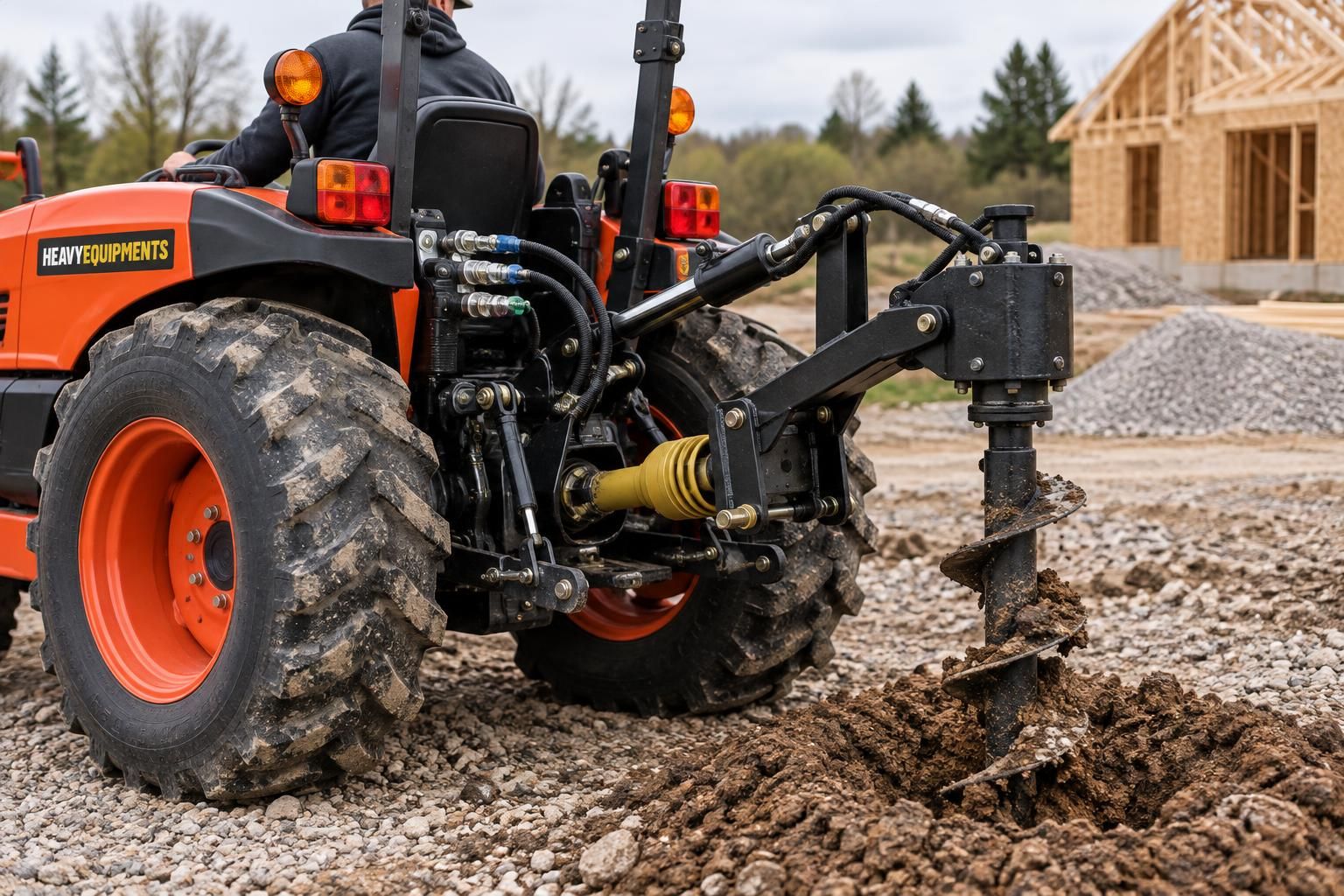
The PTO, power take off, mechanically drives implements that need rotational power, rotary cutters, finish mowers, tillers, post hole diggers with gearbox drives, and more. This is separate from hydraulic power. Many compact tractors offer rear PTO as standard, and some provide a mid PTO option for front mounted mowers or snowblowers. You will also encounter different PTO clutching arrangements, for example, systems that let you start and stop PTO driven implements without stopping the tractor. When choosing PTO driven tractor implements, confirm compatibility with your tractor’s PTO type and connection, and be sure your tractor has the control features you prefer for engaging and modulating PTO power.
Rear Remotes SCVs And Third Function Options
If your compact tractor came with only a loader joystick, adding rear remotes, SCVs, expands what you can run. Common uses include:
- Top-and-tilt kits on the 3-point hitch for precise grading adjustments.
- Hydraulic offset or angle on blades and ditchers.
- Grapples, snowplow angle, or 4-in-1 buckets using a third function or a diverter on the loader circuit.
- Hydraulic motors on certain attachments that need steady flow.
Deciding between a diverter and a true third function valve depends on how often you need to run loader lift or tilt and an auxiliary function at the same time. A dedicated third function keeps everything live without toggling, which is useful for grapples and other loader mounted attachments.
Reading Hydraulic Specs For Buying Decisions
- Use pump flow as the benchmark. In this group, values range from 33.7 LPM (8.9 GPM) to 47.3 LPM (12.5 GPM). Favor the higher flow end if you expect frequent continuous hydraulic work.
- More SCVs or remotes let you run more functions at once. If a spec sheet does not list them, plan for add on kits and routing.
- Confirm the 3 point hitch can handle implement weight plus ballast. The MX series examples list 1300.0 kg (2866.0 lbs), and the T4.75 lists 2190.0 kg (4828.1 lbs).
- Think about future needs. If you may add hydraulic motor implements later, note that larger tractors, for example the John Deere 9620 at 113.6 LPM (30.0 GPM), deliver far more flow. Typical compact work does not need that, but it shows how flow scales.
Practical Setup Tips
- Plan your ports by counting the hydraulic functions you will run at the same time. A loader with lift and tilt plus a grapple needs a third function up front, and a rear blade with angle and offset may need two rear remotes.
- Mind return paths for continuous flow attachments. Follow implement instructions on returning oil to tank to avoid heat buildup and valve damage.
- Route hoses to avoid pinch points when turning or lifting. Keep quick couplers clean and capped when not in use.
- Match rear ballast or a 3 point counterweight to the work. Hydraulic power lets you lift, and stability makes it safe.
- Clean oil and filters keep valves and pumps performing to spec. Follow the tractor’s maintenance schedule.
Next Steps And Resources
- Use our compare specs tool to line up pump flow, lift capacity, and other details across compact and utility tractors.
- Browse current for-sale listings or check rentals if you need capability for a short term project.
- Outfit your machine with the right attachments and parts to match your hydraulic setup and PTO needs.
- Explore more model details in our specs database to verify features like SCV options and PTO configurations.