Spec Your Sit Down Forklift, Tires and Power Options
Practical guide to spec a sit down forklift, choosing cushion or pneumatic tires and LP or electric, with Toyota 8FBMT30 and Linde H25 specs.
Choosing a sit down forklift comes down to two big decisions: tire type (cushion vs. pneumatic) and power (LP vs. electric). Both choices affect safety, productivity and total cost over the life of the truck. This guide breaks down the tradeoffs, then shows how two proven models line up on capacity, lift height and maneuverability so you can spec your next warehouse forklift with confidence.
Sit down forklifts and key specs
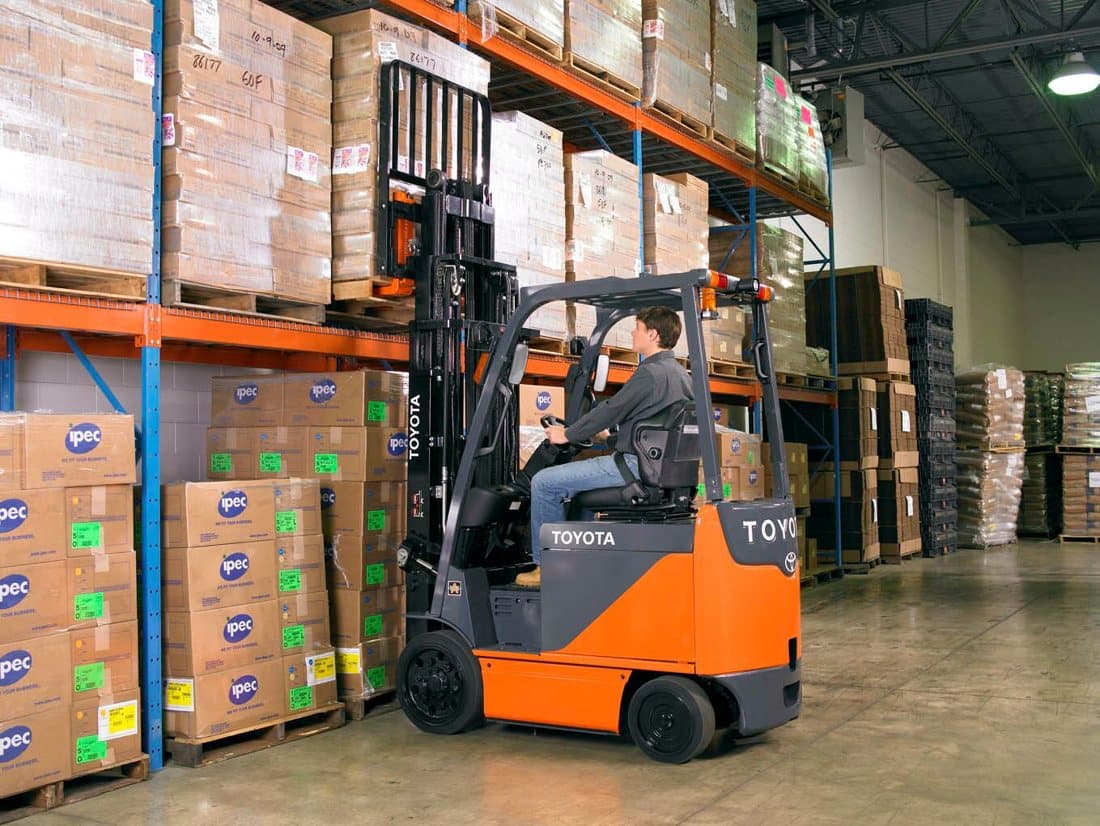
Sit down forklifts put the operator in a seated, enclosed position with steering and hydraulic controls at hand. They are the backbone of indoor warehousing and also common in mixed indoor and outdoor work. When you size one, zero in on:
- Check rated capacity at the load center you handle. Capacity drops as loads get longer or as the mast goes higher.
- Choose a standard lift height and mast that fit doorways, racks, and trailers. Duplex and triplex options balance free lift with collapsed height.
- Turning radius drives aisle width and trailer maneuvering. Tighter is usually better indoors.
- Power source and tire type determine where the truck can safely work and how it performs shift after shift.
For example, the electric Toyota 8FBMT30 lists a 3,000 kg (6,614 lb) capacity at a 500 mm (19.7 in) load center, a 3,000 mm (118.1 in) standard lift height, and a tight 2,200 mm (86.6 in) turning radius. The diesel Linde H25 is rated for 2,500 kg (5,512 lb) at a 500 mm (19.7 in) load center and a 3,150 mm (124.0 in) standard lift height, with duplex and triplex mast options.
Cushion and pneumatic tires for your floor
When to choose cushion tires
- Best for smooth, dry concrete inside warehouses and manufacturing plants where floors are even and debris is managed.
- Smaller overall diameter helps with low doorways and dock plates, and it often yields a tighter turning radius for narrow aisles and around racking.
- Lower upfront cost and simple upkeep with no air pressure to maintain, though they can chunk or wear quickly on rough surfaces.
When to choose pneumatic tires
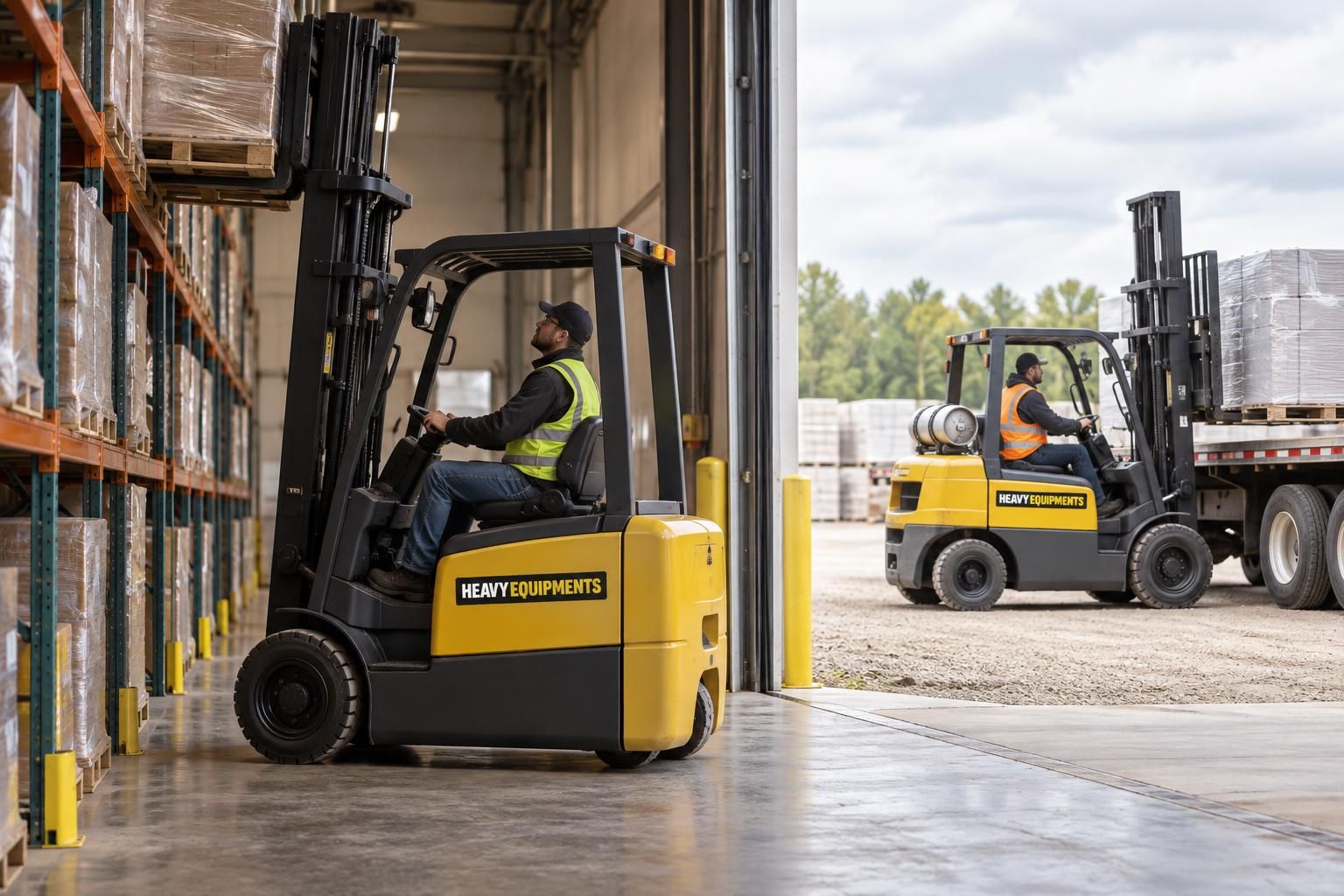
- Suited to mixed or outdoor surfaces, handling expansion joints, dock approaches, and yard travel with more compliance over rough ground.
- Added ground clearance and traction help on ramps and in wet or uneven areas. Depending on the site, consider solid pneumatic or air filled for puncture resistance.
- The larger footprint typically needs a slightly bigger turning circle than cushion. Confirm aisle width and trailer maneuvering space.
If your fleet splits time between indoor storage and yard staging, pneumatic (or solid pneumatic) can be a safer, more versatile choice. For 100% indoor, smooth floor work, cushion tires keep maneuverability high and costs down.
LP and electric with diesel notes
Electric forklifts for indoor work
- Zero tailpipe emissions and low noise, ideal for food, pharma, and tight indoor spaces where ventilation is limited.
- Predictable power delivery suits start stop warehouse duty cycles. Plan for charging or battery changeouts during or between shifts.
- Charging infrastructure matters. Verify charging capacity, ventilation around chargers, and battery handling. The Toyota 8FBMT30 is an 80 V electric, a common voltage for sit down trucks in this class.
LP forklifts overview
- Fast refueling with cylinder swaps, useful for multi shift operations without charging capacity.
- Indoor and outdoor flexibility with proper ventilation and maintenance. Check local regulations and air quality requirements.
- Consistent performance in cold weather, since LP engines are less affected by low temperatures than some battery chemistries.
Diesel forklifts use cases
- Best outdoors and for heavy duty where loads are heavier, duty cycles are continuous, or the environment is predominantly outside.
- Emissions and noise typically limit indoor use. Many facilities keep diesel trucks outside or in well ventilated areas. The Linde H25 runs diesel power in a 2,500 kg class.
For indoor warehouse use, electric is often the default, quiet and clean, if your facility supports charging. LP is a strong alternative for multi shift uptime without chargers. Diesel is typically best outdoors or in mixed environments with larger loads and ample ventilation.
Two sit down forklift examples
The table below contrasts a widely used electric forklift with a diesel counterpart. Use it to sanity check capacity, lift height, and maneuverability against your site’s needs.
| Model | Power | Capacity | Load Center | Standard Lift Height | Turning Radius | Mast Options |
|---|---|---|---|---|---|---|
| Toyota 8FBMT30 | Electric (80 V) | 3,000 kg (6,614 lb) | 500 mm (19.7 in) | 3,000 mm (118.1 in) | 2,200 mm (86.6 in) | Duplex / Triplex |
| Linde H25 | Diesel | 2,500 kg (5,512 lb) | 500 mm (19.7 in) | 3,150 mm (124.0 in) | N/A | Duplex / Triplex |
What this means in practice:
- Both list load centers at 500 mm (19.7 in). If your pallets or loads are longer than typical, available capacity decreases, so plan a margin.
- The Linde standard lift height is slightly higher. Confirm your top beam, door, and trailer clearances against mast specifications.
- The Toyota 2,200 mm (86.6 in) turning radius is compact for tight aisles and docks. If you are setting a new layout, size aisles off the largest turning radius in your fleet.
- The Toyota runs as an electric forklift, fitting clean indoor work. The Linde diesel suits outdoor and mixed environments. Check policies before using indoors.
How to choose a field checklist
- Smooth, sealed concrete favors cushion tires. Uneven or outdoor routes favor pneumatic or solid pneumatic.
- Know weight, size, and center of gravity. Verify capacity at your real load center and working heights (see your load diagrams).
- Frequent grades, dock lips, and potholes point toward pneumatic tires and strong power.
- Match turning radius to your narrowest aisle and to trailer interiors. Do not forget allowance for counterweight swing and pallet overhang.
- One shift with downtime fits electric charging. Multiple continuous shifts without charging infrastructure lean LP. Outdoor heavy duty leans diesel.
- Air quality and noise matter. Electric indoors, LP indoors with ventilation, diesel mainly outdoors per site policy.
- Choose duplex or triplex for free lift and height. Plan for sideshifters, fork positioners, clamps, or booms and review their capacity derates. Browse common options in attachments.
- Confirm local support and lead times for consumables and parts.
Common pitfalls and ways to avoid
- Underspecified capacity at height is common. A truck that lifts 3,000 kg at a 500 mm load center on the ground may not legally or safely lift that at top rack. Validate with the rating plate and mast charts.
- Choosing the wrong tires for the route leads to damage and downtime. Cushion tires on broken concrete are a frequent cause. Map the entire daily path before choosing.
- Plan battery and charging in advance for electrics. Size chargers, locations, and changeout processes before delivery day.
- Account for attachments. They reduce net capacity, so include them in the spec and the rating plate process.
Next steps for picking forklifts
Dial in your spec, then compare options side by side. Start with our forklift entries in the spec database and use Compare to line up capacity, lift height and turning radius. If you are ready to buy or try, see forklifts for sale and for rent. Need to outfit your truck? Browse attachments and parts. A well matched sit down forklift (correct tires and powertrain for your floors, loads and shifts) will pay for itself in safer, faster moves.