Guide to Single and Deep Reach Forklifts, Masts, and Aisles
Get clear on single and deep reach, mast types, and aisle planning. Includes a spec snapshot of two warehouse ready counterbalance forklifts.
A reach forklift shines in high density racking, but choosing between single reach and deep reach, matching mast height to your clear height, and laying out aisles can get tricky. This guide covers the key decisions, explains mast options in plain language, and shows how counterbalance forklifts compare for warehouse work. Use it to tighten your slotting plan and spec the right truck for your loads while avoiding layout mistakes.
Single reach and deep reach basics
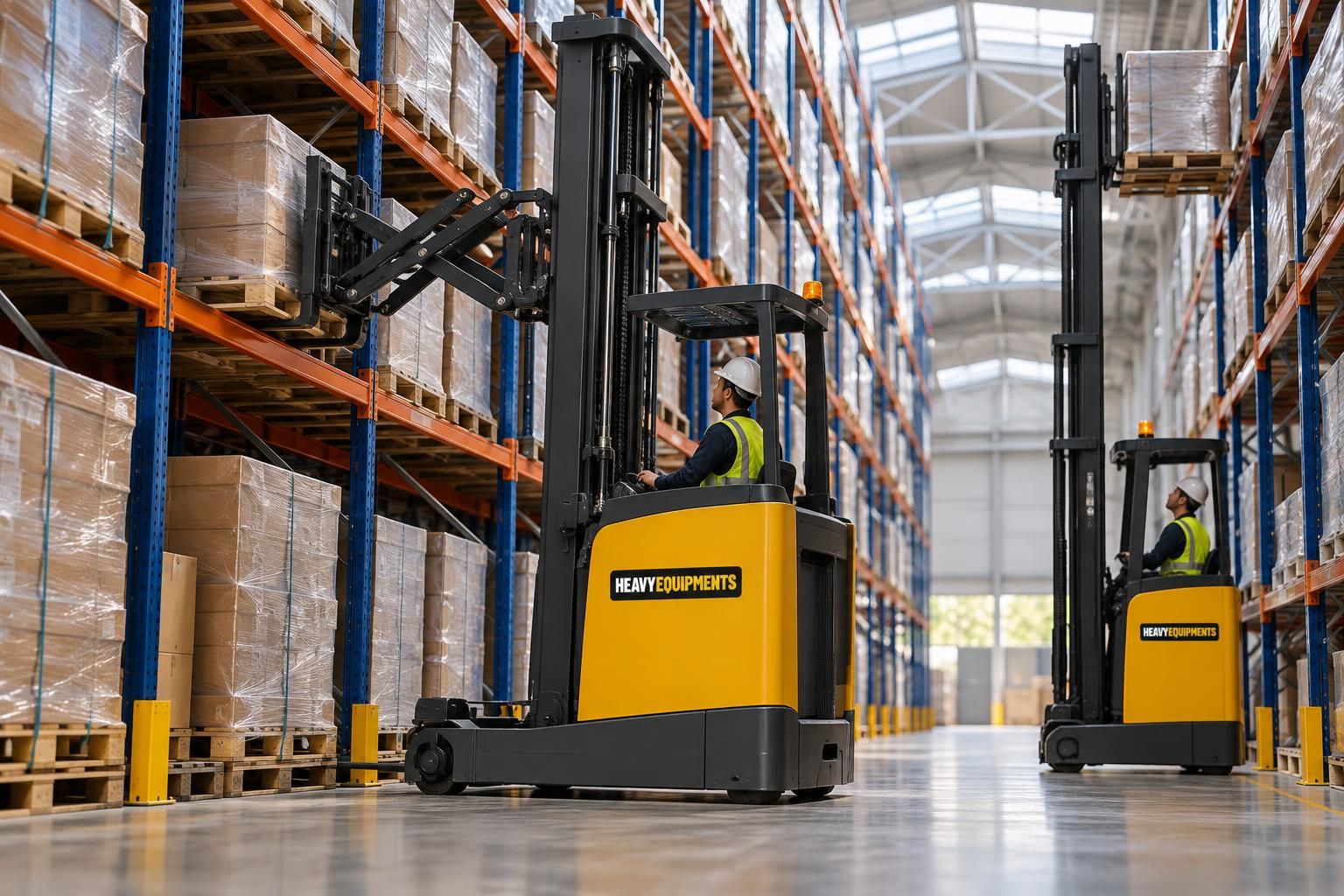
Reach trucks move loads back inside the chassis using either a pantograph (scissor) mechanism or a moving mast. That reach lets them work in narrower aisles than a standard counterbalance warehouse forklift. From there you choose between single reach and deep reach, often called double deep.
- Single reach handles the front pallet position in a rack bay. Best when you need high selectivity (fast access to any SKU) and frequent order changes.
- Deep reach places or pulls a second pallet behind the front position. Delivers higher storage density with fewer aisles, but reduces selectivity and may slow picks if you frequently need the rear pallet.
Operational implications to consider before you choose:
- SKU profile and turns. If you turn the same SKUs repeatedly in batch, deep reach can shine. If you need single pallet access across many SKUs, single reach is usually cleaner.
- Rack and pallet compatibility. Deep reach typically requires compatible rack design and consistent pallets to manage deflection and reach in tolerances.
- Throughput tradeoffs and density. Single reach favors higher pick rates, deep reach favors more pallets per square meter.
- Training and visibility. Deep reach placement demands solid operator skill and good load visibility at height.
Mast heights and mast types explained
Whether you run a reach truck forklift or a counterbalance unit, mast selection affects what you can store and where. You will commonly see Duplex (two stage) and Triplex (three stage) mast options across many warehouse forklifts. Duplex masts are simpler and often preferred for dock work and moderate stacking heights. Triplex masts collapse shorter for doorways and low mezzanines but extend taller for higher rack levels.
Two counterbalance examples illustrate how manufacturers publish mast and lift data:
- Toyota 8FBMT30: Capacity 3,000 kg at 500 mm load center, Standard lift height 3,000 mm, Electric (80 V), Duplex/Triplex mast options, Turning radius 2,200 mm.
- Linde H25: Capacity 2,500 kg at 500 mm load center, Standard lift height 3,150 mm, Diesel power, Duplex/Triplex mast options.
Key takeaways for mast selection:
- Clear height matters. Match the mast’s collapsed height to doors, docks and mezzanines. Triplex masts help where headroom is tight but you still need higher lifts.
- Standard and optional heights. The standard lift height on a spec sheet is a baseline. Reach forklifts typically offer additional mast options targeted at high bay storage.
- Load center stays central. Rated capacity assumes a stated load center (often 500 mm). Taller lifts, attachments, and off center loads reduce effective capacity, plan your slotting accordingly.
Aisle design and equipment fit
A reach forklift is favored because it works in narrower aisles than counterbalance trucks. Still, the right aisle width is not guesswork. It comes from your pallets and the truck’s geometry.
- Start with the load. Pallet size, load overhang, and handling direction (short side or long side) drive the core space requirement.
- Add the truck geometry. Right angle stacking clearance, chassis dimensions, and turning radius determine how tightly you can work. As a counterbalance reference point, the Toyota 8FBMT30 lists a turning radius of 2,200 mm. Reach trucks are engineered to work in narrower aisles than typical counterbalance units.
- Allow for rack protection and offsets. Allow space for pallet deflection, rack uprights, and safe mast clearance at height.
- Plan for traffic. One way aisles reduce required clearances, two way aisles need extra room for passing and staging.
Lay out a pilot aisle and test with your heaviest, tallest load before committing to full racking.
Counterbalance forklifts as warehouse workhorses
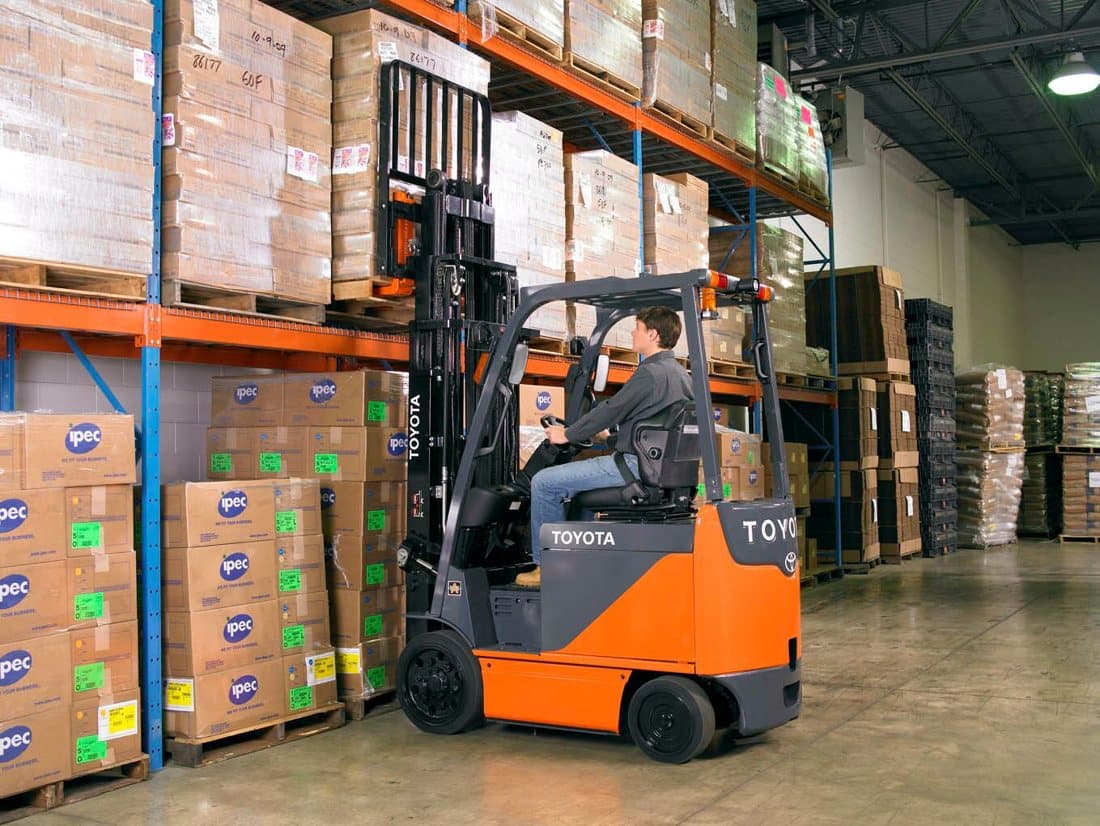
Not every warehouse is set up for a stand up forklift reach application. Many operations rely on counterbalance trucks, especially on docks, for cross docking, or in mixed indoor and outdoor work, then move pallets to reserve storage via reach trucks. Two examples from our database show how capacities and mast types are presented for warehouse focused counterbalance units:
| Model | Power | Rated capacity | Load center | Standard lift height | Mast type | Turning radius |
|---|---|---|---|---|---|---|
| Toyota 8FBMT30 | Electric (80 V) | 3,000 kg | 500 mm | 3,000 mm | Duplex / Triplex options | 2,200 mm |
| Linde H25 | Diesel | 2,500 kg | 500 mm | 3,150 mm | Duplex / Triplex options | , |
Use this kind of snapshot to align counterbalance specs with your dock and staging needs, then size your reach forklift fleet around density storage. To line up multiple models side by side, try our tool at /specs/compare/.
Choosing between single and deep reach
Deep reach promises fewer aisles and more pallets in the same footprint, but only if the operation fits. Run through this checklist before you commit:
- SKU mix. If most slots hold 2+ pallets of the same SKU, deep reach typically pays. If you live in singles, single reach is usually better.
- Service level. If you need rapid, random access to many SKUs, the selectivity of single reach reduces rearranging and labor touches.
- Pallet quality. Variations in pallet size or condition can create hang ups in deep reach positions.
- Operator visibility. Reaching into the second position at height requires training and clear sightlines.
- Future flexibility. If SKU profiles change often, single reach offers fewer constraints on re slotting.
Mast and power tips for warehouse forklift fleets
Even if your primary target is a reach truck, most warehouses still rely on at least one counterbalance unit for docks, yard trailers, and odd sized loads. When mixing truck types, consider:
- Mast alignment across zones. If your reserve storage uses higher masts, ensure your dock and staging masts can safely handle transfers to the first rack levels without pinch points.
- Power and ventilation. Electric counterbalance like the Toyota 8FBMT30 (80 V) is common indoors; diesel units such as the Linde H25 need proper ventilation policies.
- Attachments and capacity. Side shifters, fork positioners, and deep reach pantographs (on reach trucks) impact net capacity. Always check the derated capacity at your actual lift height and load center.
- Turning and aisle plan. The Toyota 8FBMT30 turning radius of 2,200 mm is a reminder that counterbalance trucks need more space than a reach forklift. Plan your aisles so each truck type can do its job without bottlenecks.
Practical layout workflow
- Define the load (pallet size, weight, overhang) and rack goals (density vs. selectivity).
- Choose reach strategy (single or deep) to match slotting and throughput.
- Select mast types (Duplex/Triplex) for each truck class that fit building clear heights and target rack levels.
- Draft aisles around the reach forklift’s right angle stack and your counterbalance turning radius.
- Pilot test the tightest aisle with your heaviest, tallest load before purchasing racking in volume.
Next steps for your warehouse
Ready to dial in a reach forklift for your building?
- Browse our forklift catalog at /specs/ and line up options with /specs/compare/.
- See what’s available today on /for-sale/ or explore short-term needs on /rentals/.
- Plan support with /parts/ and /attachments/ for the masts and accessories you will run.
If you are still debating single and deep reach, map a trial aisle and validate with your heaviest, tallest SKU. The right choice will be clear once you see the truck, the load, and the rack working together.