Cat 259D Specs, Attachments, Maintenance and Hauling Tips
A contractor’s guide to Cat 259D specs that matter on site, plus how it compares to 259D3 and 289D3, smart attachment choices, hauling pointers, and practical maintenance habits.
If you run or are considering a Cat 259D, you know it is a compact track loader that punches above its weight. This guide puts Cat 259D specs in context, explains what the numbers mean for daily work, shows how it stacks against close siblings, and adds owner style tips on attachments, maintenance, and hauling. If you are deciding between machines, use the comparison table below and our tools to narrow your pick.
Cat 259D specs that matter on site
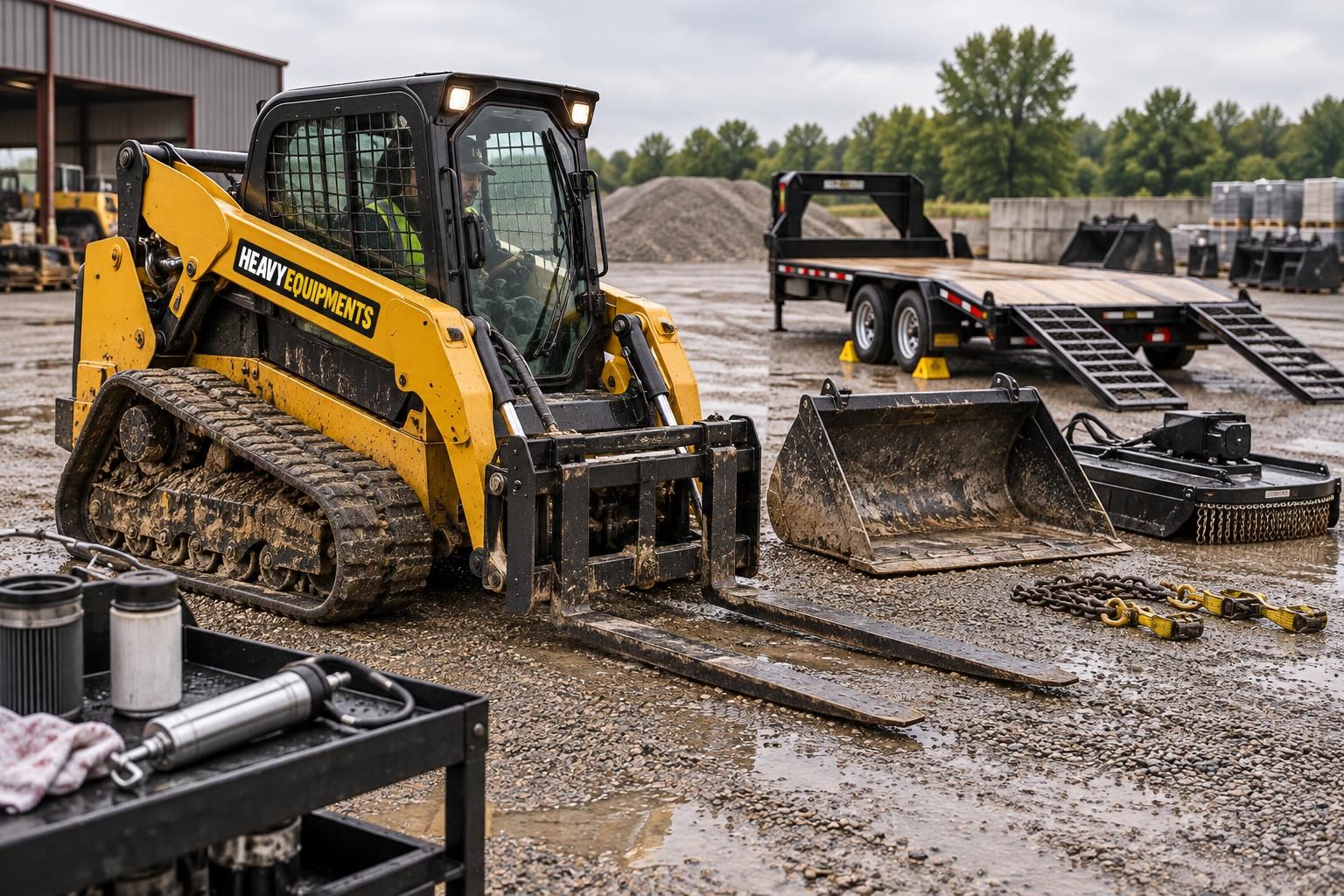
The Cat 259D is a vertical‑lift compact track loader built for pallet work, truck loading, and grading with good stability. Key figures:
- Horsepower: 55.4 kW (74.3 HP)
- Rated operating capacity (35% tipping): 920.8 kg (2030 lbs)
- Rated operating capacity (50% tipping): 1315.4 kg (2900 lbs)
- Tipping load: 2630.8 kg (5800 lbs)
- Tilt breakout force: 2283.8 kg (5035 lbs)
- Operating weight: 4012.5 kg (8846 lbs)
- Maximum travel speed: 13.7 km (8.5 mph)
- Lift design: Vertical; Years made: 2015 to 2020
In plain terms: you get 74.3 HP, strong tilt breakout for digging into piles, and up to 1315.4 kg (2900 lbs) rated capacity at the 50% tipping standard. That combination suits forks, general‑purpose buckets, and many common landscape and site prep tools, plus utility attachments. The vertical‑lift geometry helps with truck loading and high‑stacking tasks.
Cat 259D 259D3 and 289D3 differences
If you are choosing between generations or stepping up a size, the table summarizes core differences so you can match machine to workload. Note horsepower parity between 259D and 289D3, but a significant jump in rated capacity and breakout on 289D3.
| Model | Lift | Horsepower | ROC @50% | Tipping Load | Operating Weight | Tilt Breakout | Max Travel Speed | Years Made |
|---|---|---|---|---|---|---|---|---|
| Cat 259D | Vertical | 55.4 kW (74.3 HP) | 1315.4 kg (2900 lbs) | 2630.8 kg (5800 lbs) | 4012.5 kg (8846 lbs) | 2283.8 kg (5035 lbs) | 13.7 km (8.5 mph) | 2015, 2020 |
| Cat 259D3 | Vertical | 55.4 kW (74.3 HP) | 1301.8 kg (2870 lbs) | 2608.2 kg (5750 lbs) | 4077.8 kg (8990 lbs) | 2252.1 kg (4965 lbs) | 9.5 km (5.9 mph) | 2018, 2022 |
| Cat 289D3 | Vertical | 55.4 kW (74.3 HP) | 1880 kg (4130 lbs) | 3750 kg (8255 lbs) | 4848 kg (10688 lbs) | 3307.1 kg (7291 lbs) | 13.3 km (8.3 mph) | 2020, 2023 |
Takeaways from the numbers
- Same power, different payloads: 259D and 289D3 both show 55.4 kW (74.3 HP), but the 289D3’s rated capacity at 50% tipping rises to 1880 kg (4130 lbs) and tilt breakout to 3307.1 kg (7291 lbs) (a meaningful jump for heavier attachments or denser materials).
- Transport weight considerations: 259D sits at 4012.5 kg (8846 lbs). Moving up to a 289D3 increases operating weight to 4848 kg (10688 lbs), affecting trailer and truck pairing.
- Speed nuance: The 259D’s maximum travel speed of 13.7 km (8.5 mph) is higher than the 259D3’s 9.5 km (5.9 mph). If you shuttle material long distances on site, that may factor into cycle times.
Attachment matchups for Cat skid steers
Attachments make or break productivity. Use the Cat 259D’s rated operating capacity and breakout force as your guardrails, then size tooling accordingly. A few practical pairings:
- Forks and pallet handling: With 1315.4 kg (2900 lbs) ROC at 50%, the 259D handles many palletized loads in building supply yards and on mixed‑use job sites. Keep the load low while traveling and use the vertical‑lift reach for truck or flatbed loading.
- Buckets (GP, 4‑in‑1, light‑material): The 2283.8 kg (5035 lbs) tilt breakout force helps with pile work and backfilling. For light‑material buckets, watch heaped densities to stay within ROC.
- Grapples and brush: The rated capacity and breakout support land clearing of brush and small logs. For sustained heavy brush cutting or high‑demand forestry work, consider stepping up to a machine with higher ROC and breakout such as the Cat 289D3.
- Augers, brooms, trenchers: The 259D’s balance and breakout make it a versatile carrier for utility attachments. Match bit size and working depth to material conditions and stay mindful of downforce limits tied to ROC.
Tip: If you plan to run particularly heavy or high‑duty attachments all day, check your tool’s weight and required machine capability against the ROC and breakout figures above. When in doubt, compare across models using our spec comparison tool.
Hauling and transport for real weights
Before you roll, build your transport plan around operating weight and attachment choice:
- Know your base weight: The 259D is 4012.5 kg (8846 lbs). The 259D3 is 4077.8 kg (8990 lbs). The 289D3 is 4848 kg (10688 lbs). Your trailer must have enough payload for the machine plus attachment and any gear on deck.
- Account for attachments: Buckets, forks, and specialty tools add mass. Include them in your payload math and position to keep axle loads balanced.
- Secure correctly: Use proper tie‑downs and anchor points, cross‑chain where appropriate, and re‑check tension after the first few miles. Follow local DOT or provincial rules for chains, binders, and flags.
- Ramps and ground clearance: Choose ramp angles that will not high‑center the machine and load on firm, level ground.
- Onsite travel: If hauling inside large sites, the 259D’s 13.7 km (8.5 mph) top speed helps with longer shuttles; slow down on rough ground to preserve the undercarriage.
Maintenance habits that pay back
Compact track loaders reward routine care. A few owner‑tested habits for a 259D‑class machine:
- Daily walkaround: Check for leaks, loose hardware, track condition, and packed mud or debris around sprockets, idlers, and rollers. Clean out before it hardens.
- Track tension and wear: Proper track tension supports ride quality and component life. Inspect tread, lugs, and edges; correct tracking issues early to prevent derailing or accelerated wear.
- Undercarriage housekeeping: Keep the undercarriage clear of rock and clay buildup. Excess debris adds rolling resistance and stresses bearings and seals.
- Cooling airways: Blow out radiators and coolers if you are mulching or sweeping. Fine debris can blanket heat exchangers quickly.
- Attachment upkeep: Grease couplers and pivots, and inspect hoses and flats on hydraulic fittings. A weeping fitting today is a downtime call tomorrow.
- Operator station: Clean pedals and joysticks, check seatbelts and interlocks, and replace worn floor mats that can ball up under controls.
Keep records of what you do and when. Consistent small checks beat reactive repairs, especially in abrasive soils or winter conditions.
Operating tips to turn specs into productivity
- Work to the ROC, not past it: Use the 1315.4 kg (2900 lbs) 50% ROC as your practical ceiling for pallet and material handling. If you are consistently near that limit, the Cat 289D3 offers more headroom.
- Use vertical‑lift smartly: Vertical‑lift helps clear high‑sided trucks and keeps load centers favorable. Level loads and keep the attachment low while traveling.
- Exploit breakout when digging: Let the 2283.8 kg (5035 lbs) tilt breakout force work for you when prying or cutting into compacted piles, short controlled strokes reduce spin and wear.
- Match ground speed to footing: Even with a top speed of 13.7 km (8.5 mph), rough or wet ground calls for slower travel to protect the undercarriage and maintain control.
Choosing a machine for your workload
If your jobs lean toward pallet work, residential site prep, and multi‑tool versatility, the Cat 259D remains a strong all‑rounder. If you prefer a newer generation with a similar capability set, the Cat 259D3 is the like‑for‑like successor. If you are constantly bumping up against capacity or running heavier attachments, the Cat 289D3 adds a substantial margin in rated capacity and breakout, with the trade‑off of higher operating weight.
Practical next steps
- Dig deeper into specs across brands and sizes: browse our equipment specs and line up options with the side‑by‑side compare tool.
- Ready to buy or test the market? See what is available on for sale and short‑term rentals.
- Outfitting your machine? Shop compatible attachments and keep it working with parts.
Whether you stay with a 259D‑class compact track loader or step up a size, grounding your choice in the specs above, and matching them to the work you actually do, will pay back in uptime and cycle efficiency.