Bulldozer Undercarriage and Blade Maintenance, Checks and Costs
A practical field ready guide to dozer undercarriage and blade care, with daily checks, track tension, wear cues, and building your own cost per hour.
Undercarriage and blade condition drive most of a bulldozer’s operating cost and productivity. The best way to control both is a simple, repeatable maintenance routine that catches issues early, sets track tension correctly for the material underfoot, and plans wear parts on your schedule. This guide covers daily checks, how to think about wear limits, track tension fundamentals, and a practical way to calculate your own dozer cost per hour.
Dozer size weight and power basics
Heavier, higher‑power machines typically run larger undercarriage components and move more material, both factors that influence wear rate and parts spend. Use the table below to situate your fleet and tailor inspection frequency and component planning. For example, a Caterpillar D9T will demand a different wear strategy than a mid‑size unit like the John Deere 850K WLT or a lighter LGP machine.
| Model | Operating Weight kg (lbs) | Net Power kW (HP) |
|---|---|---|
| Caterpillar D9T WH | 49523.2 (109180) | 305.7 (410) |
| Caterpillar D9T | 47899.3 (105600) | 305.7 (410) |
| Caterpillar D8N | 37462.0 (82589.6) | 212.5 (285) |
| Caterpillar D8R LGP | 33729.1 (74360) | 227.4 (305) |
| Komatsu D85PX-15 E0 | 27651.0 (60960) | 196.9 (264) |
| Komatsu DP61PX-15 EO | 15621.7 (34440) | 125.3 (168) |
| Komatsu D87E-3 | 23998.0 (52906.6) | 171.5 (230) |
| John Deere 850K WLT | 20347.2 (44858) | 152.9 (205) |
| John Deere 850K | 8756.1 (19304) | 152.9 (205) |
| John Deere 950C LGP | 24584.7 (54200) | 171.5 (230) |
| John Deere 950C LT | 23722.9 (52300) | 171.5 (230) |
| Case 850L LGP | 9402.0 (20727.9) | 72.0 (96.6) |
| Case 850H LT | 7946.5 (17519) | 67.9 (91) |
| Case 850H LGP | 8713.0 (19209) | 67.9 (91) |
Use these specs alongside your ground conditions to decide inspection cadence. LGP and wide‑track variants distribute weight differently, which affects packing, track tension targets, and wear patterns.
Daily bulldozer maintenance checklist
Five to ten minutes at startup prevents most undercarriage and blade failures. Build this into your walk‑around:
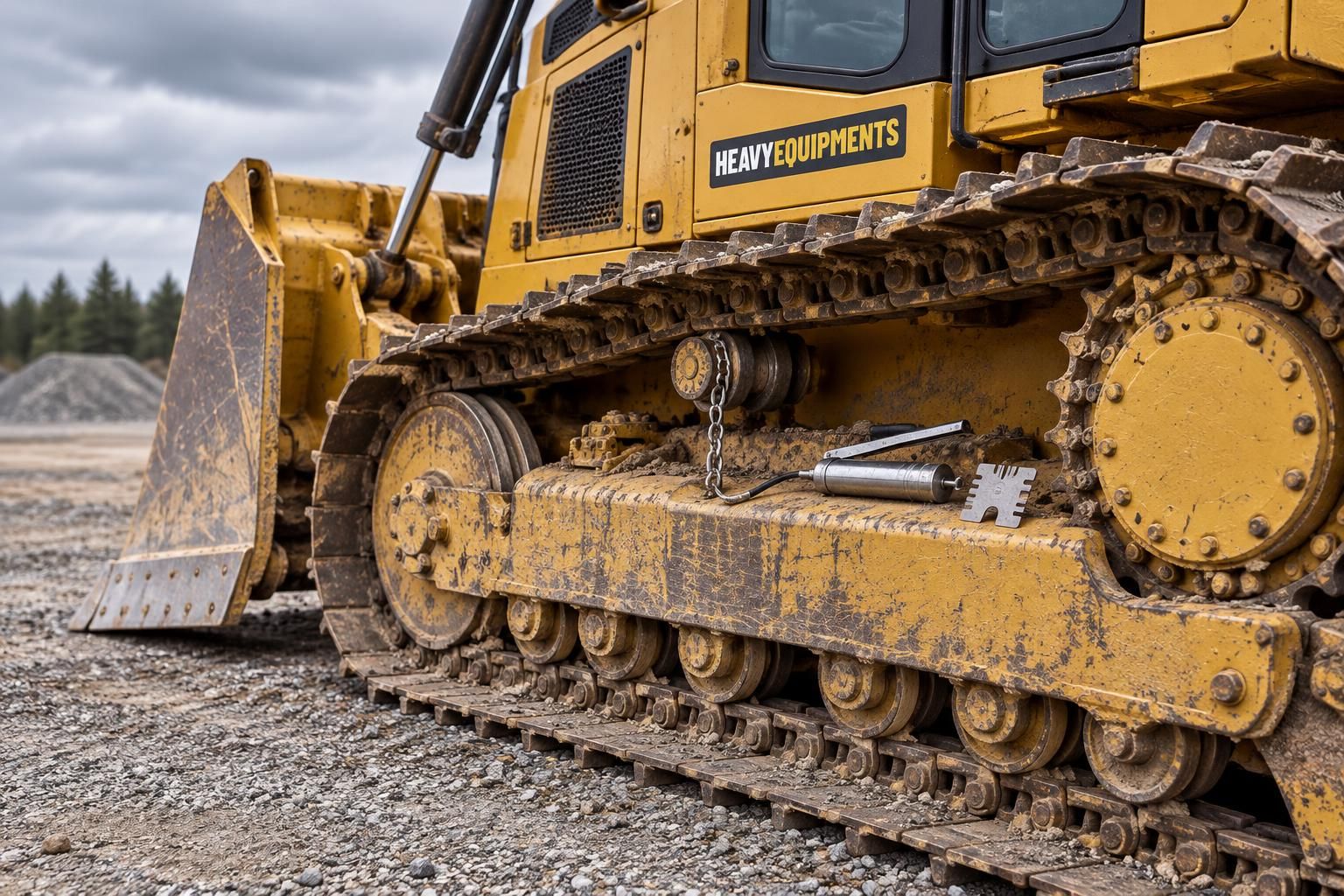
- Clean out packed mud, rock, or debris from track frames, sprockets, carrier rollers, and recoil areas. Packed material drives tension up and accelerates wear.
- Check track tension visually. If sag or packing looks off, verify against the OEM method and adjust before production.
- Inspect track shoes for loose or missing bolts and cracked plates. Tighten or replace as needed.
- Look at sprocket teeth for hooking or sharp points, and idler/roller flanges for thin or chipped edges.
- Scan links and bushings for uneven wear, flats, or oil leakage (on sealed/greased designs).
- Verify blade cutting edges and end bits: look for rounding, cupping, or uneven wear; check plow bolts and nuts.
- Check blade pins, trunnions, and tilt/c‑frame hardware for play and missing retainers.
- Walk the machine while listening for squeals or grinding from rollers and idlers.
- Grease daily points and confirm guards are secure.
Track tension setup and reasons it matters
Improper track tension is a leading cause of premature bushing, sprocket, and idler wear. Too tight increases friction and heat; too loose promotes derailment, shock loading, and pitch wear.
- Follow the OEM method for your specific machine. Procedures typically reference track sag at a defined point on the track frame with the machine on level ground.
- Adjust using the recoil/grease cylinder as designed. Add grease to tighten, carefully relieve to loosen. Never loosen fittings under pressure. Follow the manual’s safety steps.
- Match tension to material: wet clay and sticky fills can pack the undercarriage and effectively tighten the chain; drier, sandy conditions may run cleaner. Recheck tension anytime conditions change.
- LGP and wide‑track setups are more sensitive to packing. Frequent clean‑outs and tension checks help prevent overtight running.
Sprocket and idler wear signs to watch
Track components wear together. Replacing one part too late often damages others. Use these cues to decide when to plan parts:
- Watch sprockets for pointed or hooked teeth, cracking, and abnormal polishing on the flanks. Excessive hooking indicates pitch mismatch with the chain and accelerates bushing wear.
- Check front idlers for tread grooving and for flanges that are thinning or chipping. Look for oil leaks and side to side play that suggests bearing issues.
- Listen at bottom and carrier rollers for noise, and feel for heat after a short run. Inspect for flat spots, leaks, and loose mounts.
- Monitor links and bushings for bushing roundness and link height. A bushing with a flat or visible elongation signals it is time to evaluate against OEM wear limits.
- Watch alignment. Uneven flange wear or shiny rub marks on one side of shoes or rollers can point to issues (bent frame, worn guides) that should be corrected before installing new parts.
When measuring, use the manufacturer’s dimensions and service limits in your manual. Record measurements at the same locations each time, and keep photos. Consistency beats guesswork.
Blade edges and bits maintenance that saves money
Cutting edges and end bits are consumables, but you can influence their life and protect the blade structure:
- Replace edges before they knife out. Running too long can wear into the blade moldboard or corner bits, increasing repair cost.
- Turn reversible edges and end bits following the OEM guidance. Turning too late forfeits usable material and hurts grade quality.
- Keep plow bolts tight. A loose edge works the bolt holes and can crack the edge or blade.
- Watch for cupping or scalloping, uneven wear often traces back to operator angle or tilt habits or to one side running heavier in slope work.
- Inspect blade push arms, c‑frame, and trunnions for play. Excess clearance hammers pins and bores and can throw edges out of square.
Operating practices that extend undercarriage life
- Avoid high‑speed, long reverse pushes; reverse loads concentrate wear on the opposite bushings/sprocket flanks.
- Minimize sharp, stationary turns. Use wider, rolling turns to reduce side loading on idlers and rollers.
- Maintain proper track tension and keep the undercarriage clean in sticky conditions.
- Balance blade loads. Chronic side loading from aggressive tilt or windrowing can show up as uneven shoe, roller, and idler flange wear.
- Match shoe type to ground. In soft or swampy material, LGP machines like a Caterpillar D8R LGP or John Deere 950C LGP distribute load but need more frequent clean‑outs to avoid over‑tension from packing.
Dozer cost per hour from your data
Your dozer cost per hour is the sum of consumables, labor, parts, and wear components divided by productive hours. The biggest variable is often the undercarriage, which is why consistent inspections and planned component changes matter. Here is a practical way to build your number without guesswork:
- Track meter hours by job and ground condition. Separate travel or cleanup time from heavy push work when possible.
- Log spend for wear parts, including cutting edges and end bits, plow bolts, track shoes and bolts, links and bushings, sprockets, rollers, idlers, and alignment work.
- Include technician labor and shop time for inspections, tension adjustments, clean‑outs, and component swaps.
- Allocate the cost of major assemblies across the life you achieve in your conditions, and update the allocation as you add history.
- Account for operating fluids and grease, including daily greasing and any specialty lubricants used for sealed or greased components.
- Sum all costs for a period and divide by productive working hours to get your current cost per hour. Track it monthly and by site type such as rock, sand, or clay to see trends.
Use the spec table to benchmark expectations by size class. A high‑power, heavy unit like the Caterpillar D9T WH will typically move more material, and consume edges and undercarriage faster, than a lighter machine such as the Case 850L LGP. Your records will reveal the real gap on your sites.
Set your wear limits by the book
Because OEMs publish the official inspection dimensions and discard limits, build your replacement decisions on those values, not estimates. Measure links, bushings, roller and idler diameters, and sprocket teeth profiles with the tools and points specified in the service manual. When your readings approach the published limits (or when wear is uneven) schedule change‑outs to prevent collateral damage.
Next steps for your fleet
- Compare detailed specs for multiple dozers side by side to plan maintenance and parts commonality: /specs/compare/
- Browse all dozer specs to validate power/weight for upcoming work: /specs/
- Need iron now? See current machines available: /for-sale/ or short‑term /rentals/
- Pricing parts or building a spares kit? Check /parts/ and /attachments/
Keep the daily checklist, set track tension for the ground you’re in, measure wear against the OEM limits, and track your spend by component. That is the straightforward path to longer life and a defensible dozer cost per hour.